
How to Get a Job With No Connections or Networking (2026)

%20(1).webp)
If you've been searching for how to get a job with no connections or networking, you're probably dealing with one of these situations:
"I keep applying online and nobody replies."
"I'm new to this country or industry and I literally don't know anyone."
"I'm introverted and the usual networking advice feels fake."
"I don't have the 'right' background, so referrals feel like a locked door."
This guide is for exactly that. We built it assuming you have zero insider access and you want a system that actually produces interviews. Not vague advice about "putting yourself out there." A real, repeatable process.
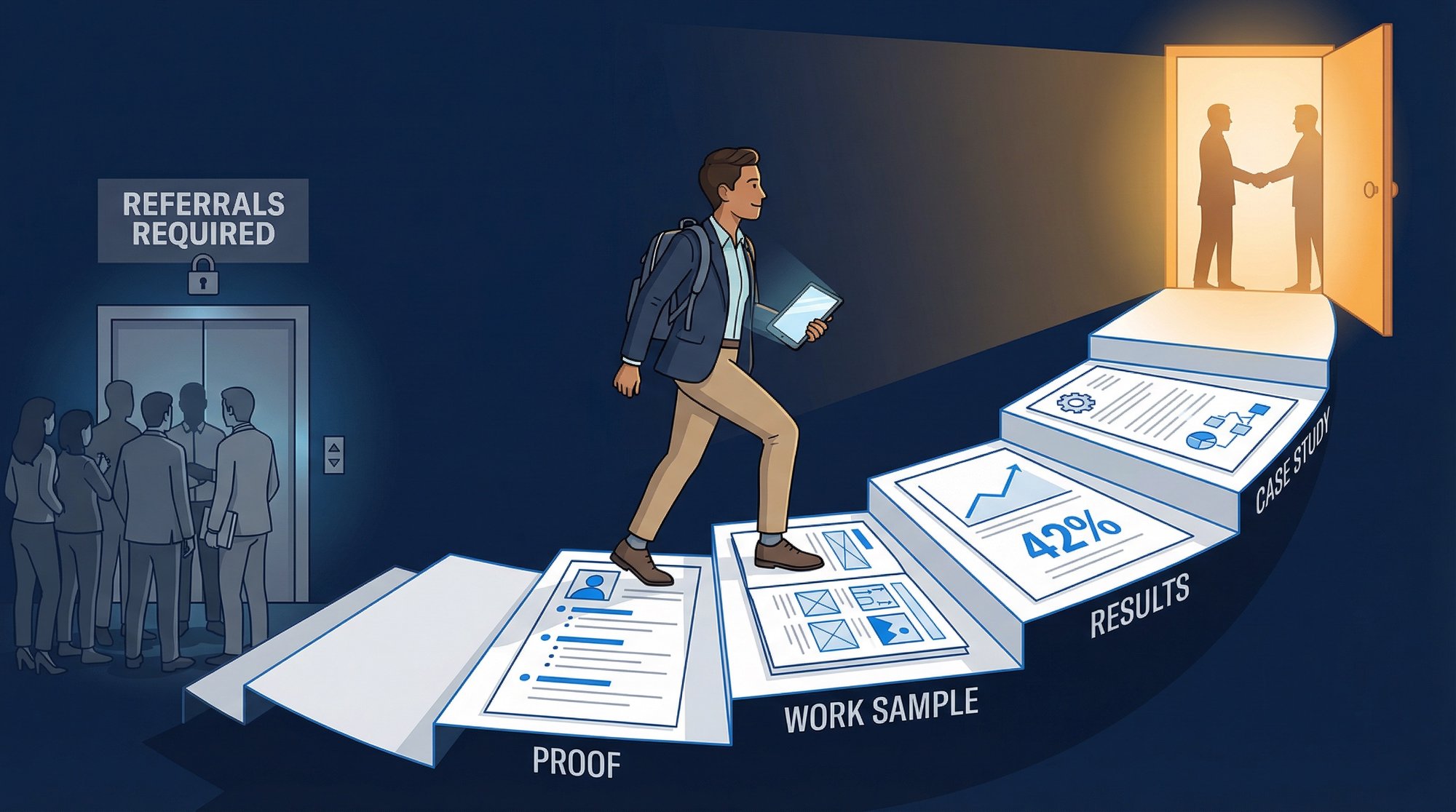
The core idea is simple: if you can't rely on trust through people, you replace it with trust through proof. That's the whole game. And by the end of this post, you'll know how to play it.
Why You Don't Need Connections to Get a Job
Referrals work so well for a reason that rarely gets stated plainly.
It's not because referred candidates are always better. It's because hiring is fundamentally about reducing risk with incomplete information, under time pressure. A hiring manager is making a bet on someone they barely know. When a current employee says "I'd stake my reputation on this person," that's a powerful uncertainty reducer.
But it's not the only uncertainty reducer.
Large-scale hiring data (covering tens of millions of applications across hundreds of thousands of jobs) consistently shows the same pattern:
The vast majority of applications come from inbound applicants (people who apply directly), while referrals make up a small fraction of the total volume
Referred candidates convert at much higher rates per person, with a significantly larger share reaching interview and offer stages
Inbound offer rates have dropped materially over the last several years as competition has increased
That sounds grim. Until you notice the most important line in the data: inbound applicants are still the dominant source of hires. Referrals convert better per person, but the sheer volume of inbound hiring dwarfs referral hiring.
So the question isn't whether you can get hired without connections. You can. The question is how to become a high-signal inbound candidate instead of a forgettable one.
The real challenge in 2026: Hiring platform metrics show the number of applications per open role has more than tripled over the last four years. More than one in five candidates now use automated tools to apply at scale, and a significant share have admitted to using AI to generate fake work samples. Hiring has become a trust problem.

If your plan is "submit another generic resume," you're competing in the noisiest channel on earth. This guide is how you get out of that trap. Learning how to get hired fast starts with understanding that the game has changed. Knowing exactly how to play it differently is the whole point.
How to Pick the Right Jobs to Apply for Without Connections
The biggest hidden mistake people without connections make? They apply to roles they could do, not roles they can prove.
When you have no network vouching for you, proof matters more. So you need a target that allows proof.
6 Questions to Find the Right Job to Apply For
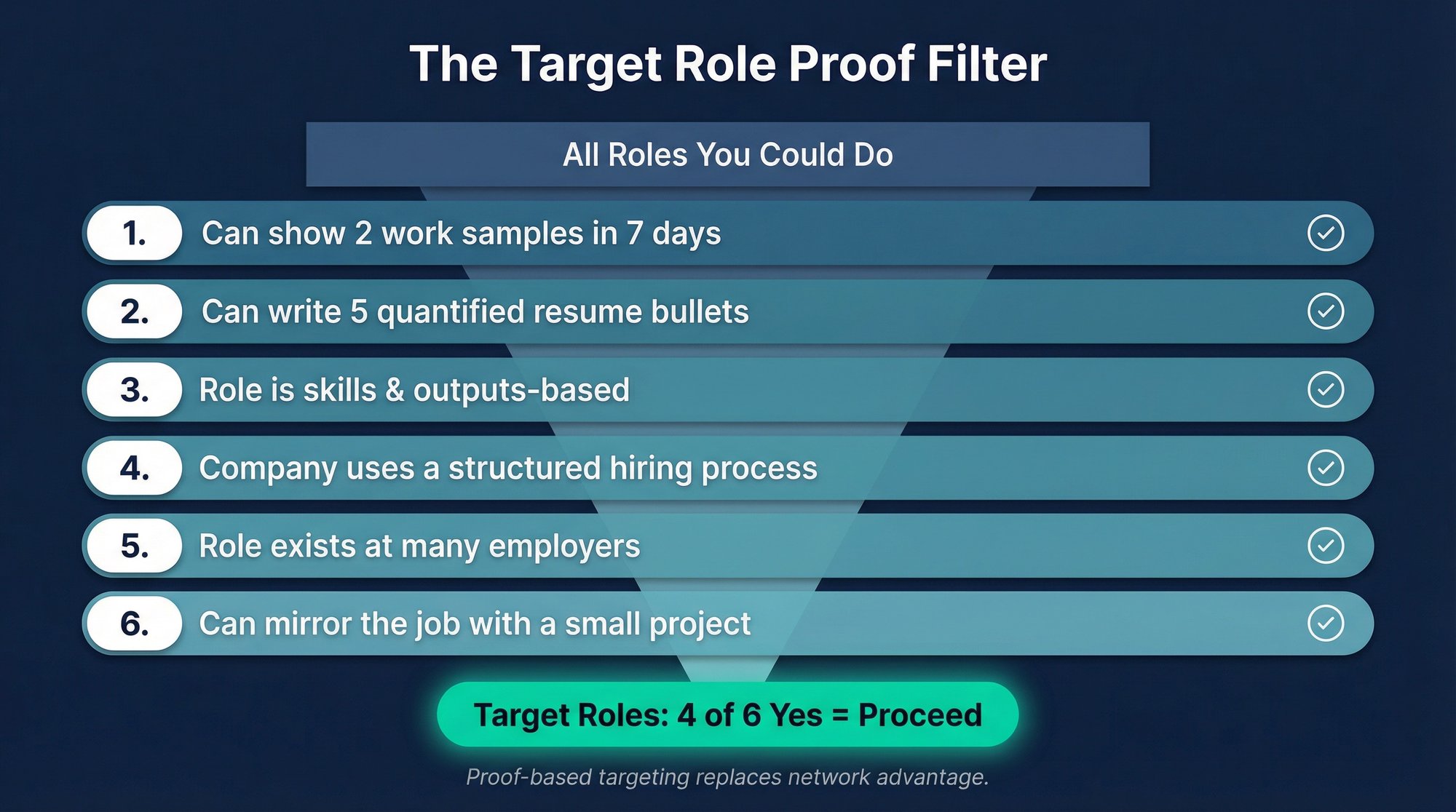
Choose a role where you can honestly answer "yes" to at least four of these six questions:
I can show two relevant work samples within seven days
I can write five quantified resume bullets that match the job's outcomes
The role's requirements are about skills and outputs (not pure pedigree)
The company hires in a structured way (clear process, clear rubric)
The role has many employers (so one rejection doesn't kill your search)
I can do a small project that mirrors the job and publish it
If you can't show proof quickly, you're choosing a role where networking typically does the heavy lifting. That doesn't mean you can't pursue it, but it does mean you'll want to combine your approach with the "micro-audition" method we'll cover later.
How Competitive Is the Job Market Right Now?
UK ONS data reported 734,000 vacancies in October to December 2025 (down 8.6% year-on-year) with 2.5 unemployed people per vacancy, up from 1.9 a year earlier.
The math is clear: spray-and-pray is punished harder now than at any point in recent memory. Targeting isn't just helpful. It's necessary. A solid job search strategy starts with knowing exactly what you're going after and why you're the right person for it.
How to Build a Proof Pack That Replaces Your Network
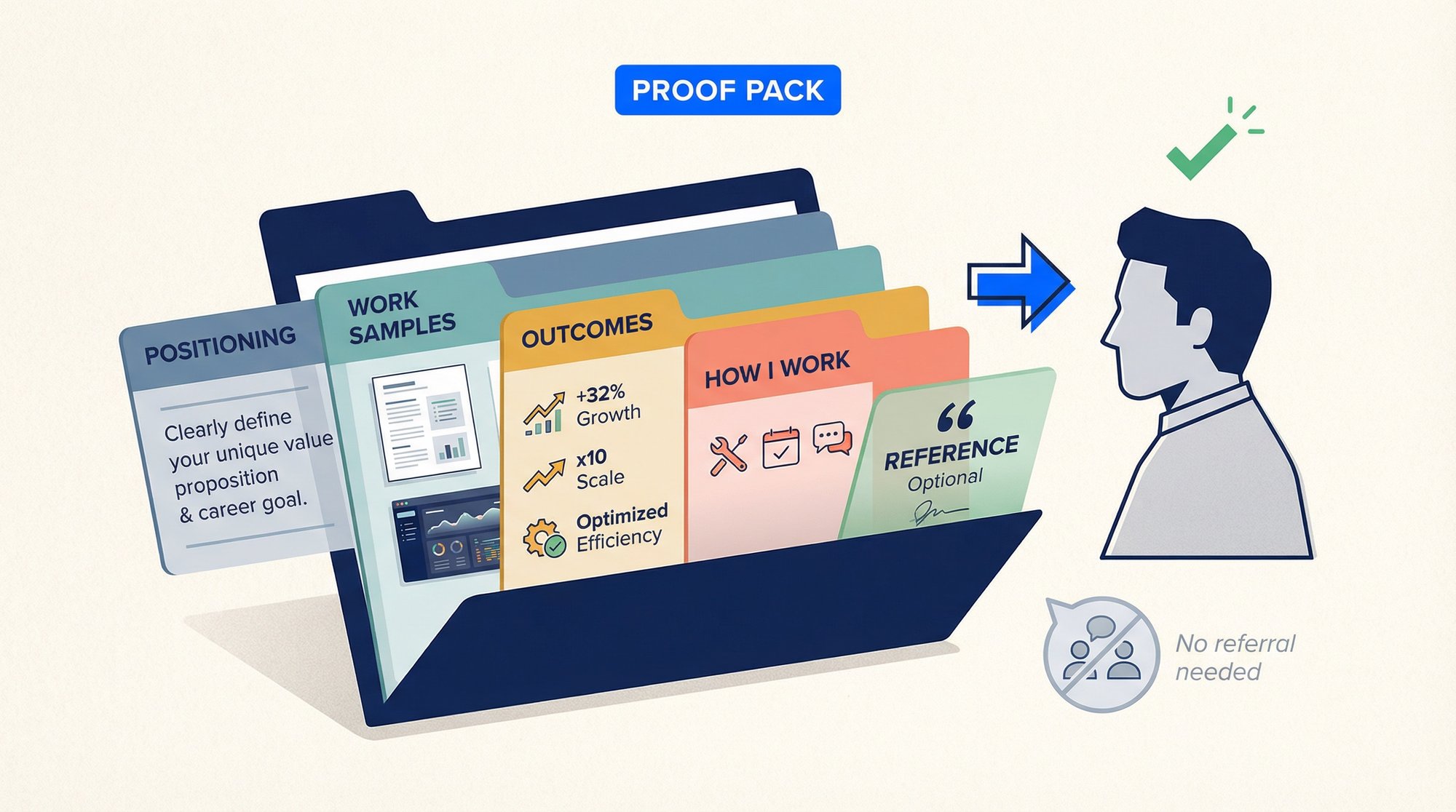
Your Proof Pack is what substitutes for connections. It's the thing that makes a hiring manager think: "Even if I don't know them, I can see they can do the work."
Think of it as a portable reputation. One link or one PDF that contains everything someone needs to take you seriously. Learning how to create a professional portfolio is one of the highest-impact moves you can make when you have no network to lean on.
What Should Your Proof Pack Include?
A one-paragraph positioning statement: "I do X for Y using Z." Short. Specific. No fluff.
Two work samples (or case studies) that show relevant skills in action
Three quantified outcomes with numbers, before/after comparisons, or scope descriptions
One "how I work" section covering tools, process, and communication rhythm
Optional: A short testimonial or reference quote (even from a class project or freelance client)
This isn't "personal branding." It's risk reduction. You're giving someone the evidence they'd normally get from a referral.
Proof Pack Examples for Every Job Type
Not sure what skills you need to build for a target role? Check out the skills breakdown for marketing analyst roles, customer service positions, and sales roles to understand exactly what hiring managers want to see.
Why You Should Never Fake Your Work Samples
Worth stating plainly: because of the AI flood we mentioned earlier, a growing share of applicants have admitted to using AI to generate fake work samples and portfolios (and hiring managers are getting noticeably more skeptical as a result).
Don't do this. It surfaces eventually (during interviews, on the job, through reference checks) and it can burn your reputation permanently. Use AI to polish, structure, and explain your real work. Not to invent work you didn't do. Our tools at AIApply are built exactly for this: helping you present your genuine experience in the strongest possible way, not fabricating experience you don't have.
How to Write an ATS-Friendly Resume That Sounds Human
Most people treat their resume like a biography. Employers treat it like a search query combined with a risk scan.
What this means for you: Your first reader is often software. Whether you like it or not, every major enterprise and the overwhelming majority of mid-market employers now use an Applicant Tracking System. Understanding what an ATS does is essential before you send a single application.
What Is ATS and Why Does It Matter?
The right ATS-friendly resume templates can make a massive difference in whether you get through automated filters. It's standard practice across the Fortune 500 and has been for years.
Resume Formatting Rules That Pass ATS Filters
Do this:
Use a single-column layout (ATS parsing handles these best)
Stick with standard headings: "Experience," "Education," "Skills"
Keep dates in a consistent format
Use simple fonts and normal bullet points
Include keywords that describe the job's outcomes, not every buzzword you can think of
Avoid this:
Tables, text boxes, or heavy multi-column layouts
Fancy icons and decorative graphics
Headers and footers that hide key information
Keyword stuffing (it reads like spam and modern ATS can detect it)
For a deeper breakdown of what formatting passes ATS filters and what gets flagged, check out effective resume formats alongside those ATS templates.
How to Write Resume Bullets That Get Noticed
Hiring managers hire you to deliver outcomes. Job descriptions are just outcomes disguised as responsibilities. So you rewrite your bullets to mirror those outcomes.
Use this formula: Action + Scope + Result + Proof
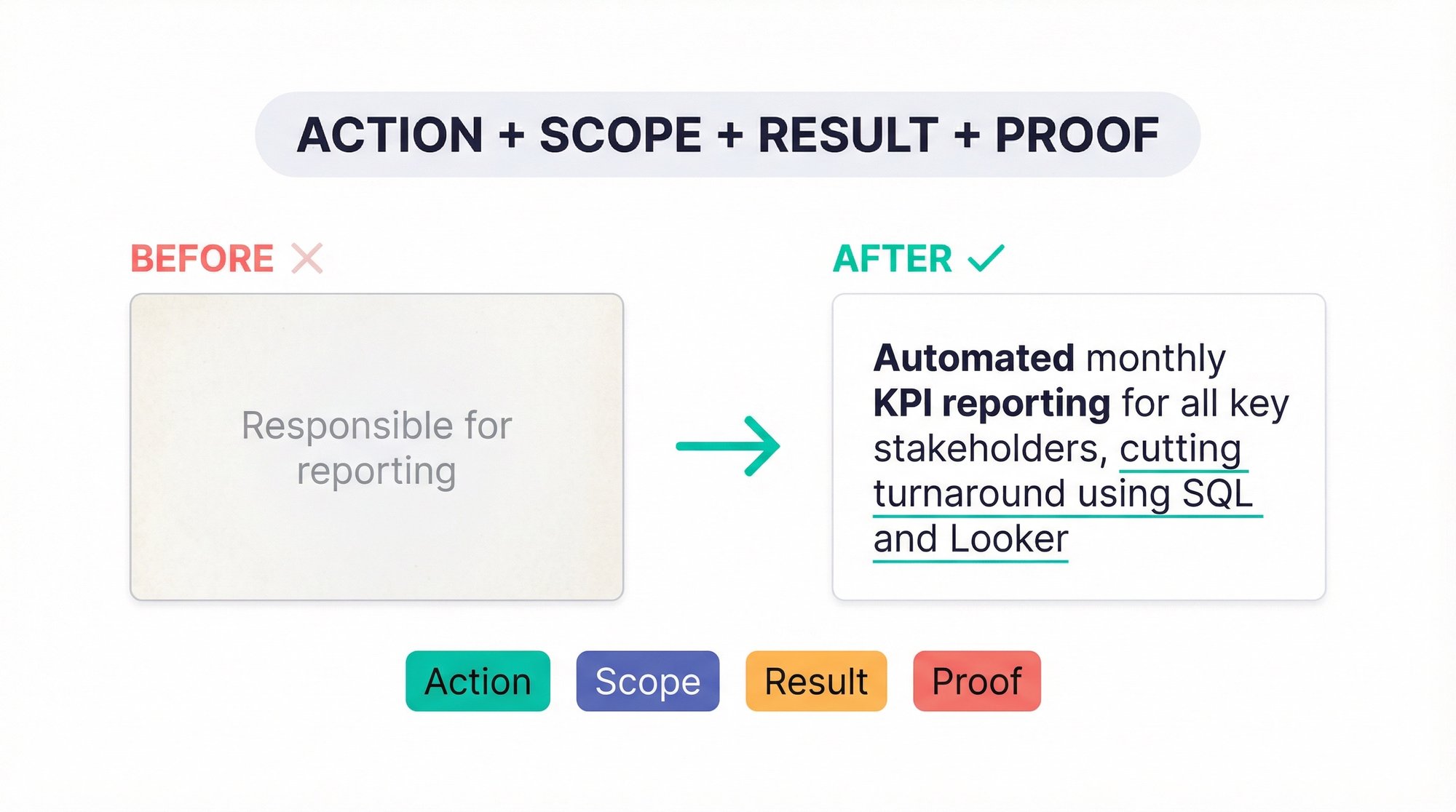
For example, here is how a weak bullet becomes a strong one using this format:
Before: "Responsible for reporting"
After: "Automated monthly KPI reporting for all key stakeholders, cutting turnaround significantly using SQL and Looker."
Before: "Managed email campaigns"
After: "Redesigned onboarding emails and improved activation through A/B testing (wrote copy, set up tests, and analyzed results)."
The specificity is the proof. Those two bullets read completely differently, and that difference is what gets you noticed. For more examples and templates, check out these resume bullet point examples and resume optimization techniques that use the same outcome-first framework.
Using AIApply to Build an ATS-Ready Resume Faster
AIApply's Resume Builder is designed specifically for ATS-friendly formatting and job-description matching. If you want to move faster without sacrificing quality, a solid workflow looks like this:
Import your current resume
Generate a version tailored for the target role
Rewrite bullets using your Proof Pack content (so everything stays truthful)
Run an ATS check before submitting
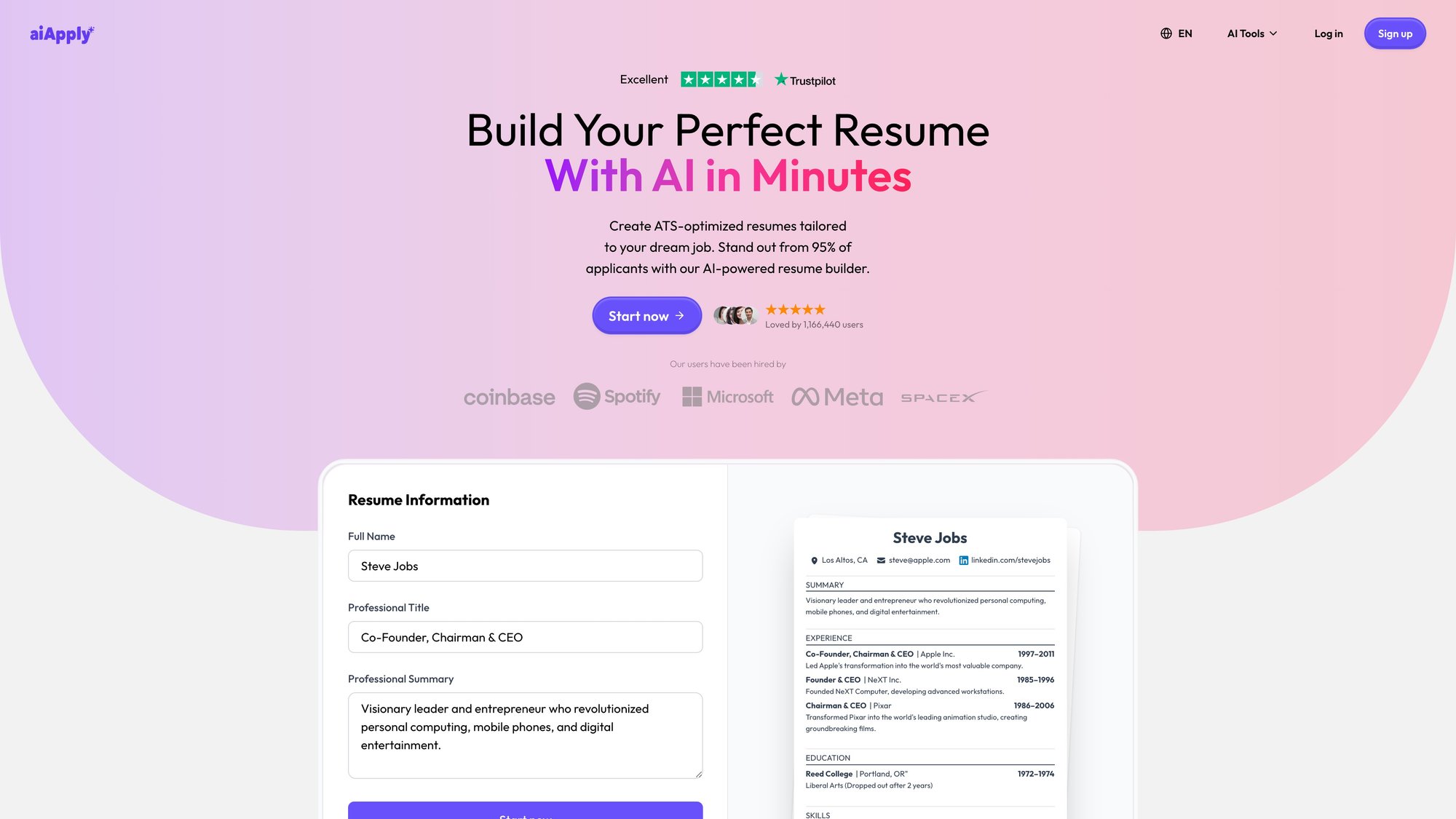
You're not handing control to AI. You're using it to handle the formatting and optimization work so you can focus on strategy. Before you start, see how to tailor your resume to the job description for maximum keyword match without stuffing.
Why Applying Through Multiple Channels Gets You More Interviews
Most people without connections are stuck in a single channel: job boards. That's like trying to win a game by only taking the hardest shot every time.
5 Job Search Channels You Should Be Using Right Now
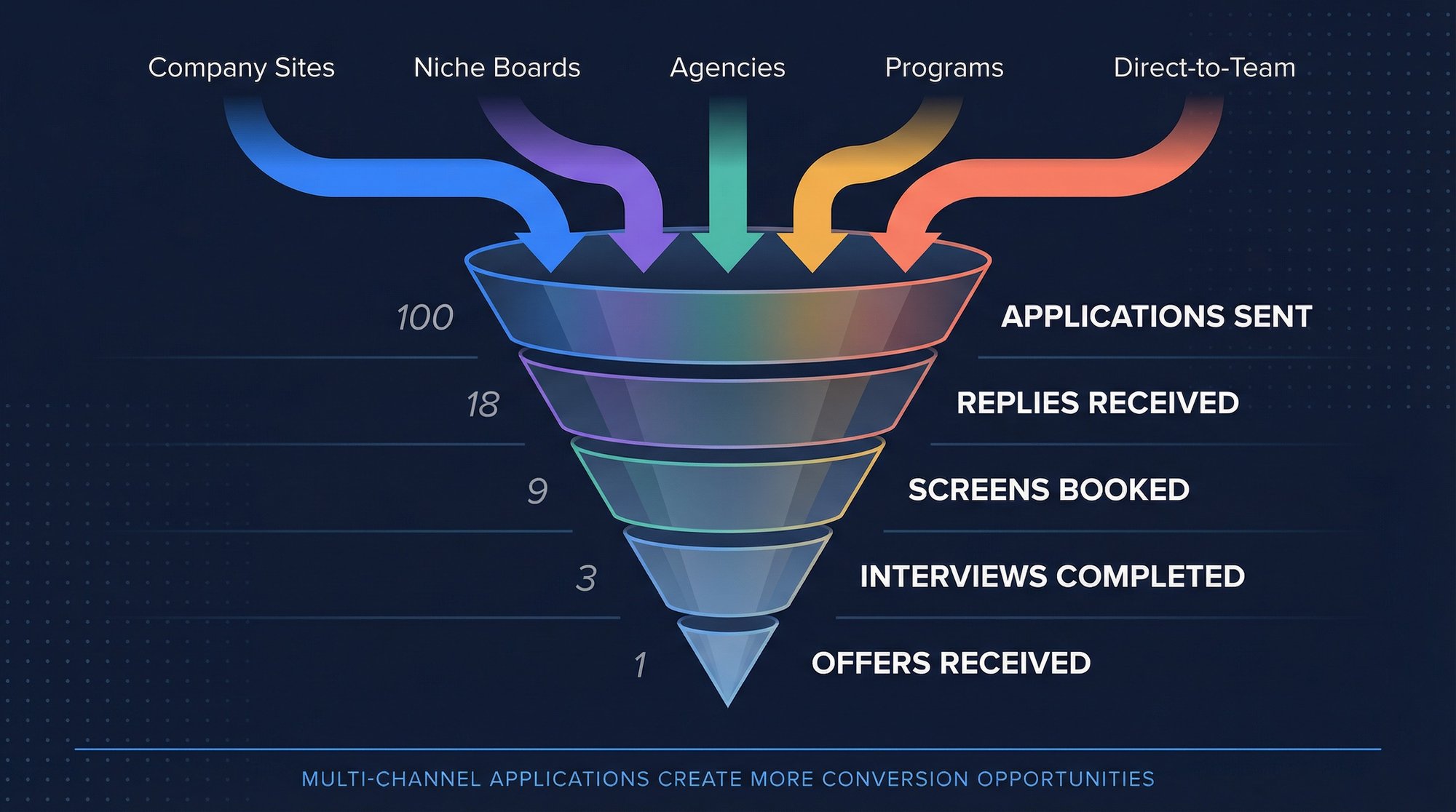
You want applications flowing through multiple channels simultaneously:
Company career site applications (direct is often less competitive than third-party boards)
Niche job boards specific to your industry (they're less flooded than the big aggregators)
Recruiting agencies (these are essentially someone else's network working on your behalf)
Structured programs like apprenticeships, rotational schemes, graduate programs, and returnships
Direct-to-team applications using your Proof Pack (we'll cover this in the micro-audition section)
If one channel is flooded, the others often aren't. Diversification is your hedge against the noise. Understanding how to apply for jobs online effectively, across multiple channels at once, is what separates candidates who land interviews from those who keep getting silence. The best way to apply for jobs in a competitive market isn't working harder in one channel, it's working smarter across all of them.
How to Track Your Job Applications Like a Pipeline
You don't need motivation. You need math.
Track these numbers every week:
→ Applications sent
→ Replies received
→ Screens booked
→ Interviews completed
→ Offers received
Your job is to increase conversion at each stage. If you're getting applications out but no replies, your resume or targeting needs work. If you're getting screens but no interviews, your phone presence needs polishing.
AIApply has a free Job Search Tracker that lets you log applications and monitor response rates. You can also explore job search tracking methods that help you analyze what's working. If you track nothing, you can't improve anything.
How to Stand Out as a High-Signal Candidate
In 2026, the default applicant looks like this: auto-generated resume, generic cover letter, no work samples, no clear reason for applying, and no follow-up.
Recruiters are absolutely drowning in that pattern.
Your goal is to create a "trust spike" inside 30 seconds of someone opening your application.
What a Strong Job Application Actually Looks Like
Part 1: A resume tailored to outcomes (not a biography, but a relevance document)
Part 2: A short cover note that proves fit (not a story about your childhood dreams)
Part 3: Your Proof Pack link (the thing that makes you feel "safe to hire")
How to Write a Cover Letter That Actually Gets Read
Don't write a story. Write a claim plus evidence.
Hi [Name],I'm applying for [Role]. Based on the job description, it looks likesuccess is mainly about:1) [Outcome A]2) [Outcome B]3) [Outcome C]Here's proof I can deliver those:- [Proof bullet 1 with number]- [Proof bullet 2 with number]- [Proof bullet 3 with number]Work samples: [link]If helpful, I can walk you through a 10-minute breakdown of [relevantwork sample] and how I'd apply it to [company/project].Thanks,[Name]That's it. No multi-paragraph origin story. Just: here's what you need, here's proof I can deliver it, here's where to see my work. See what to include in a cover letter and cover letter format examples if you want to see this pattern applied across different industries. For role-specific templates, browse the full cover letter examples library.
How to Balance Quality Applications With Volume
This is important: you don't want to do only high-touch applications, and you don't want to do only volume applications.
If you do only Lane A, your volume is too low. If you do only Lane B, you become part of the noise. The combination is what wins.
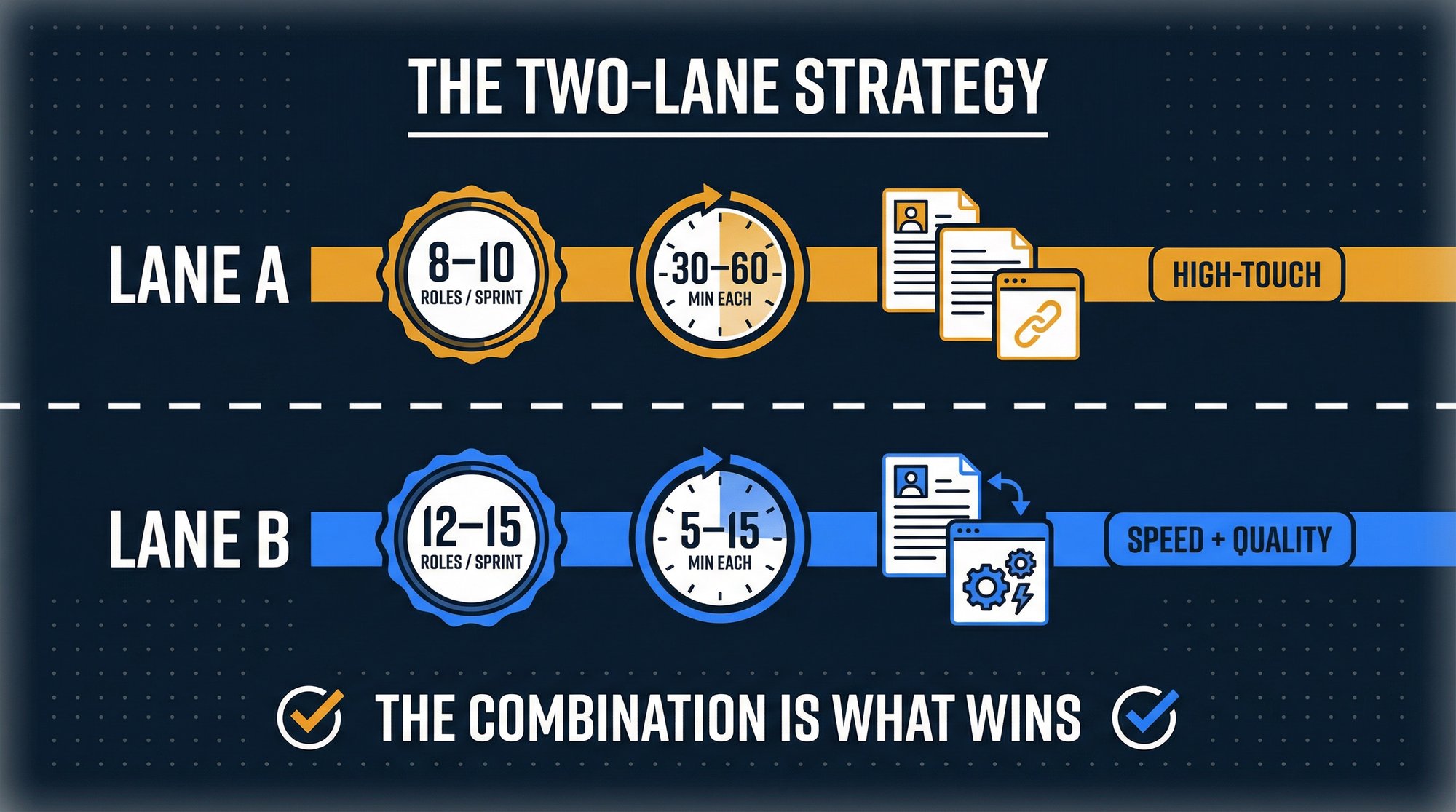
AIApply's Cover Letter Builder handles the Lane B cover notes quickly so your writing time goes toward your Lane A applications. And Auto Apply can manage high-volume submissions while you focus your energy on the roles that matter most. If you're wondering how many applications you need to send to get a job, the answer depends heavily on whether you're using the two-lane system. Volume alone without quality rarely works.
How to Follow Up on a Job Application Without Being Annoying
Most people think follow-ups are annoying. But the reality of modern hiring is that the majority of applicants never get meaningful status updates, and most end up losing trust in the hiring process as a result.
So when you don't follow up, you're betting on a perfect system. That's not a smart bet.

A Job Application Follow-Up Email Sequence That Works
Day 2 after applying:
Subject: Quick question on [Role] applicationHi [Name],I applied for [Role] on [date]. I wanted to share one relevant worksample that matches what you listed around [outcome].[One sentence describing proof + link]If the role is still active, happy to answer any questions.Thanks,[Name]Day 7:
Subject: Following up on [Role]Hi [Name],Just checking in on the [Role]. If it helps, here are 3 outcomesI've delivered that match the posting:- [bullet]- [bullet]- [bullet]Either way, thanks for your time.[Name]Day 14:
Subject: Closing the loop on [Role]Hi [Name],Last note from me. If the position is filled or paused, no worries.If you're still hiring, I'd love to be considered and can shareadditional work samples for [specific project].Thanks again,[Name]Notice the pattern: each follow-up adds value (a work sample, proof bullets, an offer to share more). You're not just pinging them with "any update?" You're reinforcing why you're worth talking to.
For word-for-word templates you can copy, see these follow-up email after application samples, a complete job application follow-up email example, and guidance on when to follow up on a job application so your timing is always right.
How to Use Micro-Auditions to Get Hired Without a Referral
This is the power move. And it doesn't require knowing anyone.
Instead of trying to talk your way into a job, you show your way in. You do a small piece of the actual job and send it to the hiring manager.

Micro-Audition Examples for Different Job Roles
Marketing: A one-page ad and landing page teardown for their actual product
Data: A short data exploration or visual built from a public dataset related to their market
Product: A feature critique plus a spec for improvement
Sales: A territory plan plus a sample outreach sequence
Ops: A process map showing three bottlenecks and proposed fixes
Then you send it directly to the hiring manager or team lead. Knowing how to send a message to a hiring manager, and how to attract job recruiters with your outreach, can make the difference between your micro-audition landing in the right inbox and disappearing into a black hole.
Subject: I built a quick [deliverable] for your [Role] openingHi [Name],I'm applying for [Role]. I noticed [company] is focused on [thingfrom job post or website].I put together a short [deliverable] showing:- [insight 1]- [insight 2]- [idea 3]Link: [Proof Pack link]If it's useful, I'd love to walk you through it in 10 minutes.Either way, thanks for building [company/product].[Name]Why Micro-Auditions Work Better Than a Referral
It works because it creates costly proof. AI spam is cheap. A tailored micro-audition that shows you actually understand their business? That's expensive to fake. And hiring managers notice.
Even if they don't hire you for this role, micro-auditions often get you:
Genuine feedback on your work
A referral to another team or opening
A "let's keep in touch" for the next position
And none of that required networking. It required doing good work and putting it in front of the right person.
How to Prepare for Interviews When You Have No Inside Connections
By the time you reach interviews, your goal shifts. During the resume stage, you're saying "I might be able to do it." During the interview stage, you're saying "I have done it, and here's exactly how."
How to Build a Story Bank for Behavioral Interviews
Prepare eight stories before your first interview:
2 stories about solving a hard problem
2 stories about improving a metric or outcome
2 stories about handling conflict or ambiguity
1 story about a failure and what you learned
1 story about leading without formal authority
Write each one in STAR format (Situation, Task, Action, Result) so you can deliver them cleanly under pressure. See these behavioral interview questions and answers and learn how to prepare for behavioral interviews with stories that stick.

Why Skills-First Hiring Helps Candidates With No Network
Good news for candidates without connections: Skills-first hiring is a growing priority across the talent acquisition industry. The ability to demonstrate competence directly (through work samples, structured tests, and clear outcomes) has become increasingly valued over pedigree and connections alone.
This is good news if you don't have connections. Skills-first hiring means your Proof Pack, your story bank, and your ability to demonstrate competence matter more than who you know. The modern job search techniques that work best today are all built around demonstrating capability, not credentials or connections.
How to Use AI Mock Interviews to Prepare for the Real Thing
AIApply's Mock Interview Simulator lets you paste a job description and run through realistic practice rounds. It generates tailored questions based on the actual role, gives you instant feedback, and helps you refine your STAR stories until they're sharp. For targeted prep, also see this guide to AI interview prep and how to use interview practice online effectively.
For live interviews, AIApply also offers an Interview Answer Buddy Chrome extension that provides real-time coaching. A quick note on ethics here: use it to perform at your real level, not to misrepresent yourself. Follow the employer's rules on interview tools, and focus on building genuine confidence through practice.
A 14-Day Sprint Plan to Get Your First Interviews
Stop thinking of your job search as an indefinite grind. Think of it as a series of two-week sprints you can repeat and improve.
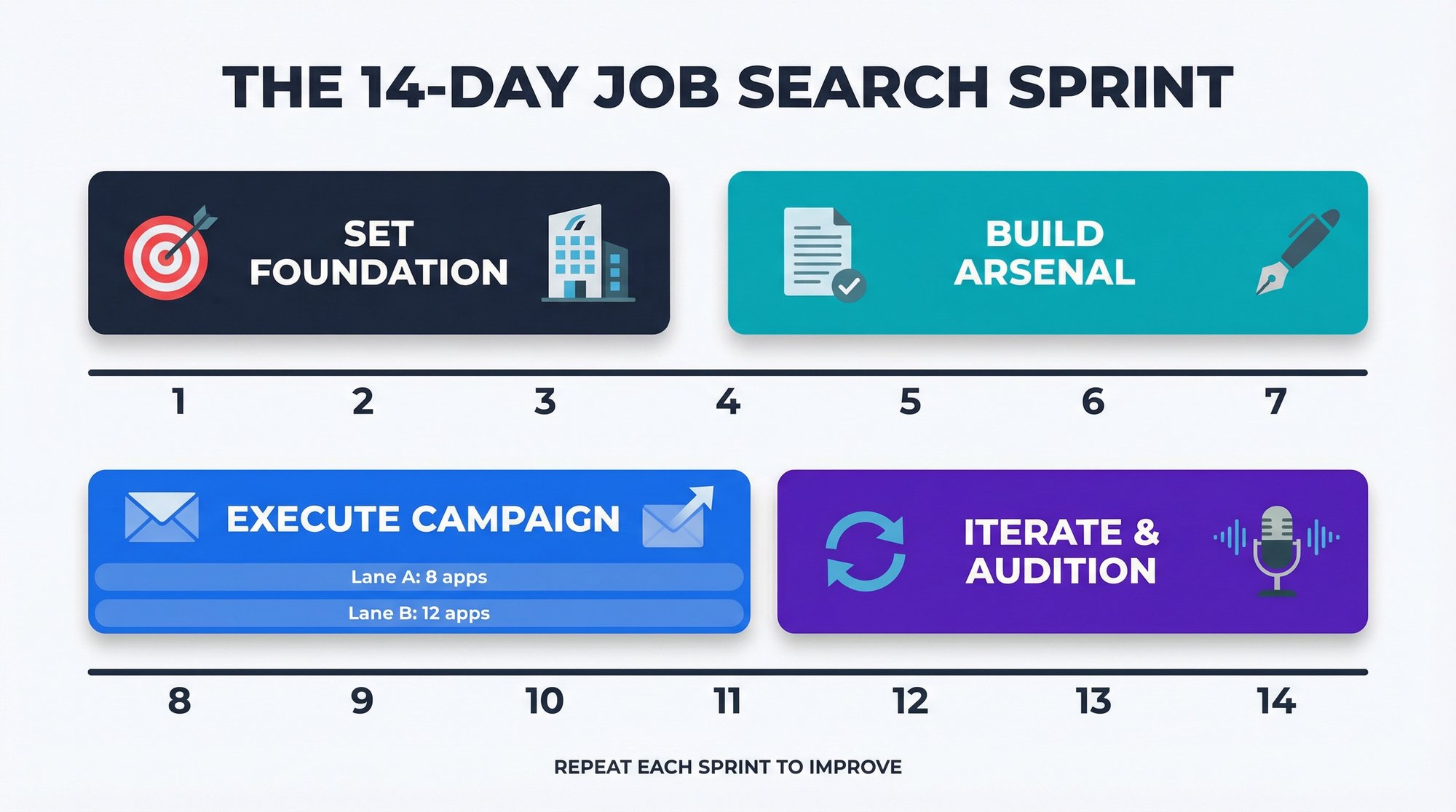
Days 1-2: Set Your Job Search Foundation
Pick your target role using the Target Role Filter
Draft your Proof Pack outline
Identify 25 target companies
Days 3-5: Build Your Job Application Arsenal
Create two work samples
Rewrite your resume bullets to match target role outcomes (use AIApply's Resume Builder to speed this up)
Draft one cover note template using AIApply's Cover Letter Builder
Days 6-10: Execute Your Application Campaign
Apply to 20 roles total:
8 Lane A applications (high-signal, with Proof Pack)
12 Lane B applications (solid quality, faster turnaround with Auto Apply)
Send Day 2 follow-ups for your first batch
Days 11-14: Add Micro-Auditions and Iterate
Complete 5 micro-auditions for your highest-priority roles
Keep applying (10 to 15 more)
Practice interviews daily for 30 minutes (use AIApply's Mock Interview tool)
Review your pipeline metrics and adjust using the job application tracker
What a Successful Sprint Actually Looks Like
A good sprint outcome is not "I got a job."
A good sprint outcome is:
Your response rate is improving compared to before
You booked at least one or two screening calls
You can see what's working and what isn't
Then you iterate. Adjust your resume, refine your Proof Pack, try different channels, and run another sprint. Each cycle gets tighter.
Common Questions About Getting a Job Without Connections
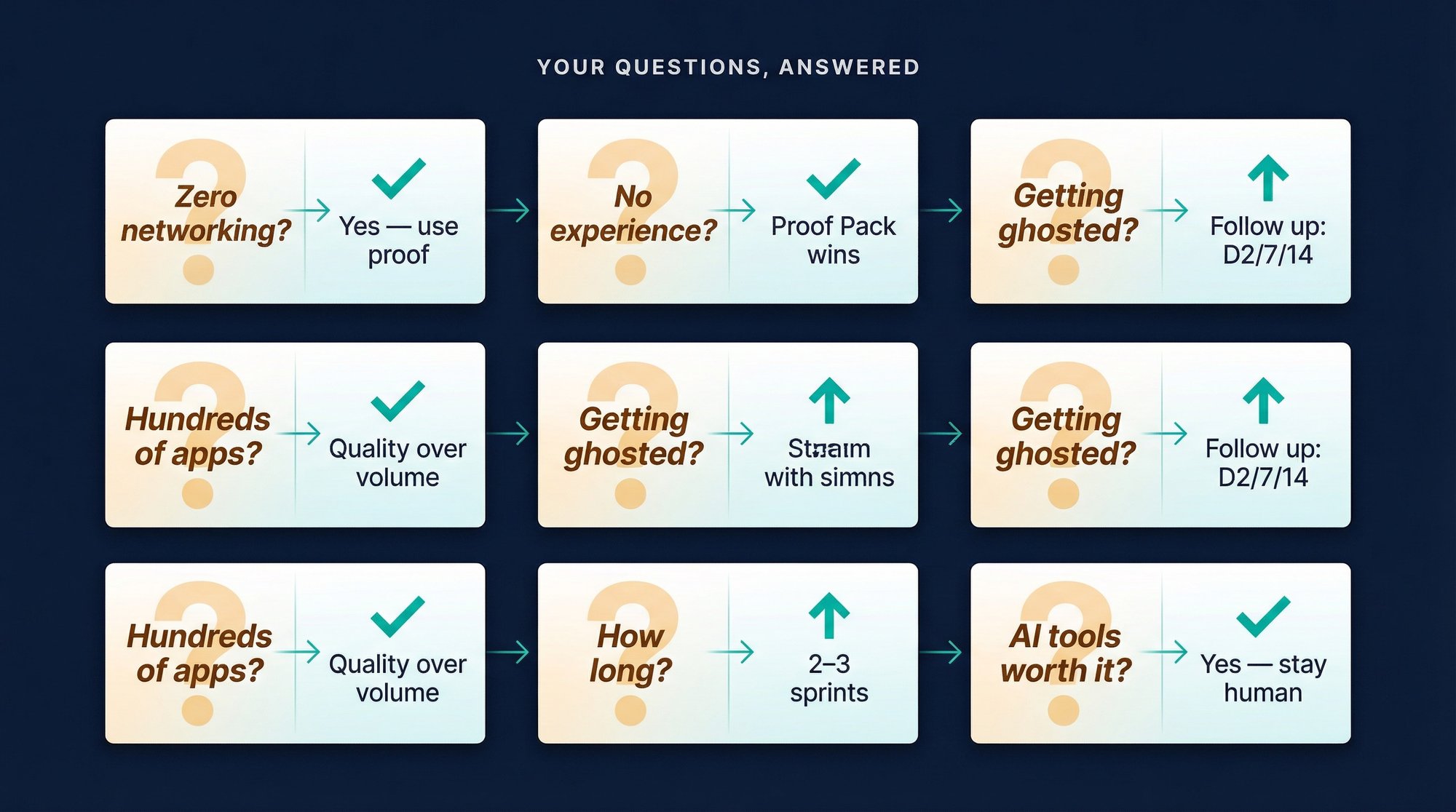
Can I really get hired with zero networking?
Yes. But you need to replace the advantage that connections provide (trust and reduced risk for the employer) with proof that you can do the work. Inbound applicants (people who apply directly) still drive the majority of hires. A Proof Pack, tailored resume, and strategic application approach can absolutely get you interviews without knowing anyone.
Should I apply to hundreds of jobs?
Only if you have a system that preserves quality. Mass-applying with generic materials is how people burn through months without results. The better approach is the two-lane strategy: a smaller number of high-touch, proof-backed applications for your top roles, combined with a faster volume approach for good-fit positions. AIApply's Auto Apply can help manage the volume lane while you focus your energy on high-signal applications.
Why do I keep getting ghosted after applying?
It's often a systemic issue, not a reflection of your worth. Companies receive far more applications than their communication systems are built to handle, and most candidates get little or no status update. Following up strategically (using the Day 2, Day 7, Day 14 sequence) significantly improves your chances of getting a response.
What if I have no experience at all?
Then your Proof Pack becomes even more critical. Projects, simulations, case studies, volunteering, and self-initiated work samples are how you manufacture experience into evidence. A student who builds a marketing campaign teardown for a real company shows more capability than a candidate with experience who sends a generic resume. AIApply offers specific tools for entry-level job seekers, including entry-level data analyst cover letter examples and entry-level business analyst cover letter examples that help you showcase transferable skills from coursework, volunteering, and personal projects. Students can also explore the AIApply Students hub for tailored resources. For role-specific resume help, see entry-level data analyst resume examples or entry-level business analyst resume examples.
How long will this take to work?
A single two-week sprint won't land most people a job, and anyone promising otherwise is overselling. But if you follow the system, you should see signals of progress within two to three sprints: higher response rates, screening calls, interview invitations. The average job search takes several months, but candidates who use a structured, proof-based approach compress that timeline significantly compared to those who spray and pray. Our users at AIApply consistently get hired faster when they use the full workflow.
Is it worth using AI tools for my job search?
Absolutely, as long as you use them the right way. AI is incredible for tailoring resumes quickly, generating draft cover letters you can personalize, running interview practice, and managing application volume. The trap is letting AI do all the thinking. Use it to handle repetitive formatting and optimization work so you can invest your time in strategy, proof-building, and the high-touch applications that actually get results. That's exactly what we built AIApply to do: handle the mechanics so you can focus on the strategy. Explore AI job search tools to see how candidates are using them effectively without losing their authentic voice.
Do I need a perfect resume to get interviews?
No, but you need a relevant one. A perfect resume with no relevance to the job loses to an imperfect resume that mirrors the role's outcomes. Focus on matching your bullets to the job description's priorities, using the Action + Scope + Result + Proof formula, and ensuring your formatting passes ATS filters. AIApply's Resume Scanner can check your resume's ATS compatibility for free before you submit. You can also compare your resume against role-specific resume examples for data analyst positions or resume examples for product manager roles to see what strong candidates include.
What's the single most effective thing I can do without connections?
Build and send a micro-audition. It's the closest thing to a referral because it creates costly, hard-to-fake proof that you understand the company's problems and can contribute from day one. Even a 30-minute effort on a targeted deliverable puts you ahead of the vast majority of applicants who send nothing but a resume.
Start Your Job Search Without Connections Today
Landing a job without connections isn't about luck or personality type. It's about building a system that replaces trust-through-people with trust-through-proof. Pick your target, build your Proof Pack, craft an ATS-ready resume, apply through multiple channels, and follow up strategically. Run it as a sprint. Track your numbers. Iterate.
You don't need to know anyone. You need to prove you can do the work, and then get that proof in front of the right people.

If you want to move faster, AIApply brings all of these pieces together in one place:
Our AI Resume Builder handles ATS optimization
The Cover Letter Builder generates tailored cover notes
Auto Apply manages your volume applications across a vast pool of live job postings
The Mock Interview Simulator helps you sharpen your story bank before the real thing
Users who run the full AIApply workflow consistently land interviews faster than those applying without a structured system.
Start your first sprint today.
If you've been searching for how to get a job with no connections or networking, you're probably dealing with one of these situations:
"I keep applying online and nobody replies."
"I'm new to this country or industry and I literally don't know anyone."
"I'm introverted and the usual networking advice feels fake."
"I don't have the 'right' background, so referrals feel like a locked door."
This guide is for exactly that. We built it assuming you have zero insider access and you want a system that actually produces interviews. Not vague advice about "putting yourself out there." A real, repeatable process.
The core idea is simple: if you can't rely on trust through people, you replace it with trust through proof. That's the whole game. And by the end of this post, you'll know how to play it.
Why You Don't Need Connections to Get a Job
Referrals work so well for a reason that rarely gets stated plainly.
It's not because referred candidates are always better. It's because hiring is fundamentally about reducing risk with incomplete information, under time pressure. A hiring manager is making a bet on someone they barely know. When a current employee says "I'd stake my reputation on this person," that's a powerful uncertainty reducer.
But it's not the only uncertainty reducer.
Large-scale hiring data (covering tens of millions of applications across hundreds of thousands of jobs) consistently shows the same pattern:
The vast majority of applications come from inbound applicants (people who apply directly), while referrals make up a small fraction of the total volume
Referred candidates convert at much higher rates per person, with a significantly larger share reaching interview and offer stages
Inbound offer rates have dropped materially over the last several years as competition has increased
That sounds grim. Until you notice the most important line in the data: inbound applicants are still the dominant source of hires. Referrals convert better per person, but the sheer volume of inbound hiring dwarfs referral hiring.
So the question isn't whether you can get hired without connections. You can. The question is how to become a high-signal inbound candidate instead of a forgettable one.
The real challenge in 2026: Hiring platform metrics show the number of applications per open role has more than tripled over the last four years. More than one in five candidates now use automated tools to apply at scale, and a significant share have admitted to using AI to generate fake work samples. Hiring has become a trust problem.
If your plan is "submit another generic resume," you're competing in the noisiest channel on earth. This guide is how you get out of that trap. Learning how to get hired fast starts with understanding that the game has changed. Knowing exactly how to play it differently is the whole point.
How to Pick the Right Jobs to Apply for Without Connections
The biggest hidden mistake people without connections make? They apply to roles they could do, not roles they can prove.
When you have no network vouching for you, proof matters more. So you need a target that allows proof.
6 Questions to Find the Right Job to Apply For
Choose a role where you can honestly answer "yes" to at least four of these six questions:
I can show two relevant work samples within seven days
I can write five quantified resume bullets that match the job's outcomes
The role's requirements are about skills and outputs (not pure pedigree)
The company hires in a structured way (clear process, clear rubric)
The role has many employers (so one rejection doesn't kill your search)
I can do a small project that mirrors the job and publish it
If you can't show proof quickly, you're choosing a role where networking typically does the heavy lifting. That doesn't mean you can't pursue it, but it does mean you'll want to combine your approach with the "micro-audition" method we'll cover later.
How Competitive Is the Job Market Right Now?
UK ONS data reported 734,000 vacancies in October to December 2025 (down 8.6% year-on-year) with 2.5 unemployed people per vacancy, up from 1.9 a year earlier.
The math is clear: spray-and-pray is punished harder now than at any point in recent memory. Targeting isn't just helpful. It's necessary. A solid job search strategy starts with knowing exactly what you're going after and why you're the right person for it.
How to Build a Proof Pack That Replaces Your Network
Your Proof Pack is what substitutes for connections. It's the thing that makes a hiring manager think: "Even if I don't know them, I can see they can do the work."
Think of it as a portable reputation. One link or one PDF that contains everything someone needs to take you seriously. Learning how to create a professional portfolio is one of the highest-impact moves you can make when you have no network to lean on.
What Should Your Proof Pack Include?
A one-paragraph positioning statement: "I do X for Y using Z." Short. Specific. No fluff.
Two work samples (or case studies) that show relevant skills in action
Three quantified outcomes with numbers, before/after comparisons, or scope descriptions
One "how I work" section covering tools, process, and communication rhythm
Optional: A short testimonial or reference quote (even from a class project or freelance client)
This isn't "personal branding." It's risk reduction. You're giving someone the evidence they'd normally get from a referral.
Proof Pack Examples for Every Job Type
Not sure what skills you need to build for a target role? Check out the skills breakdown for marketing analyst roles, customer service positions, and sales roles to understand exactly what hiring managers want to see.
Why You Should Never Fake Your Work Samples
Worth stating plainly: because of the AI flood we mentioned earlier, a growing share of applicants have admitted to using AI to generate fake work samples and portfolios (and hiring managers are getting noticeably more skeptical as a result).
Don't do this. It surfaces eventually (during interviews, on the job, through reference checks) and it can burn your reputation permanently. Use AI to polish, structure, and explain your real work. Not to invent work you didn't do. Our tools at AIApply are built exactly for this: helping you present your genuine experience in the strongest possible way, not fabricating experience you don't have.
How to Write an ATS-Friendly Resume That Sounds Human
Most people treat their resume like a biography. Employers treat it like a search query combined with a risk scan.
What this means for you: Your first reader is often software. Whether you like it or not, every major enterprise and the overwhelming majority of mid-market employers now use an Applicant Tracking System. Understanding what an ATS does is essential before you send a single application.
What Is ATS and Why Does It Matter?
The right ATS-friendly resume templates can make a massive difference in whether you get through automated filters. It's standard practice across the Fortune 500 and has been for years.
Resume Formatting Rules That Pass ATS Filters
Do this:
Use a single-column layout (ATS parsing handles these best)
Stick with standard headings: "Experience," "Education," "Skills"
Keep dates in a consistent format
Use simple fonts and normal bullet points
Include keywords that describe the job's outcomes, not every buzzword you can think of
Avoid this:
Tables, text boxes, or heavy multi-column layouts
Fancy icons and decorative graphics
Headers and footers that hide key information
Keyword stuffing (it reads like spam and modern ATS can detect it)
For a deeper breakdown of what formatting passes ATS filters and what gets flagged, check out effective resume formats alongside those ATS templates.
How to Write Resume Bullets That Get Noticed
Hiring managers hire you to deliver outcomes. Job descriptions are just outcomes disguised as responsibilities. So you rewrite your bullets to mirror those outcomes.
Use this formula: Action + Scope + Result + Proof
For example, here is how a weak bullet becomes a strong one using this format:
Before: "Responsible for reporting"
After: "Automated monthly KPI reporting for all key stakeholders, cutting turnaround significantly using SQL and Looker."
Before: "Managed email campaigns"
After: "Redesigned onboarding emails and improved activation through A/B testing (wrote copy, set up tests, and analyzed results)."
The specificity is the proof. Those two bullets read completely differently, and that difference is what gets you noticed. For more examples and templates, check out these resume bullet point examples and resume optimization techniques that use the same outcome-first framework.
Using AIApply to Build an ATS-Ready Resume Faster
AIApply's Resume Builder is designed specifically for ATS-friendly formatting and job-description matching. If you want to move faster without sacrificing quality, a solid workflow looks like this:
Import your current resume
Generate a version tailored for the target role
Rewrite bullets using your Proof Pack content (so everything stays truthful)
Run an ATS check before submitting
You're not handing control to AI. You're using it to handle the formatting and optimization work so you can focus on strategy. Before you start, see how to tailor your resume to the job description for maximum keyword match without stuffing.
Why Applying Through Multiple Channels Gets You More Interviews
Most people without connections are stuck in a single channel: job boards. That's like trying to win a game by only taking the hardest shot every time.
5 Job Search Channels You Should Be Using Right Now
You want applications flowing through multiple channels simultaneously:
Company career site applications (direct is often less competitive than third-party boards)
Niche job boards specific to your industry (they're less flooded than the big aggregators)
Recruiting agencies (these are essentially someone else's network working on your behalf)
Structured programs like apprenticeships, rotational schemes, graduate programs, and returnships
Direct-to-team applications using your Proof Pack (we'll cover this in the micro-audition section)
If one channel is flooded, the others often aren't. Diversification is your hedge against the noise. Understanding how to apply for jobs online effectively, across multiple channels at once, is what separates candidates who land interviews from those who keep getting silence. The best way to apply for jobs in a competitive market isn't working harder in one channel, it's working smarter across all of them.
How to Track Your Job Applications Like a Pipeline
You don't need motivation. You need math.
Track these numbers every week:
→ Applications sent
→ Replies received
→ Screens booked
→ Interviews completed
→ Offers received
Your job is to increase conversion at each stage. If you're getting applications out but no replies, your resume or targeting needs work. If you're getting screens but no interviews, your phone presence needs polishing.
AIApply has a free Job Search Tracker that lets you log applications and monitor response rates. You can also explore job search tracking methods that help you analyze what's working. If you track nothing, you can't improve anything.
How to Stand Out as a High-Signal Candidate
In 2026, the default applicant looks like this: auto-generated resume, generic cover letter, no work samples, no clear reason for applying, and no follow-up.
Recruiters are absolutely drowning in that pattern.
Your goal is to create a "trust spike" inside 30 seconds of someone opening your application.
What a Strong Job Application Actually Looks Like
Part 1: A resume tailored to outcomes (not a biography, but a relevance document)
Part 2: A short cover note that proves fit (not a story about your childhood dreams)
Part 3: Your Proof Pack link (the thing that makes you feel "safe to hire")
How to Write a Cover Letter That Actually Gets Read
Don't write a story. Write a claim plus evidence.
Hi [Name],I'm applying for [Role]. Based on the job description, it looks likesuccess is mainly about:1) [Outcome A]2) [Outcome B]3) [Outcome C]Here's proof I can deliver those:- [Proof bullet 1 with number]- [Proof bullet 2 with number]- [Proof bullet 3 with number]Work samples: [link]If helpful, I can walk you through a 10-minute breakdown of [relevantwork sample] and how I'd apply it to [company/project].Thanks,[Name]That's it. No multi-paragraph origin story. Just: here's what you need, here's proof I can deliver it, here's where to see my work. See what to include in a cover letter and cover letter format examples if you want to see this pattern applied across different industries. For role-specific templates, browse the full cover letter examples library.
How to Balance Quality Applications With Volume
This is important: you don't want to do only high-touch applications, and you don't want to do only volume applications.
If you do only Lane A, your volume is too low. If you do only Lane B, you become part of the noise. The combination is what wins.
AIApply's Cover Letter Builder handles the Lane B cover notes quickly so your writing time goes toward your Lane A applications. And Auto Apply can manage high-volume submissions while you focus your energy on the roles that matter most. If you're wondering how many applications you need to send to get a job, the answer depends heavily on whether you're using the two-lane system. Volume alone without quality rarely works.
How to Follow Up on a Job Application Without Being Annoying
Most people think follow-ups are annoying. But the reality of modern hiring is that the majority of applicants never get meaningful status updates, and most end up losing trust in the hiring process as a result.
So when you don't follow up, you're betting on a perfect system. That's not a smart bet.
A Job Application Follow-Up Email Sequence That Works
Day 2 after applying:
Subject: Quick question on [Role] applicationHi [Name],I applied for [Role] on [date]. I wanted to share one relevant worksample that matches what you listed around [outcome].[One sentence describing proof + link]If the role is still active, happy to answer any questions.Thanks,[Name]Day 7:
Subject: Following up on [Role]Hi [Name],Just checking in on the [Role]. If it helps, here are 3 outcomesI've delivered that match the posting:- [bullet]- [bullet]- [bullet]Either way, thanks for your time.[Name]Day 14:
Subject: Closing the loop on [Role]Hi [Name],Last note from me. If the position is filled or paused, no worries.If you're still hiring, I'd love to be considered and can shareadditional work samples for [specific project].Thanks again,[Name]Notice the pattern: each follow-up adds value (a work sample, proof bullets, an offer to share more). You're not just pinging them with "any update?" You're reinforcing why you're worth talking to.
For word-for-word templates you can copy, see these follow-up email after application samples, a complete job application follow-up email example, and guidance on when to follow up on a job application so your timing is always right.
How to Use Micro-Auditions to Get Hired Without a Referral
This is the power move. And it doesn't require knowing anyone.
Instead of trying to talk your way into a job, you show your way in. You do a small piece of the actual job and send it to the hiring manager.
Micro-Audition Examples for Different Job Roles
Marketing: A one-page ad and landing page teardown for their actual product
Data: A short data exploration or visual built from a public dataset related to their market
Product: A feature critique plus a spec for improvement
Sales: A territory plan plus a sample outreach sequence
Ops: A process map showing three bottlenecks and proposed fixes
Then you send it directly to the hiring manager or team lead. Knowing how to send a message to a hiring manager, and how to attract job recruiters with your outreach, can make the difference between your micro-audition landing in the right inbox and disappearing into a black hole.
Subject: I built a quick [deliverable] for your [Role] openingHi [Name],I'm applying for [Role]. I noticed [company] is focused on [thingfrom job post or website].I put together a short [deliverable] showing:- [insight 1]- [insight 2]- [idea 3]Link: [Proof Pack link]If it's useful, I'd love to walk you through it in 10 minutes.Either way, thanks for building [company/product].[Name]Why Micro-Auditions Work Better Than a Referral
It works because it creates costly proof. AI spam is cheap. A tailored micro-audition that shows you actually understand their business? That's expensive to fake. And hiring managers notice.
Even if they don't hire you for this role, micro-auditions often get you:
Genuine feedback on your work
A referral to another team or opening
A "let's keep in touch" for the next position
And none of that required networking. It required doing good work and putting it in front of the right person.
How to Prepare for Interviews When You Have No Inside Connections
By the time you reach interviews, your goal shifts. During the resume stage, you're saying "I might be able to do it." During the interview stage, you're saying "I have done it, and here's exactly how."
How to Build a Story Bank for Behavioral Interviews
Prepare eight stories before your first interview:
2 stories about solving a hard problem
2 stories about improving a metric or outcome
2 stories about handling conflict or ambiguity
1 story about a failure and what you learned
1 story about leading without formal authority
Write each one in STAR format (Situation, Task, Action, Result) so you can deliver them cleanly under pressure. See these behavioral interview questions and answers and learn how to prepare for behavioral interviews with stories that stick.
Why Skills-First Hiring Helps Candidates With No Network
Good news for candidates without connections: Skills-first hiring is a growing priority across the talent acquisition industry. The ability to demonstrate competence directly (through work samples, structured tests, and clear outcomes) has become increasingly valued over pedigree and connections alone.
This is good news if you don't have connections. Skills-first hiring means your Proof Pack, your story bank, and your ability to demonstrate competence matter more than who you know. The modern job search techniques that work best today are all built around demonstrating capability, not credentials or connections.
How to Use AI Mock Interviews to Prepare for the Real Thing
AIApply's Mock Interview Simulator lets you paste a job description and run through realistic practice rounds. It generates tailored questions based on the actual role, gives you instant feedback, and helps you refine your STAR stories until they're sharp. For targeted prep, also see this guide to AI interview prep and how to use interview practice online effectively.
For live interviews, AIApply also offers an Interview Answer Buddy Chrome extension that provides real-time coaching. A quick note on ethics here: use it to perform at your real level, not to misrepresent yourself. Follow the employer's rules on interview tools, and focus on building genuine confidence through practice.
A 14-Day Sprint Plan to Get Your First Interviews
Stop thinking of your job search as an indefinite grind. Think of it as a series of two-week sprints you can repeat and improve.
Days 1-2: Set Your Job Search Foundation
Pick your target role using the Target Role Filter
Draft your Proof Pack outline
Identify 25 target companies
Days 3-5: Build Your Job Application Arsenal
Create two work samples
Rewrite your resume bullets to match target role outcomes (use AIApply's Resume Builder to speed this up)
Draft one cover note template using AIApply's Cover Letter Builder
Days 6-10: Execute Your Application Campaign
Apply to 20 roles total:
8 Lane A applications (high-signal, with Proof Pack)
12 Lane B applications (solid quality, faster turnaround with Auto Apply)
Send Day 2 follow-ups for your first batch
Days 11-14: Add Micro-Auditions and Iterate
Complete 5 micro-auditions for your highest-priority roles
Keep applying (10 to 15 more)
Practice interviews daily for 30 minutes (use AIApply's Mock Interview tool)
Review your pipeline metrics and adjust using the job application tracker
What a Successful Sprint Actually Looks Like
A good sprint outcome is not "I got a job."
A good sprint outcome is:
Your response rate is improving compared to before
You booked at least one or two screening calls
You can see what's working and what isn't
Then you iterate. Adjust your resume, refine your Proof Pack, try different channels, and run another sprint. Each cycle gets tighter.
Common Questions About Getting a Job Without Connections
Can I really get hired with zero networking?
Yes. But you need to replace the advantage that connections provide (trust and reduced risk for the employer) with proof that you can do the work. Inbound applicants (people who apply directly) still drive the majority of hires. A Proof Pack, tailored resume, and strategic application approach can absolutely get you interviews without knowing anyone.
Should I apply to hundreds of jobs?
Only if you have a system that preserves quality. Mass-applying with generic materials is how people burn through months without results. The better approach is the two-lane strategy: a smaller number of high-touch, proof-backed applications for your top roles, combined with a faster volume approach for good-fit positions. AIApply's Auto Apply can help manage the volume lane while you focus your energy on high-signal applications.
Why do I keep getting ghosted after applying?
It's often a systemic issue, not a reflection of your worth. Companies receive far more applications than their communication systems are built to handle, and most candidates get little or no status update. Following up strategically (using the Day 2, Day 7, Day 14 sequence) significantly improves your chances of getting a response.
What if I have no experience at all?
Then your Proof Pack becomes even more critical. Projects, simulations, case studies, volunteering, and self-initiated work samples are how you manufacture experience into evidence. A student who builds a marketing campaign teardown for a real company shows more capability than a candidate with experience who sends a generic resume. AIApply offers specific tools for entry-level job seekers, including entry-level data analyst cover letter examples and entry-level business analyst cover letter examples that help you showcase transferable skills from coursework, volunteering, and personal projects. Students can also explore the AIApply Students hub for tailored resources. For role-specific resume help, see entry-level data analyst resume examples or entry-level business analyst resume examples.
How long will this take to work?
A single two-week sprint won't land most people a job, and anyone promising otherwise is overselling. But if you follow the system, you should see signals of progress within two to three sprints: higher response rates, screening calls, interview invitations. The average job search takes several months, but candidates who use a structured, proof-based approach compress that timeline significantly compared to those who spray and pray. Our users at AIApply consistently get hired faster when they use the full workflow.
Is it worth using AI tools for my job search?
Absolutely, as long as you use them the right way. AI is incredible for tailoring resumes quickly, generating draft cover letters you can personalize, running interview practice, and managing application volume. The trap is letting AI do all the thinking. Use it to handle repetitive formatting and optimization work so you can invest your time in strategy, proof-building, and the high-touch applications that actually get results. That's exactly what we built AIApply to do: handle the mechanics so you can focus on the strategy. Explore AI job search tools to see how candidates are using them effectively without losing their authentic voice.
Do I need a perfect resume to get interviews?
No, but you need a relevant one. A perfect resume with no relevance to the job loses to an imperfect resume that mirrors the role's outcomes. Focus on matching your bullets to the job description's priorities, using the Action + Scope + Result + Proof formula, and ensuring your formatting passes ATS filters. AIApply's Resume Scanner can check your resume's ATS compatibility for free before you submit. You can also compare your resume against role-specific resume examples for data analyst positions or resume examples for product manager roles to see what strong candidates include.
What's the single most effective thing I can do without connections?
Build and send a micro-audition. It's the closest thing to a referral because it creates costly, hard-to-fake proof that you understand the company's problems and can contribute from day one. Even a 30-minute effort on a targeted deliverable puts you ahead of the vast majority of applicants who send nothing but a resume.
Start Your Job Search Without Connections Today
Landing a job without connections isn't about luck or personality type. It's about building a system that replaces trust-through-people with trust-through-proof. Pick your target, build your Proof Pack, craft an ATS-ready resume, apply through multiple channels, and follow up strategically. Run it as a sprint. Track your numbers. Iterate.
You don't need to know anyone. You need to prove you can do the work, and then get that proof in front of the right people.
If you want to move faster, AIApply brings all of these pieces together in one place:
Our AI Resume Builder handles ATS optimization
The Cover Letter Builder generates tailored cover notes
Auto Apply manages your volume applications across a vast pool of live job postings
The Mock Interview Simulator helps you sharpen your story bank before the real thing
Users who run the full AIApply workflow consistently land interviews faster than those applying without a structured system.
Start your first sprint today.
.webp)
.webp)
Don't miss out on
your next opportunity.
Create and send applications in seconds, not hours.


