
Best Time of Year to Apply for Jobs in 2026

%20(1).webp)
There's no magic month that guarantees you'll land interviews. If anyone tells you otherwise, they're selling you a fantasy.
But there are predictable hiring patterns that repeat every single year. And if you understand those patterns, you can time your job search to maximize your odds instead of leaving everything to chance.
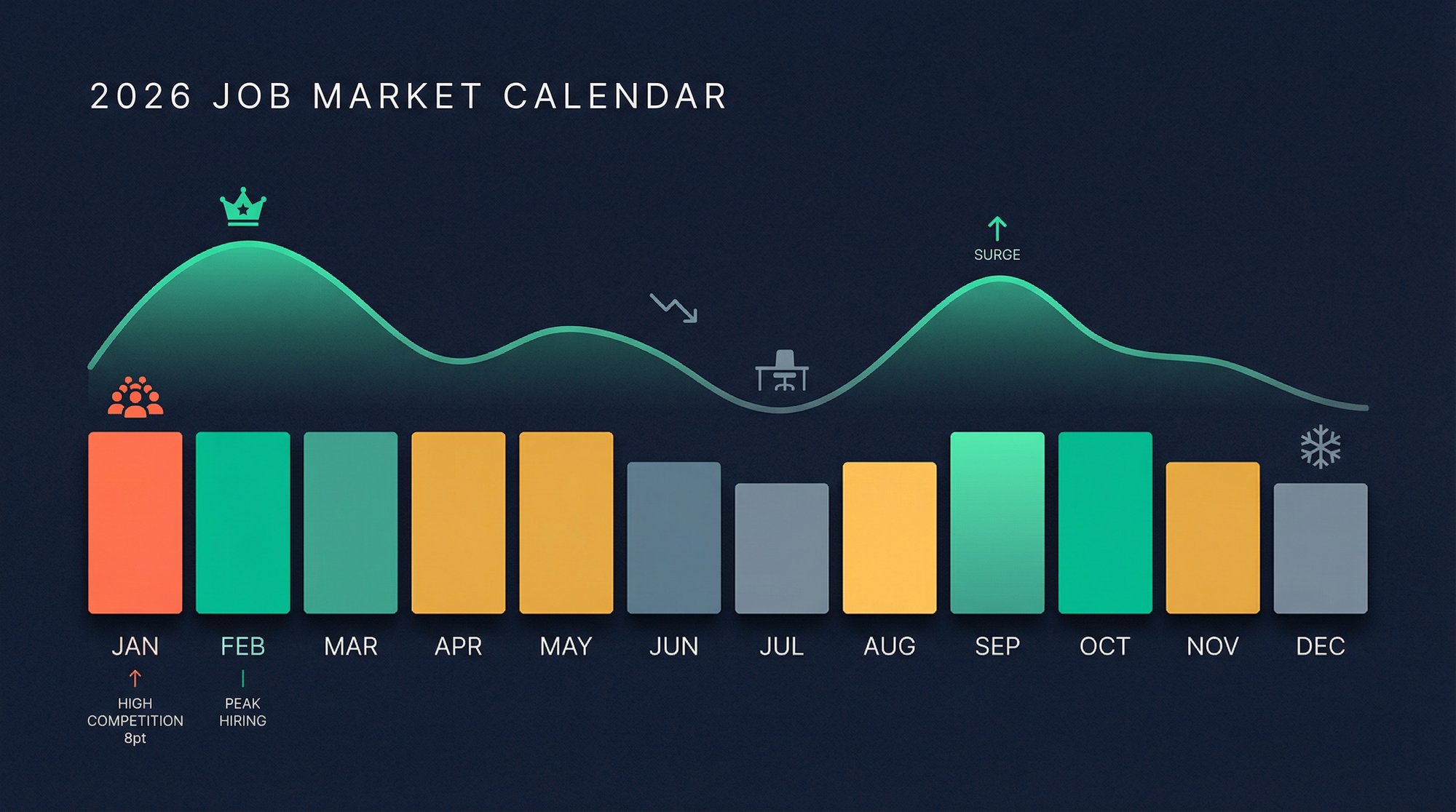
The short version? January through early March and September through October are the strongest windows for most roles. Research describes February as a peak hiring period, and September and October as consistently strong across industries. Mid-December tends to be the worst time, with budgets stalling and decision-makers checked out for the holidays.
But that short version skips something important. In 2026, the hiring landscape has shifted. January is still a big month, but it's crowded. Indeed Hiring Lab reported that job searches spiked up to 31% higher in January 2026 compared to early December 2025, while job postings didn't rise to match. More people chasing the same number of openings.
So timing matters, but how you show up during those windows matters just as much.
This guide breaks down the full 2026 hiring calendar month by month, covers role-specific timing for students, grads, and seasonal workers, and gives you a practical execution plan so you're not just applying at the right time, you're applying the right way.
Why Seasonal Hiring Patterns Exist
Hiring looks seasonal for the same reason rush-hour traffic exists: people and systems move in cycles.
A company decides to hire when three conditions line up at the same time:
Budget exists. Headcount is approved, the team has money to spend.
Need exists. There are projects to staff, growth targets to hit, or someone just quit.
Decision-makers are available. Managers, HR, and interview panels are actually in the office and able to move things forward.
On the candidate side, there's a separate cycle: when large numbers of people start actively searching and applying. New Year's resolutions push job seekers into action every January. Summer vacations pull them away. Back-to-school energy in September brings everyone back.
Seasonality happens when these two cycles, employer readiness and candidate activity, sync up or fall out of step.
A simple way to think about your odds at any given moment:
Your chances = Hiring demand / Competition / Process friction
Demand rises in early-year and early-fall. Competition spikes in those exact same windows (especially January). Process friction gets bad around holidays and summer vacations, when decision-makers disappear.
The sweet spot? Periods when demand is climbing faster than competition, and the hiring process is actually moving.
What the 2026 Job Market Looks Like Right Now
Seasonality always matters, but it matters more when the market is cooler. In a red-hot hiring market, companies scramble to fill roles as fast as possible and timing barely matters. In a slower market, companies can afford to be picky, time-to-hire stretches, and getting your timing right becomes a real competitive advantage.
Where things stand in early 2026:
The figures above come directly from the LinkedIn Economic Graph's February 2026 Workforce Report, one of the most authoritative real-time hiring datasets available.

What this means for you, practically: Timing alone won't save you in 2026. Quality and speed matter more than they did in hotter markets. You need a system that lets you apply early, tailor your materials correctly, and maintain momentum across weeks or months. Showing up at the right time with a generic resume isn't going to cut it when employers have their pick of candidates. AIApply is built exactly for this challenge, helping you apply faster, smarter, and with better-tailored materials.

The 2026 Hiring Calendar: What to Do Each Month
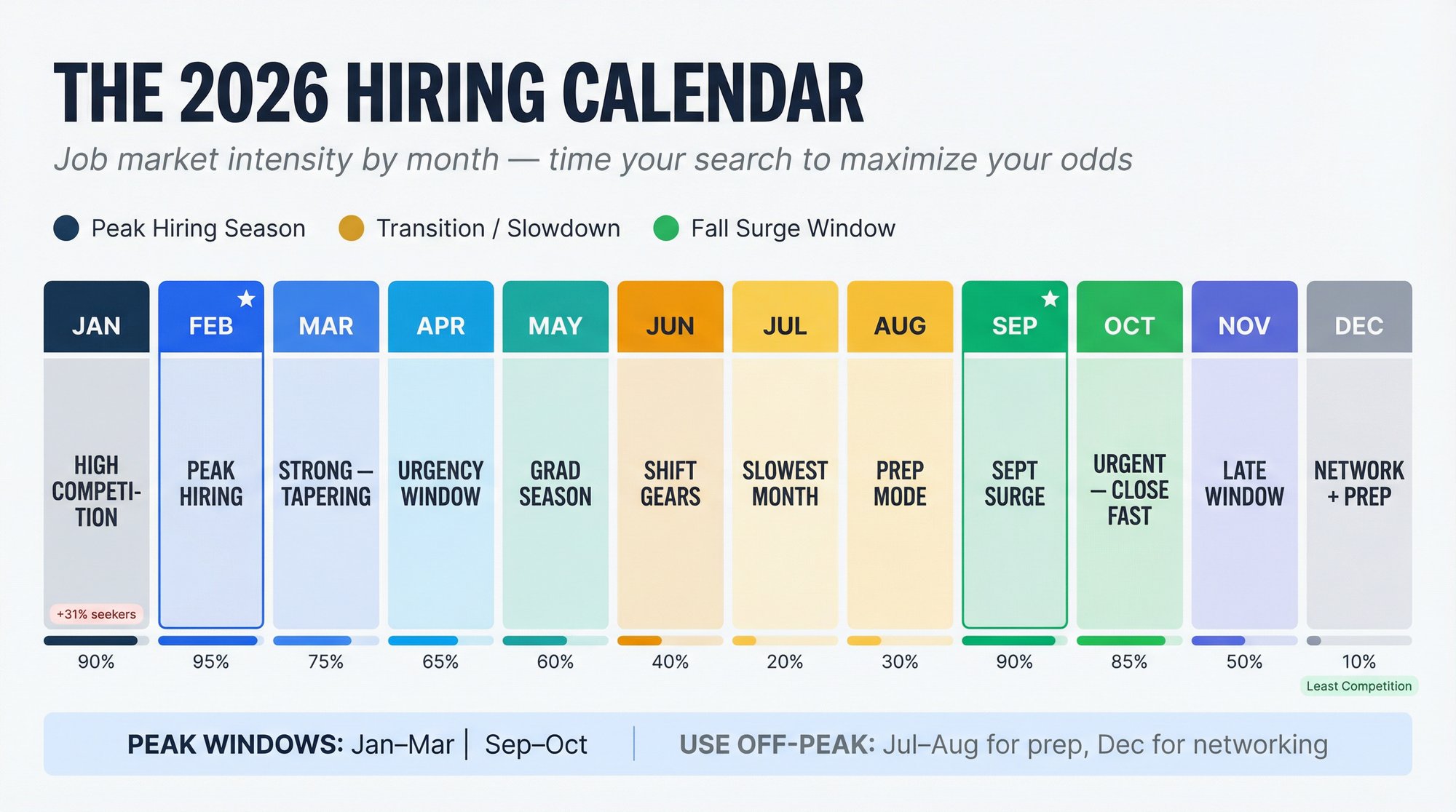
This is the practical month-by-month calendar you can actually follow. Think of it as a strong default based on typical hiring patterns, then adjust it using the role-specific and regional guidance later in this post.
January: The Most Competitive Month to Apply
High opportunity, high competition.
Companies come back from the holidays and start posting roles again, though the first couple of weeks can still be sluggish as people ease back in. This is when the hiring engine restarts.
The 2026 twist? Job seeker activity spikes hard. Indeed Hiring Lab found that searches jumped up to 31% higher in January 2026 versus early December, while postings didn't climb at the same rate. That means more people competing for roughly the same number of roles.
How to win January:
→ Apply early in the month, but expect responses to lag a bit
→ Prioritize roles posted within the last week (fresh listings tend to be less crowded)
→ Have your resume versions ready to go so you're not rewriting from scratch every time
February: When Hiring Activity Peaks
February is one of the strongest hiring months. Those January postings are turning into interviews. Recruiters are actively screening, and hiring managers are making decisions.
Treat February as your maximum-output month. Follow up on anything you applied to in January, and expect recruiter screens and first-round interviews to land in your inbox.
Sending a strong follow-up email can set you apart from the crowd when everyone's competing in the same window.
March: How to Win Before Spring Slowdowns
Many positions are still open from early-year hiring pushes. The momentum is still there, but it starts to taper.
How to win March:
① Keep applying, but also invest in the human channel: referrals, hiring manager outreach, alumni introductions
② If you haven't gotten traction yet, revisit your resume and cover letter strategy before the spring
③ Consider running your resume through AIApply's AI Resume Checker to catch any gaps before you keep sending
April and May: Why Unfilled Roles Create Opportunities
April can create urgency when roles posted earlier remain unfilled. May is often strong because of university graduations flooding the entry-level market. These are two distinct dynamics working in your favor at once.
How to win April and May:
Re-apply or re-engage roles that have been open for a while (hiring teams may be more motivated to close quickly)
If you're an entry-level candidate or recent grad, this is a sweet spot. Check out entry-level data analyst and entry-level business analyst career pages for roles opening in this window
Pair your applications with strong tailored cover letters using AIApply's AI Cover Letter Generator
June: Shifting Your Strategy for the Summer Slowdown
June can start showing fewer new opportunities after a strong first half, with some employers tightening budgets. This isn't the time to go quiet, but it is time to shift gears.
Focus on fewer, higher-fit applications rather than volume. Use the downtime for portfolio work, certifications, or networking that'll pay off when September hits. This is also a great time to build out a stronger profile. Learn what skills matter most for the roles you're targeting.
Think of June as your maintenance mode. Keep the engine warm, but don't burn out sprinting for a finish line that's moved.
July: Why You Should Still Apply During the Slowest Month
July is traditionally slow, mostly because vacations pull decision-makers out of the office and interview panels can't convene.
The contrarian play: Apply anyway. There's less competition, and certain types of companies still operate normally: smaller firms, global teams, operations-heavy roles.
How to win July:
Apply, but set expectations for slower replies
Target teams that don't shut down for summer
Use July to set up warm introductions for your September push
Polish your resume with an AI editor so your materials are sharp and ready when activity picks back up
August: How to Prepare for the September Hiring Surge
August is a turning point. New postings start appearing as companies gear up for fall, but decisions still move slowly.
This is a preparation month. Treat it that way.
→ Build your pipeline: save roles, prep resume versions, line up referrals
→ Get your resume and LinkedIn profile polished so you can hit September running
→ Run your resume through AIApply's Resume Scanner to spot ATS issues before the hiring surge begins
September: The Second Peak Hiring Window of the Year
This is the other peak. Research describes September as a "renewed vigor" period after the summer slowdown, with a clear post-summer uptick in both hiring activity and candidate engagement that many call the "September Surge."
How to win September:
① Apply hard from the first week. Don't wait for mid-month
② Expect faster hiring cycles than January, because teams want positions filled before year-end
③ If you're job searching while employed, September is often easier emotionally too, because routines return and it feels like a natural time for change
④ Scale your applications with AIApply's Auto Apply tool to submit tailored applications at volume while keeping your top-priority roles in focus
October: The Final Strong Hiring Window Before Year-End
October carries urgency. Hiring managers want to fill remaining roles before the holiday season and before budgets reset.
Things move quickly in October. Look for "urgent" signals: recently posted roles, recruiters actively reaching out, multiple interview slots available. Make your follow-ups tighter and faster.
Use AIApply's Interview Buddy to prepare for the rapid-fire interview cadence that October typically brings.
November: Which Roles to Target in the Late Fall Market
Some companies slow down after the fall rush. But November can be sneaky-good for certain industries and roles that need to close before budgets reset at year-end.
Expect fewer brand-new openings, but keep an eye on roles that have been open for a while. If you interview in November, push to close before holiday calendars explode. Scheduling gets brutal in December. Practice your interview responses with AIApply's AI Mock Interview tool so you're ready for compressed timelines.
December: Why the Slowest Month Is Still Worth Your Time
December is traditionally the worst month for hiring. Many companies are waiting on new budgets, and people are out of office.
But December isn't wasted time. Use it for:
Networking. End-of-year events, holiday parties, and catch-up coffees are perfect excuses to reconnect
Document upgrades. Rewrite your resume with AIApply's AI Resume Builder, update your portfolio, overhaul your LinkedIn
Building your January target list. Research companies, bookmark roles, identify hiring managers
Sharpening your cover letters. Use AIApply's AI Cover Letter Generator to get role-specific drafts ready for your January sprint
And if you spot a company that's still actively interviewing in December? Apply. The competition is at its absolute lowest.
Best Time to Apply for Jobs by Role and Career Stage
Most timing guides give you one blanket answer and call it a day. That's a mistake. The best time of year to apply for jobs shifts dramatically depending on what kind of role you're after.

When to Apply for Graduate Schemes in the UK
Most formal graduate programmes open for applications in September or October, with many graduates starting the following September or October.
Some fields move even faster. Investment banking graduate scheme applications can open in August and close as early as October. Many employers set firm deadlines in November and December, and missing those deadlines means waiting an entire year.
If you're a student or recent grad, your best time might be August through October, not January.
AIApply has a dedicated students page built specifically for this timing challenge, including tools to help you tailor applications to competitive graduate programmes. You can also browse graduate resume examples and entry-level cover letter examples to see what competitive applications look like.
Best Time to Apply for Internships
Research shows that September and January are the peak months for internship postings.
The timing changes by employer size:
Smaller employers tend to distribute their internship postings more evenly and can extend recruiting later into spring.
If you want internships at large companies, start earlier than you think. If you're open to smaller firms, you've got more runway.
For internship applications, having polished, role-specific materials makes an enormous difference. Check out cover letter examples for roles like data analyst or front-end developer to model your applications on real examples.
When to Apply for Seasonal Jobs in Retail and Logistics
Seasonal job posting data shows that hiring historically starts ramping up in September and peaks in November.
September: Early wave of postings
October: Heavy wave
November: Peak volume, but also peak competition and time pressure
For seasonal retail and logistics roles, speed of application matters enormously. AIApply's Auto Apply lets you submit tailored applications quickly across multiple postings without sacrificing quality on your strongest fits.
Best Time to Apply for Jobs in India and Festival-Season Markets
In markets like India, hiring patterns shift around major holiday periods rather than following the Western January/September cycle.
Naukri's JobSpeak report (January 2026) shows an index dip in October 2025 (2480), with higher levels in November and December 2025 (3001), and January 2026 landing at 2637. The pattern: hiring slows during festival seasons, then rebounds when decision-makers come back.
The Biggest Job Search Timing Mistake (And How to Avoid It)
Every year, thousands of people quietly think the same thought:
"I'll start properly in January. That's when hiring is hot."
And then every single one of them floods the market at the same time. Indeed's data on the January spike in job searching is basically the entire market doing the same thing at once.

Two problems with this approach:
Problem 1: You're not the only one thinking it. When everyone piles in during the same month, you're fighting for attention in the most crowded applicant pool of the year.
Problem 2: Hiring often rewards being early, not being peak. Roles get filled as soon as a strong candidate appears. "Peak month" means more postings, not infinite time to apply.
A smarter approach:
Use peak months (January through March, September through October) for volume. That's when there are more openings and you can cast a wider net.
Use off-peak months for advantage. Fewer openings, yes, but also less competition. Win with targeted outreach and by being memorable instead of being one of 300 applicants.
A solid job search strategy accounts for both cycles, knowing when to push volume and when to go deep on targeted outreach.
How to Find the Best Time to Apply for Jobs in Your Situation
You can stop guessing about timing by spending about 30 minutes on this exercise. Do it once, and it'll guide your entire year.

Step 1: Pick your job type and hiring engine.
Are you going after graduate schemes, internships, experienced roles, contracting gigs, or seasonal work? Each one follows a different calendar (as covered above).
Step 2: Check your market temperature.
If you're in the US, LinkedIn's Economic Graph can show you whether hiring is accelerating or slowing month-to-month (for example, January 2026 was down versus December 2025). If you're in the UK, track vacancy levels using official monthly market reports and government data sources.
Step 3: Build a role watchlist.
Pick 20 companies you'd genuinely want to work for and start tracking:
Which months they post roles
How often they repost the same positions
Whether they hire in cohorts (graduate schemes) or on a rolling basis
Use AIApply to discover open roles and monitor company hiring activity in real time through its built-in job board.
Step 4: Choose your two sprint windows.
Most people do best with two intentional sprints per year:
Sprint 1: January through March (or August through October if you're early-career, a student, or targeting grad schemes)
Sprint 2: September through October (or a spring sprint if your industry peaks then)
Then keep a low-level baseline going the rest of the year. Check boards weekly, respond to recruiter messages, and keep your materials updated. A job search tracking system helps you stay organized across months of applications.
How to Execute Your Job Search During Peak Hiring Season
Knowing when to apply is only half the equation. If your execution doesn't keep up during peak months, you'll miss the window anyway.
How to Prioritize Applications with a 3-Lane Strategy
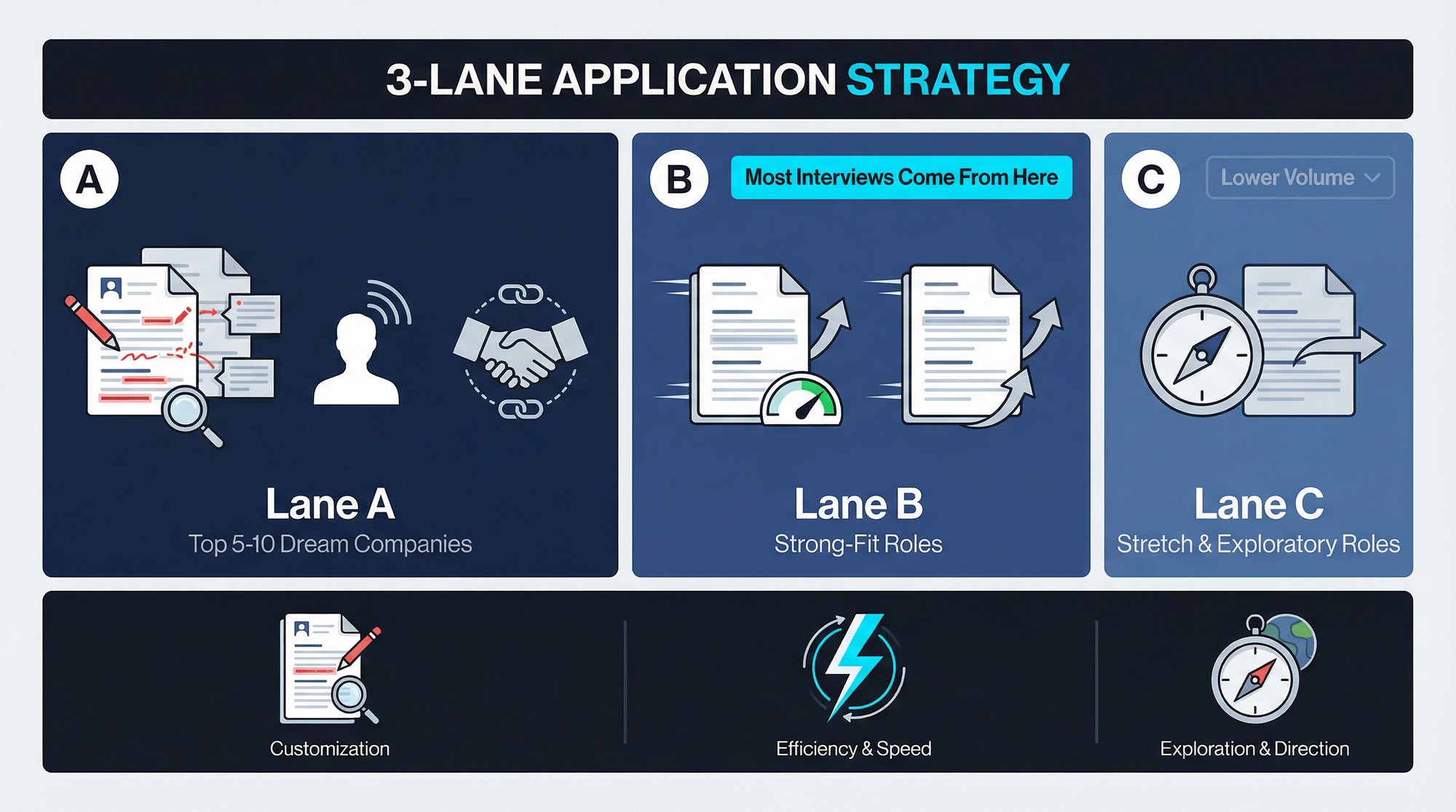
Instead of treating every application the same, split your efforts into three lanes:
Peak months (January through March, September through October) are when Lanes A and B should be running at full speed.
How to Apply Faster and Beat Other Candidates to Shortlists
In 2026, waiting five days to polish an application often means you're applying into a pile instead of into a shortlist. Speed matters.
This is where having the right system changes everything. A smart, structured workflow looks like this:
① Find roles using the AIApply Job Board or your preferred sources
② Tailor fast by generating role-specific resumes and cover letters with AIApply's AI Resume Builder and AI Cover Letter Generator
③ Check ATS risks by running your materials through an AI Resume Scanner before you hit send
④ Scale safely using Auto Apply for roles where you already have strong fit, while reserving manual time for your Lane A targets
⑤ Track outcomes with a job search tracker so you learn what's working and stop wasting applications
⑥ Convert interviews by practicing with AIApply's Mock Interview tool and using Interview Buddy for real-time coaching during live calls
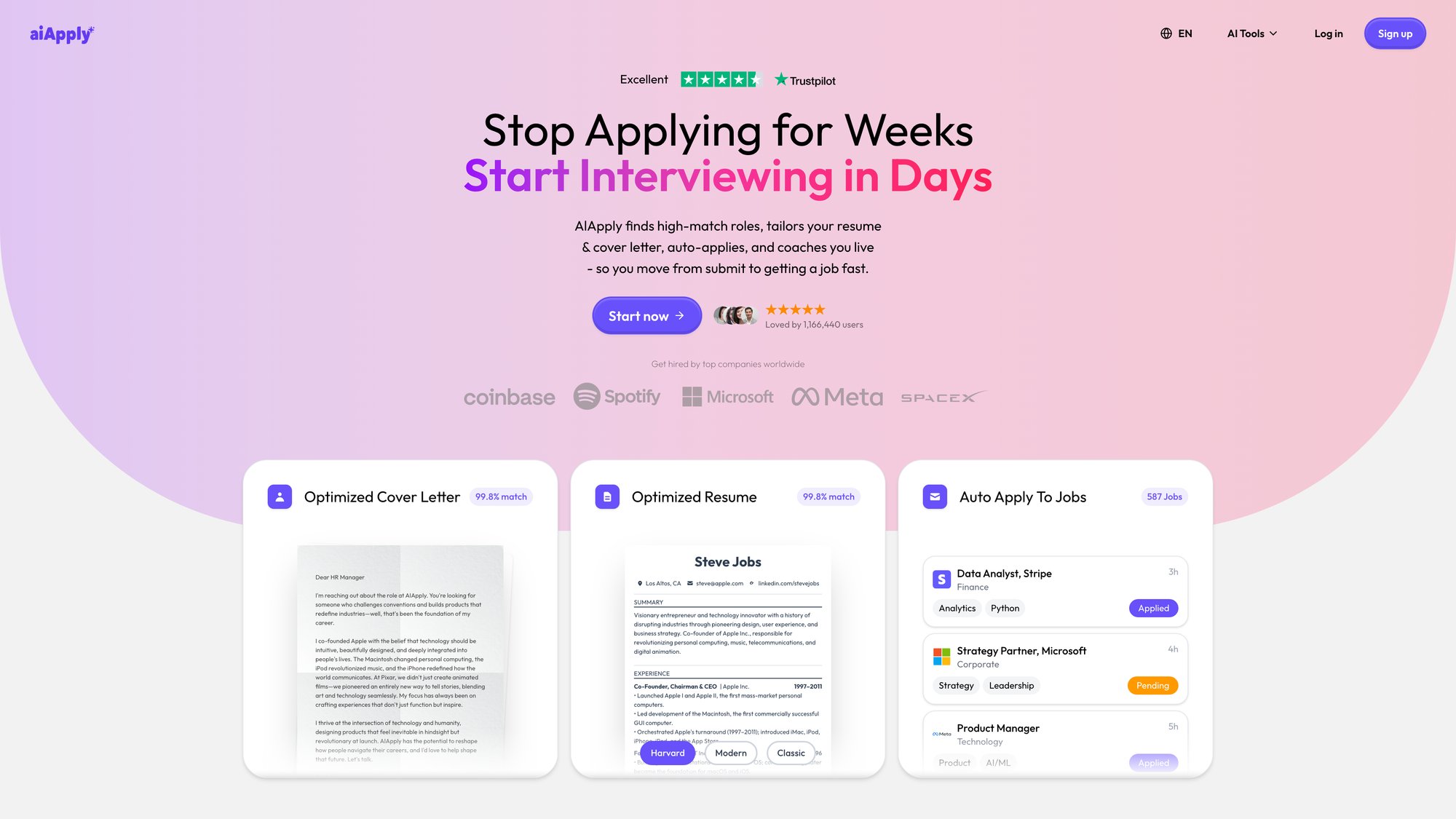
AIApply's Auto Apply makes step four above a reality — submit hundreds of tailored applications on autopilot while the dashboard tracks every status update in real time.

AIApply brings together all of these tools in one place, so your peak-season sprint stays organized and fast instead of scattered across a dozen tabs.
The point isn't to spam applications. It's to remove the bottlenecks that slow you down during the months when speed actually pays off.
And if you want to optimize even further, we've also written a guide on the best day of the week to apply for jobs, which complements your monthly timing strategy.
Frequently Asked Questions About Job Search Timing
Should I stop applying in December?
Not entirely. December is the slowest month for most corporate roles. But it's still useful for networking, upgrading your resume, and building a target list for January. Use AIApply's AI Resume Builder to overhaul your resume during the downtime so you're ready to hit January fast. And if a company is actively interviewing in December? Apply. You'll face the least competition of the entire year.
Is January still the best month to apply in 2026?
January is still important, but it's more crowded than ever. Indeed Hiring Lab found that job searching jumped up to 31% higher in January 2026 versus early December, while postings didn't match that spike. So yes, January matters, but only if you're ready to execute fast and submit strong, tailored applications instead of generic ones. Check out modern job search techniques to upgrade your approach for January's crowded market.
What makes September so good for job applications?
September is consistently one of the strongest hiring months across industries. Research describes it as a "renewed vigor" period after the summer slowdown, with companies pushing to fill roles before year-end. Hiring cycles tend to move faster in September than in January, so your follow-up emails and timely responses carry real weight.
When should students apply for internships and graduate schemes?
It depends on the employer size. For graduate schemes, most applications open in September or October. Investment banking schemes can open as early as August and close by October. For internships, September and January are the peak posting months at large employers, with smaller companies spreading postings more evenly into spring.
AIApply's students page has resources specifically designed for this timeline, including tools for tailoring applications to competitive programs. You can also find entry-level resume examples to help you build a strong application.
Is it worth applying during the summer months?
Yes, with adjusted expectations. July is the slowest month for most industries, but you'll also face less competition. Smaller companies, global teams, and operations-focused roles often continue hiring through summer. Plus, applying in July and August positions you ahead of the September surge, which is worth the effort. Use the quieter period to rewrite your resume so your materials are sharp and ATS-ready when the surge hits.
How many applications should I send during peak months?
There's no perfect number, but the answer is more than you think. During peak seasons, volume helps because there are more openings and decisions happen fast. A structured approach using AIApply's Auto Apply can let you handle 50+ applications per week without sacrificing quality on your top-priority targets. For a deeper view on application volume and specific numbers, read our guide on how many applications you need to send to get a job.
Does the Best Time to Apply for Jobs Change by Industry?
Absolutely. Retail, logistics, and hospitality ramp up seasonal hiring from September through November. Tech and finance follow the January and September peaks more closely. Healthcare and education often hire on their own fiscal-year or academic-year timelines. The month-by-month calendar in this guide gives you the general pattern, but always cross-reference with your specific industry's rhythm. If you're exploring a career change, check out our guide on the best jobs for career changers to understand which industries are hiring and when.
What Should I Do If I Missed the Peak Job Search Window?
Don't wait for the next one. Off-peak months have fewer openings, but they also have significantly less competition. Focus on targeted outreach, warm introductions, and making sure every application is highly tailored. Use the quieter months to strengthen your resume, build relationships, and prepare so you can hit the next peak window at full speed.
AIApply's AI Resume Builder and Resume Scanner can help you refine your materials during the downtime so you're ready when things pick up. You might also want to learn how to attract job recruiters during quieter months to build a pipeline that pays off when hiring opens back up.
There's no magic month that guarantees you'll land interviews. If anyone tells you otherwise, they're selling you a fantasy.
But there are predictable hiring patterns that repeat every single year. And if you understand those patterns, you can time your job search to maximize your odds instead of leaving everything to chance.
The short version? January through early March and September through October are the strongest windows for most roles. Research describes February as a peak hiring period, and September and October as consistently strong across industries. Mid-December tends to be the worst time, with budgets stalling and decision-makers checked out for the holidays.
But that short version skips something important. In 2026, the hiring landscape has shifted. January is still a big month, but it's crowded. Indeed Hiring Lab reported that job searches spiked up to 31% higher in January 2026 compared to early December 2025, while job postings didn't rise to match. More people chasing the same number of openings.
So timing matters, but how you show up during those windows matters just as much.
This guide breaks down the full 2026 hiring calendar month by month, covers role-specific timing for students, grads, and seasonal workers, and gives you a practical execution plan so you're not just applying at the right time, you're applying the right way.
Why Seasonal Hiring Patterns Exist
Hiring looks seasonal for the same reason rush-hour traffic exists: people and systems move in cycles.
A company decides to hire when three conditions line up at the same time:
Budget exists. Headcount is approved, the team has money to spend.
Need exists. There are projects to staff, growth targets to hit, or someone just quit.
Decision-makers are available. Managers, HR, and interview panels are actually in the office and able to move things forward.
On the candidate side, there's a separate cycle: when large numbers of people start actively searching and applying. New Year's resolutions push job seekers into action every January. Summer vacations pull them away. Back-to-school energy in September brings everyone back.
Seasonality happens when these two cycles, employer readiness and candidate activity, sync up or fall out of step.
A simple way to think about your odds at any given moment:
Your chances = Hiring demand / Competition / Process friction
Demand rises in early-year and early-fall. Competition spikes in those exact same windows (especially January). Process friction gets bad around holidays and summer vacations, when decision-makers disappear.
The sweet spot? Periods when demand is climbing faster than competition, and the hiring process is actually moving.
What the 2026 Job Market Looks Like Right Now
Seasonality always matters, but it matters more when the market is cooler. In a red-hot hiring market, companies scramble to fill roles as fast as possible and timing barely matters. In a slower market, companies can afford to be picky, time-to-hire stretches, and getting your timing right becomes a real competitive advantage.
Where things stand in early 2026:
The figures above come directly from the LinkedIn Economic Graph's February 2026 Workforce Report, one of the most authoritative real-time hiring datasets available.
What this means for you, practically: Timing alone won't save you in 2026. Quality and speed matter more than they did in hotter markets. You need a system that lets you apply early, tailor your materials correctly, and maintain momentum across weeks or months. Showing up at the right time with a generic resume isn't going to cut it when employers have their pick of candidates. AIApply is built exactly for this challenge, helping you apply faster, smarter, and with better-tailored materials.
The 2026 Hiring Calendar: What to Do Each Month
This is the practical month-by-month calendar you can actually follow. Think of it as a strong default based on typical hiring patterns, then adjust it using the role-specific and regional guidance later in this post.
January: The Most Competitive Month to Apply
High opportunity, high competition.
Companies come back from the holidays and start posting roles again, though the first couple of weeks can still be sluggish as people ease back in. This is when the hiring engine restarts.
The 2026 twist? Job seeker activity spikes hard. Indeed Hiring Lab found that searches jumped up to 31% higher in January 2026 versus early December, while postings didn't climb at the same rate. That means more people competing for roughly the same number of roles.
How to win January:
→ Apply early in the month, but expect responses to lag a bit
→ Prioritize roles posted within the last week (fresh listings tend to be less crowded)
→ Have your resume versions ready to go so you're not rewriting from scratch every time
February: When Hiring Activity Peaks
February is one of the strongest hiring months. Those January postings are turning into interviews. Recruiters are actively screening, and hiring managers are making decisions.
Treat February as your maximum-output month. Follow up on anything you applied to in January, and expect recruiter screens and first-round interviews to land in your inbox.
Sending a strong follow-up email can set you apart from the crowd when everyone's competing in the same window.
March: How to Win Before Spring Slowdowns
Many positions are still open from early-year hiring pushes. The momentum is still there, but it starts to taper.
How to win March:
① Keep applying, but also invest in the human channel: referrals, hiring manager outreach, alumni introductions
② If you haven't gotten traction yet, revisit your resume and cover letter strategy before the spring
③ Consider running your resume through AIApply's AI Resume Checker to catch any gaps before you keep sending
April and May: Why Unfilled Roles Create Opportunities
April can create urgency when roles posted earlier remain unfilled. May is often strong because of university graduations flooding the entry-level market. These are two distinct dynamics working in your favor at once.
How to win April and May:
Re-apply or re-engage roles that have been open for a while (hiring teams may be more motivated to close quickly)
If you're an entry-level candidate or recent grad, this is a sweet spot. Check out entry-level data analyst and entry-level business analyst career pages for roles opening in this window
Pair your applications with strong tailored cover letters using AIApply's AI Cover Letter Generator
June: Shifting Your Strategy for the Summer Slowdown
June can start showing fewer new opportunities after a strong first half, with some employers tightening budgets. This isn't the time to go quiet, but it is time to shift gears.
Focus on fewer, higher-fit applications rather than volume. Use the downtime for portfolio work, certifications, or networking that'll pay off when September hits. This is also a great time to build out a stronger profile. Learn what skills matter most for the roles you're targeting.
Think of June as your maintenance mode. Keep the engine warm, but don't burn out sprinting for a finish line that's moved.
July: Why You Should Still Apply During the Slowest Month
July is traditionally slow, mostly because vacations pull decision-makers out of the office and interview panels can't convene.
The contrarian play: Apply anyway. There's less competition, and certain types of companies still operate normally: smaller firms, global teams, operations-heavy roles.
How to win July:
Apply, but set expectations for slower replies
Target teams that don't shut down for summer
Use July to set up warm introductions for your September push
Polish your resume with an AI editor so your materials are sharp and ready when activity picks back up
August: How to Prepare for the September Hiring Surge
August is a turning point. New postings start appearing as companies gear up for fall, but decisions still move slowly.
This is a preparation month. Treat it that way.
→ Build your pipeline: save roles, prep resume versions, line up referrals
→ Get your resume and LinkedIn profile polished so you can hit September running
→ Run your resume through AIApply's Resume Scanner to spot ATS issues before the hiring surge begins
September: The Second Peak Hiring Window of the Year
This is the other peak. Research describes September as a "renewed vigor" period after the summer slowdown, with a clear post-summer uptick in both hiring activity and candidate engagement that many call the "September Surge."
How to win September:
① Apply hard from the first week. Don't wait for mid-month
② Expect faster hiring cycles than January, because teams want positions filled before year-end
③ If you're job searching while employed, September is often easier emotionally too, because routines return and it feels like a natural time for change
④ Scale your applications with AIApply's Auto Apply tool to submit tailored applications at volume while keeping your top-priority roles in focus
October: The Final Strong Hiring Window Before Year-End
October carries urgency. Hiring managers want to fill remaining roles before the holiday season and before budgets reset.
Things move quickly in October. Look for "urgent" signals: recently posted roles, recruiters actively reaching out, multiple interview slots available. Make your follow-ups tighter and faster.
Use AIApply's Interview Buddy to prepare for the rapid-fire interview cadence that October typically brings.
November: Which Roles to Target in the Late Fall Market
Some companies slow down after the fall rush. But November can be sneaky-good for certain industries and roles that need to close before budgets reset at year-end.
Expect fewer brand-new openings, but keep an eye on roles that have been open for a while. If you interview in November, push to close before holiday calendars explode. Scheduling gets brutal in December. Practice your interview responses with AIApply's AI Mock Interview tool so you're ready for compressed timelines.
December: Why the Slowest Month Is Still Worth Your Time
December is traditionally the worst month for hiring. Many companies are waiting on new budgets, and people are out of office.
But December isn't wasted time. Use it for:
Networking. End-of-year events, holiday parties, and catch-up coffees are perfect excuses to reconnect
Document upgrades. Rewrite your resume with AIApply's AI Resume Builder, update your portfolio, overhaul your LinkedIn
Building your January target list. Research companies, bookmark roles, identify hiring managers
Sharpening your cover letters. Use AIApply's AI Cover Letter Generator to get role-specific drafts ready for your January sprint
And if you spot a company that's still actively interviewing in December? Apply. The competition is at its absolute lowest.
Best Time to Apply for Jobs by Role and Career Stage
Most timing guides give you one blanket answer and call it a day. That's a mistake. The best time of year to apply for jobs shifts dramatically depending on what kind of role you're after.
When to Apply for Graduate Schemes in the UK
Most formal graduate programmes open for applications in September or October, with many graduates starting the following September or October.
Some fields move even faster. Investment banking graduate scheme applications can open in August and close as early as October. Many employers set firm deadlines in November and December, and missing those deadlines means waiting an entire year.
If you're a student or recent grad, your best time might be August through October, not January.
AIApply has a dedicated students page built specifically for this timing challenge, including tools to help you tailor applications to competitive graduate programmes. You can also browse graduate resume examples and entry-level cover letter examples to see what competitive applications look like.
Best Time to Apply for Internships
Research shows that September and January are the peak months for internship postings.
The timing changes by employer size:
Smaller employers tend to distribute their internship postings more evenly and can extend recruiting later into spring.
If you want internships at large companies, start earlier than you think. If you're open to smaller firms, you've got more runway.
For internship applications, having polished, role-specific materials makes an enormous difference. Check out cover letter examples for roles like data analyst or front-end developer to model your applications on real examples.
When to Apply for Seasonal Jobs in Retail and Logistics
Seasonal job posting data shows that hiring historically starts ramping up in September and peaks in November.
September: Early wave of postings
October: Heavy wave
November: Peak volume, but also peak competition and time pressure
For seasonal retail and logistics roles, speed of application matters enormously. AIApply's Auto Apply lets you submit tailored applications quickly across multiple postings without sacrificing quality on your strongest fits.
Best Time to Apply for Jobs in India and Festival-Season Markets
In markets like India, hiring patterns shift around major holiday periods rather than following the Western January/September cycle.
Naukri's JobSpeak report (January 2026) shows an index dip in October 2025 (2480), with higher levels in November and December 2025 (3001), and January 2026 landing at 2637. The pattern: hiring slows during festival seasons, then rebounds when decision-makers come back.
The Biggest Job Search Timing Mistake (And How to Avoid It)
Every year, thousands of people quietly think the same thought:
"I'll start properly in January. That's when hiring is hot."
And then every single one of them floods the market at the same time. Indeed's data on the January spike in job searching is basically the entire market doing the same thing at once.
Two problems with this approach:
Problem 1: You're not the only one thinking it. When everyone piles in during the same month, you're fighting for attention in the most crowded applicant pool of the year.
Problem 2: Hiring often rewards being early, not being peak. Roles get filled as soon as a strong candidate appears. "Peak month" means more postings, not infinite time to apply.
A smarter approach:
Use peak months (January through March, September through October) for volume. That's when there are more openings and you can cast a wider net.
Use off-peak months for advantage. Fewer openings, yes, but also less competition. Win with targeted outreach and by being memorable instead of being one of 300 applicants.
A solid job search strategy accounts for both cycles, knowing when to push volume and when to go deep on targeted outreach.
How to Find the Best Time to Apply for Jobs in Your Situation
You can stop guessing about timing by spending about 30 minutes on this exercise. Do it once, and it'll guide your entire year.
Step 1: Pick your job type and hiring engine.
Are you going after graduate schemes, internships, experienced roles, contracting gigs, or seasonal work? Each one follows a different calendar (as covered above).
Step 2: Check your market temperature.
If you're in the US, LinkedIn's Economic Graph can show you whether hiring is accelerating or slowing month-to-month (for example, January 2026 was down versus December 2025). If you're in the UK, track vacancy levels using official monthly market reports and government data sources.
Step 3: Build a role watchlist.
Pick 20 companies you'd genuinely want to work for and start tracking:
Which months they post roles
How often they repost the same positions
Whether they hire in cohorts (graduate schemes) or on a rolling basis
Use AIApply to discover open roles and monitor company hiring activity in real time through its built-in job board.
Step 4: Choose your two sprint windows.
Most people do best with two intentional sprints per year:
Sprint 1: January through March (or August through October if you're early-career, a student, or targeting grad schemes)
Sprint 2: September through October (or a spring sprint if your industry peaks then)
Then keep a low-level baseline going the rest of the year. Check boards weekly, respond to recruiter messages, and keep your materials updated. A job search tracking system helps you stay organized across months of applications.
How to Execute Your Job Search During Peak Hiring Season
Knowing when to apply is only half the equation. If your execution doesn't keep up during peak months, you'll miss the window anyway.
How to Prioritize Applications with a 3-Lane Strategy
Instead of treating every application the same, split your efforts into three lanes:
Peak months (January through March, September through October) are when Lanes A and B should be running at full speed.
How to Apply Faster and Beat Other Candidates to Shortlists
In 2026, waiting five days to polish an application often means you're applying into a pile instead of into a shortlist. Speed matters.
This is where having the right system changes everything. A smart, structured workflow looks like this:
① Find roles using the AIApply Job Board or your preferred sources
② Tailor fast by generating role-specific resumes and cover letters with AIApply's AI Resume Builder and AI Cover Letter Generator
③ Check ATS risks by running your materials through an AI Resume Scanner before you hit send
④ Scale safely using Auto Apply for roles where you already have strong fit, while reserving manual time for your Lane A targets
⑤ Track outcomes with a job search tracker so you learn what's working and stop wasting applications
⑥ Convert interviews by practicing with AIApply's Mock Interview tool and using Interview Buddy for real-time coaching during live calls
AIApply's Auto Apply makes step four above a reality — submit hundreds of tailored applications on autopilot while the dashboard tracks every status update in real time.
AIApply brings together all of these tools in one place, so your peak-season sprint stays organized and fast instead of scattered across a dozen tabs.
The point isn't to spam applications. It's to remove the bottlenecks that slow you down during the months when speed actually pays off.
And if you want to optimize even further, we've also written a guide on the best day of the week to apply for jobs, which complements your monthly timing strategy.
Frequently Asked Questions About Job Search Timing
Should I stop applying in December?
Not entirely. December is the slowest month for most corporate roles. But it's still useful for networking, upgrading your resume, and building a target list for January. Use AIApply's AI Resume Builder to overhaul your resume during the downtime so you're ready to hit January fast. And if a company is actively interviewing in December? Apply. You'll face the least competition of the entire year.
Is January still the best month to apply in 2026?
January is still important, but it's more crowded than ever. Indeed Hiring Lab found that job searching jumped up to 31% higher in January 2026 versus early December, while postings didn't match that spike. So yes, January matters, but only if you're ready to execute fast and submit strong, tailored applications instead of generic ones. Check out modern job search techniques to upgrade your approach for January's crowded market.
What makes September so good for job applications?
September is consistently one of the strongest hiring months across industries. Research describes it as a "renewed vigor" period after the summer slowdown, with companies pushing to fill roles before year-end. Hiring cycles tend to move faster in September than in January, so your follow-up emails and timely responses carry real weight.
When should students apply for internships and graduate schemes?
It depends on the employer size. For graduate schemes, most applications open in September or October. Investment banking schemes can open as early as August and close by October. For internships, September and January are the peak posting months at large employers, with smaller companies spreading postings more evenly into spring.
AIApply's students page has resources specifically designed for this timeline, including tools for tailoring applications to competitive programs. You can also find entry-level resume examples to help you build a strong application.
Is it worth applying during the summer months?
Yes, with adjusted expectations. July is the slowest month for most industries, but you'll also face less competition. Smaller companies, global teams, and operations-focused roles often continue hiring through summer. Plus, applying in July and August positions you ahead of the September surge, which is worth the effort. Use the quieter period to rewrite your resume so your materials are sharp and ATS-ready when the surge hits.
How many applications should I send during peak months?
There's no perfect number, but the answer is more than you think. During peak seasons, volume helps because there are more openings and decisions happen fast. A structured approach using AIApply's Auto Apply can let you handle 50+ applications per week without sacrificing quality on your top-priority targets. For a deeper view on application volume and specific numbers, read our guide on how many applications you need to send to get a job.
Does the Best Time to Apply for Jobs Change by Industry?
Absolutely. Retail, logistics, and hospitality ramp up seasonal hiring from September through November. Tech and finance follow the January and September peaks more closely. Healthcare and education often hire on their own fiscal-year or academic-year timelines. The month-by-month calendar in this guide gives you the general pattern, but always cross-reference with your specific industry's rhythm. If you're exploring a career change, check out our guide on the best jobs for career changers to understand which industries are hiring and when.
What Should I Do If I Missed the Peak Job Search Window?
Don't wait for the next one. Off-peak months have fewer openings, but they also have significantly less competition. Focus on targeted outreach, warm introductions, and making sure every application is highly tailored. Use the quieter months to strengthen your resume, build relationships, and prepare so you can hit the next peak window at full speed.
AIApply's AI Resume Builder and Resume Scanner can help you refine your materials during the downtime so you're ready when things pick up. You might also want to learn how to attract job recruiters during quieter months to build a pipeline that pays off when hiring opens back up.
.webp)
.webp)
.webp)
Don't miss out on
your next opportunity.
Create and send applications in seconds, not hours.


