
How to Write a Cover Letter With No Experience in the Field

.webp)
If you're searching for how to write a cover letter with no experience in the field, you're not really looking for document formatting tips. You're trying to solve a trust problem.
Hiring works like this: a company has a risk (a job that needs doing), and they can't see inside your head. So they look for signals that reduce that risk. Traditional "experience in the field" is one signal. But it's not the only one, and honestly, it's not always the best one.
A cover letter is your chance to replace missing signals with better ones. Done well, it can turn "no direct experience" into "this person clearly can do the work, and here's the proof."
And here's something worth knowing about 2026 specifically: AI has made polished writing cheap. That means generic cover letters are getting ignored, or worse, actively distrusted by recruiters who spot AI-ish patterns. The bar isn't "write something pretty." The bar is "write something only you could have written." Understanding your transferable skills is where that specificity starts.
This guide walks you through exactly how to do that, even if you're breaking into a completely new field. We'll cover the thinking system behind strong cover letters, a proven structure, templates you can customize today, and how to use tools like our AI Cover Letter Generator without losing what makes your letter genuinely yours.

What a Cover Letter Needs to Do When You Lack Experience
Career offices like Harvard's Mignone Center for Career Success put it plainly: a cover letter is both a writing sample and part of the screening process, an exercise in persuasion, not confession.
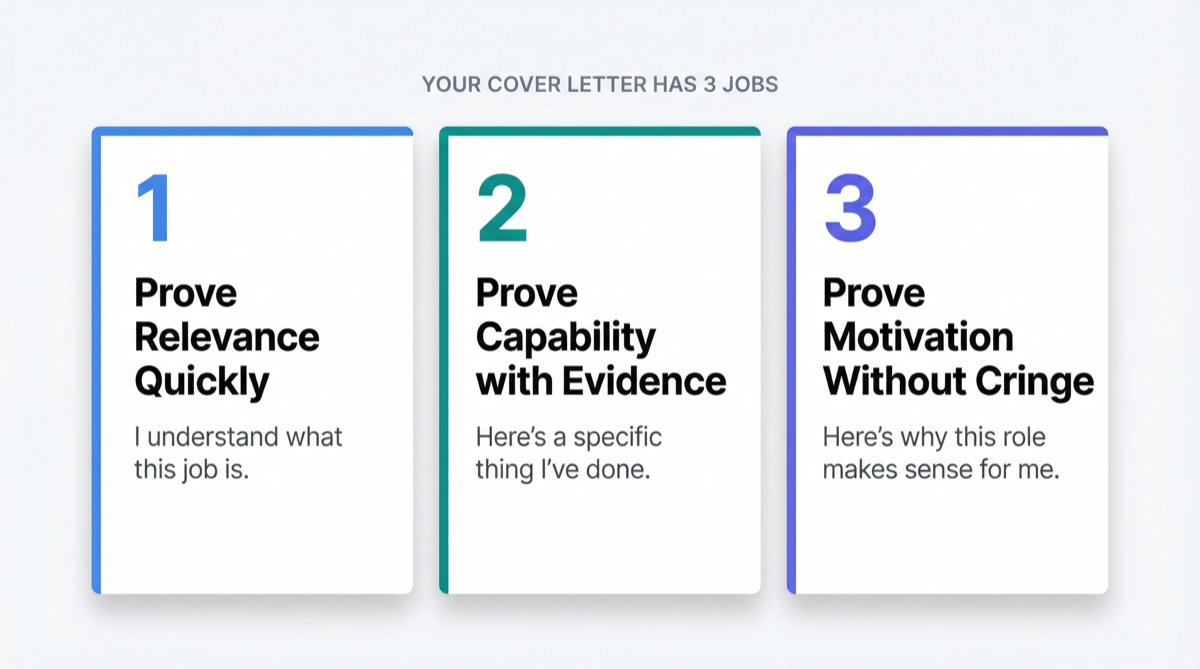
In practical terms, your cover letter has exactly three jobs:
1. Prove relevance quickly.
"I'm not randomly applying. I understand what this job is."
2. Prove capability with evidence.
"Here's a specific thing I've done that maps to your needs."
3. Prove motivation without cringe.
"Here's why this role and company make sense for me, specifically."
Notice what's not on that list: apologizing for not having the exact background. That's the single most common mistake people make when they have "no experience." They treat the letter like a confession booth. They open with "Although I lack relevant experience..." or "I know I'm not the most qualified candidate, but..."
That's you arguing against yourself. Don't do it.
A cover letter is persuasion. Your job is to build a case, not undermine one. If you want to see what a strong case looks like before you write your own, our cover letter examples library has dozens of real examples across industries and seniority levels.
Should You Even Write a Cover Letter in 2026?
This is a fair question. Some research has found that a meaningful portion of job seekers won't apply at all if a cover letter is required, which is one reason companies keep debating whether to ask for them.
But plenty of hiring managers still use cover letters to judge clarity, effort, and fit, especially when your resume doesn't obviously match the role.
So use this simple decision framework:
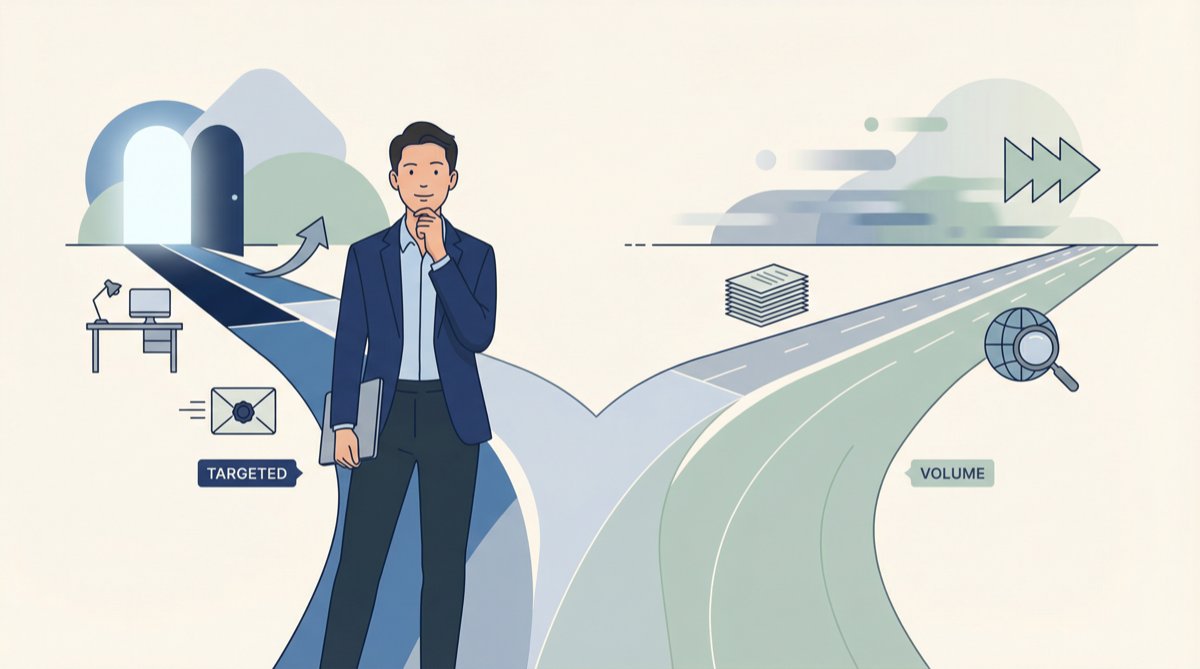
When Writing a Cover Letter Is Worth Your Time
A cover letter is worth your time when:
You're switching fields or industries (your resume needs "connective tissue" that only a letter can provide)
You're applying for entry-level roles with heavy competition
The job involves writing, communication, customer-facing work, or stakeholder management
You have a referral or a very specific reason you want that company
When to Skip the Cover Letter
Skip writing one when:
The application explicitly says "do not include a cover letter"
There's no upload field and no place to paste one
You're doing high-volume "good enough" applications and need to protect your time (but still write one for your top targets)
If it's optional and you're a career changer or beginner, the cover letter is often one of the few places you can win attention with context your resume can't provide. If you're applying in volume, our Auto Apply feature handles the mechanics while you focus on crafting strong letters for your priority roles.
What Kind of "No Experience" Do You Have?
This matters more than most people realize, because your strategy shifts depending on your specific situation. Be honest about where you fall:
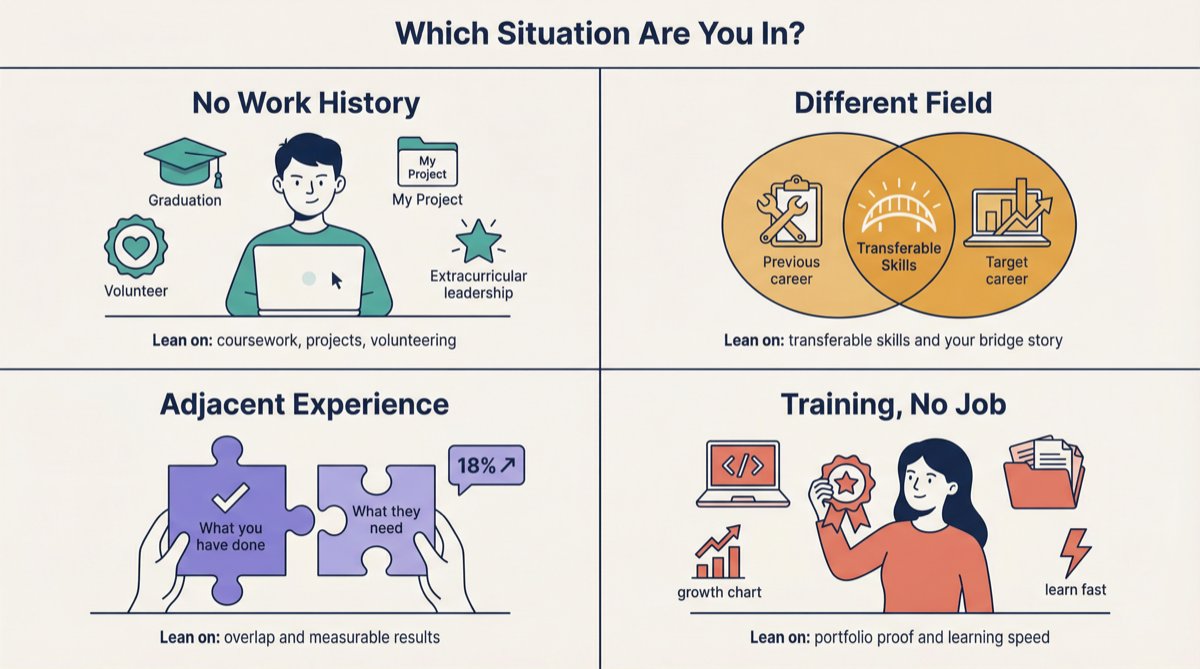
In NACE's Job Outlook 2026 survey, 70% of employers reported using skills-based hiring, often during screening and interviewing. That's a massive shift in how hiring actually works.
It means you can win without the perfect job title on your resume. But only if you show concrete proof of what you can actually do. Understanding what transferable skills are and how to frame them is half the battle, and the other half is building them into every paragraph of your letter.
How to Build a Cover Letter Proof Map Before You Write
Most cover letters fail because people start with writing. They open a blank document, stare at it, and start typing something vague about being a "passionate and driven professional."
Start with thinking instead.
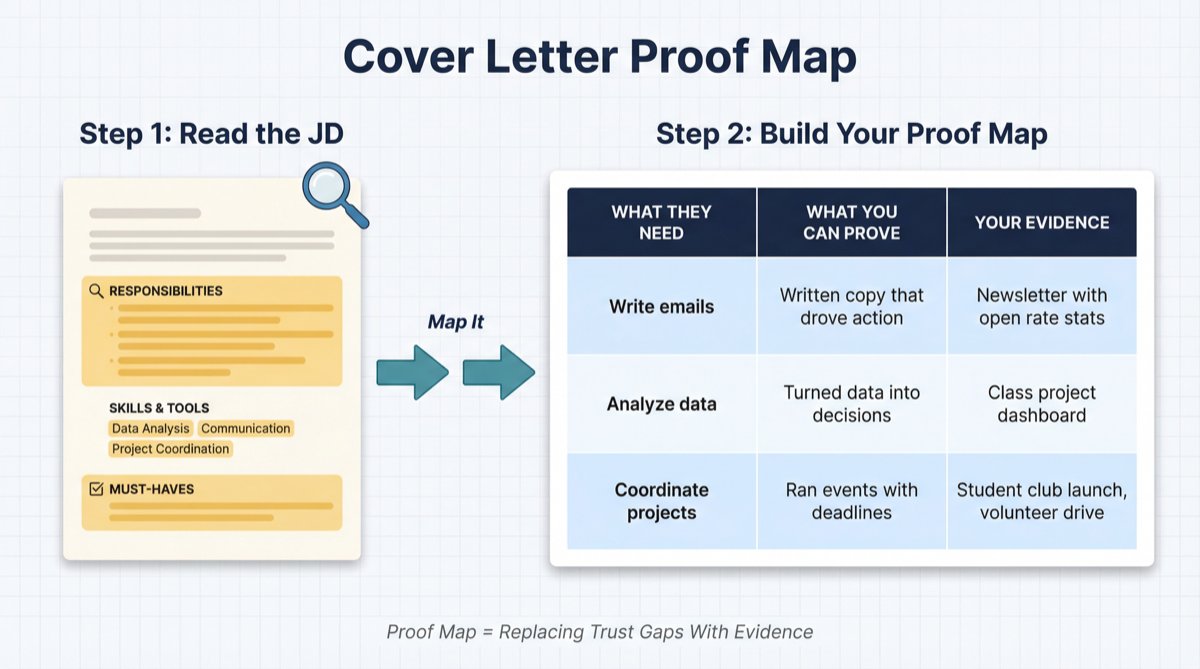
Step 1: Read the Job Description for What They Really Need
Open the job description and highlight three things:
The 3 most repeated responsibilities (look for verbs)
The 3 most repeated skills or tools (look for nouns)
Any "must-have" signals (certifications, portfolio requirements, language, schedule)
Quick example for a marketing role:
Responsibilities: write email campaigns, analyze performance, coordinate launches
Skills/tools: HubSpot, GA4, copywriting, stakeholder coordination
Step 2: Map Your Skills to Their Requirements
Create a simple three-column table. This is the backbone of your entire letter:
If you can't fill a row, don't panic. That row becomes your plan: "Here's how I'm closing that gap right now." More on that in the structure section below.
This is the same "signals" idea from the introduction, just in a practical form. You're replacing missing employer trust with tangible proof. Showcasing transferable skills, passion, and potential is exactly what makes the difference, and our AI Cover Letter Generator can help you build a proof-driven first draft in minutes.
Once you've built your Proof Map, you can run the job description through our Job Description Keyword Finder to make sure you're hitting the exact language the employer cares about.
The Best Cover Letter Structure When You Have No Field Experience
Now that you've built your Proof Map, the actual writing becomes surprisingly straightforward. Most credible career resources, including MIT's Career Advising and Harvard Career Services, emphasize the same principles: one page, clear formatting, and tailoring to the specific role.
Here's the structure we recommend:

Opening Paragraph: Hook, Role, and Why This Company
Goal: Show you're intentional and you understand what the role is about.
The formula is simple:
→ I'm applying for X.
→ Here's the value I bring (one line).
→ Here's why this company/role specifically (one line).
That last part is critical. Naming something specific about the company (a product, a mission, a recent launch) tells the reader you didn't just blast this letter to 50 employers.
Second Paragraph: Prove You Can Do the Core Work
Goal: One mini-story that maps directly to their top need. Pull this from the strongest row in your Proof Map.
Use this micro-structure:
→ Situation: What you were doing
→ Action: What you did (mention tools or methods)
→ Result: What changed (include numbers if you have them)
This is where career changers and first-time job seekers often sell themselves short. You don't need a job title in their industry. You need a story that proves you've done something similar in substance. Our cover letter examples by role show exactly how real applicants have translated unrelated backgrounds into compelling proof stories.
Third Paragraph: Show You Learn Fast
Goal: Remove the hiring manager's fear that "we'll have to train this person from scratch."
Show three things:
→ What you learned recently
→ How you applied it
→ What you produced
This paragraph is especially powerful if you've completed a bootcamp, earned a certification, or done a self-directed project. Mention the artifact you created. Link to it if you can.
Closing Paragraph: Make It Easy to Say Yes
Goal: Make it easy to say yes.
→ Thank them briefly
→ Mention your attached resume (and portfolio, if relevant)
→ Invite conversation and share your availability
Keep this paragraph to two or three sentences. Don't overdo the gratitude. And make sure your resume is as strong as your cover letter. Our AI Resume Builder can generate a job-specific resume in under two minutes that pairs well with your letter.
What to Say Instead of "I Don't Have Experience"
There are three sentences that should never appear in your cover letter:
❌ "Although I don't have experience..."
❌ "I know I'm not qualified, but..."
❌ "This would be a great opportunity for me to learn..."
All three put you on the defensive before you've even made your case. They tell the reader to view your entire letter through the lens of what's missing.
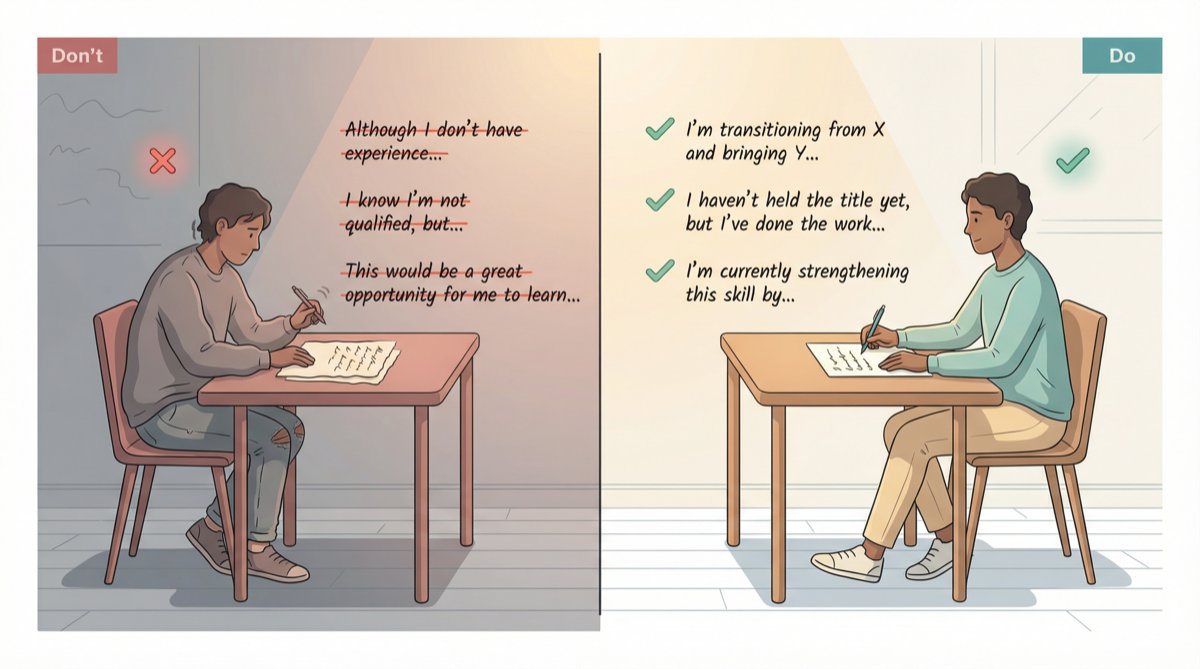
Write one of these instead:
The Bridge Statement for Career Changers
"I'm transitioning from [old field] to [new field] and I'm bringing [transferable strength] that directly supports [job requirement]."
This works best when you have real work experience in a different industry. If you're in this situation, understanding how to structure your resume objective for a career change can help you align your full application package.
The Proof-First Statement for Self-Taught Applicants
"I haven't held the title yet, but I've already done the work through [project/volunteering/coursework], including [specific outcome]."
This works best when you have no formal title but you've been doing relevant work.
The Plan Statement for Skill-Gap Situations
"I'm currently strengthening my [gap skill] by [specific action], and I've already applied it in [artifact/result]."
This only works after you've shown proof in Paragraph 2. If you lead with a gap before establishing credibility, the reader mentally files you as "needs too much ramp-up."
All three of these approaches keep your letter honest without making your lack of direct experience the headline. The key shift: you're not explaining away a weakness, you're building a case forward.
How to Make Your Cover Letter Feel Human in 2026
Recruiters are getting better at spotting AI-generated cover letters. And it's not that they hate AI. It's that they hate empty polish. Obvious AI patterns (vague enthusiasm, no specific details, perfectly balanced sentence structures) can get strong candidates rejected when the writing sounds generic.
The fix is simple: add information that AI can't invent without your input.
We call this the "3 Un-Fakeables" rule.
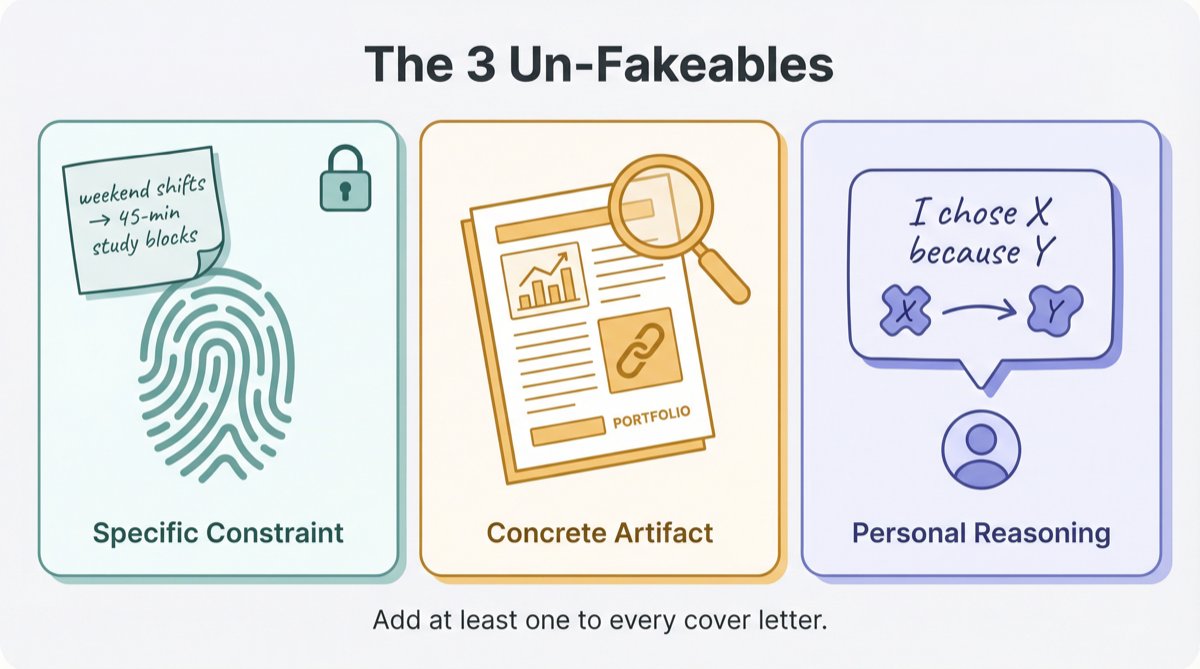
Our approach at AIApply aligns with this thinking: the problem isn't using AI to write. The problem is when the letter loses "signal" and becomes a polished blob that could have been written about anyone for any role. After you draft your letter, use our free Cover Letter Checker to verify that it reads as specific, human, and role-targeted before you send it.
Cover Letter Formatting Rules That Prevent Rejections
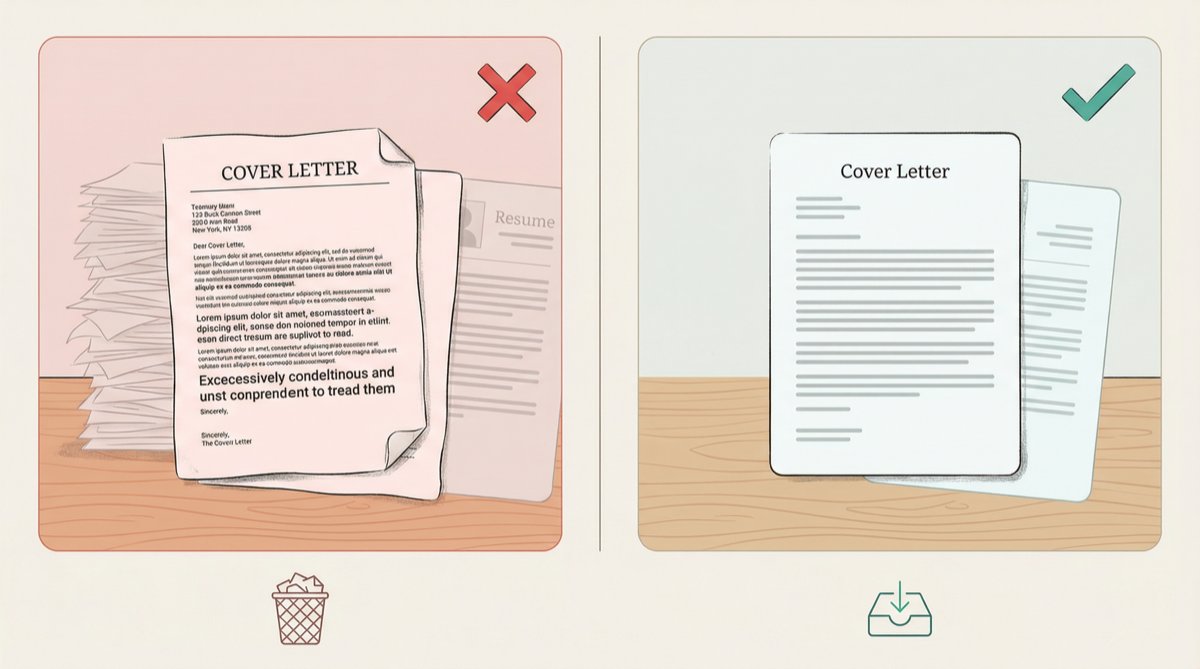
These are the boring rules that quietly matter. Get them wrong and your letter might not even get read:
If you're building your resume alongside your cover letter, running it through our Resume Scanner can help make sure both documents use consistent keywords and pass ATS screening. It checks against 50+ ATS systems, free to use, unlimited scans.
Cover Letter Templates for Every "No Experience" Situation
These templates are designed to be grabbed and customized. Each one maps to a different type of "no experience" scenario. Replace the bracketed text with your real information, and you'll have a strong first draft in minutes.
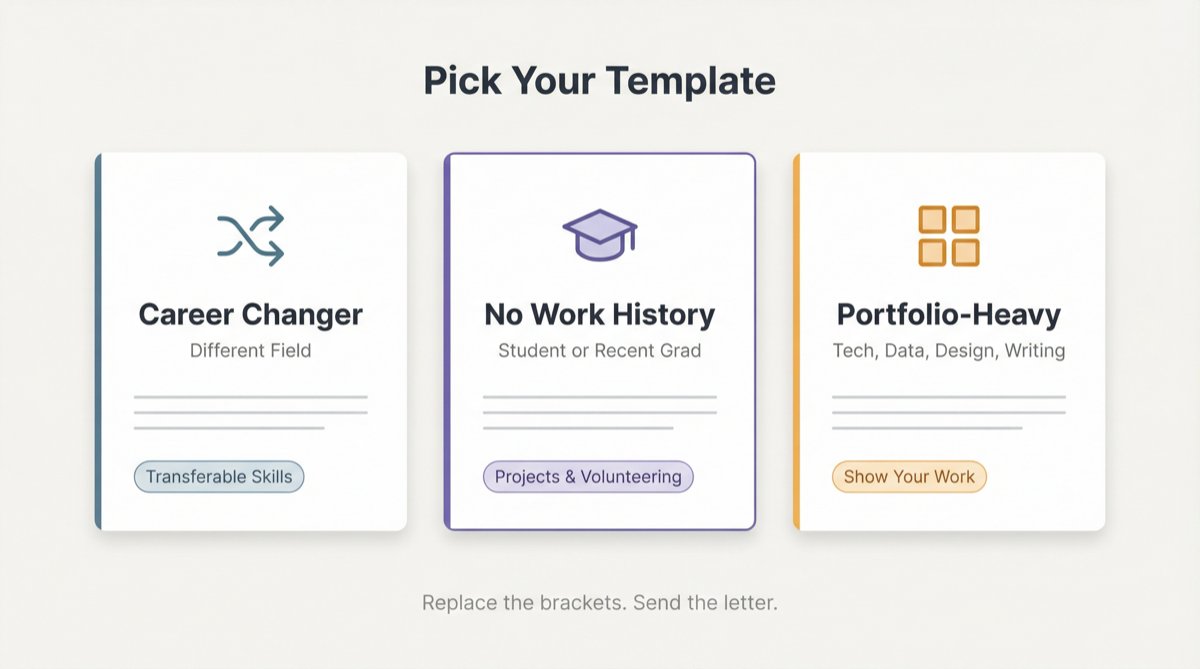
Template 1: Career Changer (Different Field)
Subject (if email): Application for [Role] | [Your Name]
Dear [Hiring Manager Name],
I'm applying for the [Role] position at [Company]. I'm transitioning from [current field] into [target field], and I'm bringing [transferable strength] that directly supports your focus on [job's top priority]. What pulled me to [Company] specifically is [one specific detail: product, mission, recent launch, customer type].
In my recent role as [Your Role] at [Place], I [did action] using [tool/method] to [solve problem]. The result was [metric/outcome]. This maps closely to your need for [job requirement], because [one sentence connection].
Over the last [timeframe], I've been building field-specific capability by [course/project/portfolio]. For example, I [built artifact] and [applied it], which led to [result or what you learned].
I'd love to discuss how I can contribute to [team/goal]. I've attached my resume and [portfolio/work sample]. Thank you for your time, and I'm happy to meet [availability].
Sincerely,
[Your Name]
[Phone] | [Email] | [LinkedIn/Portfolio]
Template 2: No Work History (Student or Recent Graduate)
Dear [Hiring Manager Name],
I'm excited to apply for the [Role] position at [Company]. I'm a [student/recent grad] focused on [relevant focus], and I've built practical experience through [projects/volunteering/leadership] that aligns with your need for [top requirement]. I'm particularly interested in [Company] because [specific detail].
In [project/club/volunteer role], I [action] using [tool/method] to [goal]. I measured success by [metric], and we achieved [result]. This matters for your role because [direct mapping sentence].
I also learn quickly and apply what I learn fast. Recently, I taught myself [skill/tool] and used it to [artifact], which [outcome]. I'm ready to bring that same pace and ownership to [Company/team].
Thank you for considering my application. I've attached my resume and [portfolio/work sample]. I'd love to talk about how I can help [specific team goal].
Sincerely,
[Your Name]
Template 3: Portfolio-Heavy (Tech, Data, Design, Writing)
Dear [Hiring Manager Name],
I'm applying for [Role]. While I'm new to the field professionally, I've already built [2 to 3 artifacts] that reflect the real work: [one-line proof]. I'm drawn to [Company] because [specific detail], and I'd love to contribute to [goal].
One project that's especially relevant is [project name]. I [action] using [tools], then [analysis/decision], resulting in [impact]. If helpful, I can share the full write-up and repo.
To build depth, I've been practicing [skill] through [routine: weekly builds, writing, shipping]. The key thing you'll get from me is [strength: structured problem solving, clarity, speed, ownership], backed by work you can actually review.
Thanks for your time. My portfolio is included here: [link] and I'm available [times].
Sincerely,
[Your Name]
The 120-Word Version (For Tiny Text Boxes)
Some applications give you a small text box instead of a file upload. Here's a version that says everything essential in about 120 words:
Hi [Name], I'm applying for [Role]. I'm transitioning from [current field] into [target field], and I'm bringing [transferable strength] that directly supports your need for [requirement]. In [project/job], I [did action] using [tool/method], resulting in [metric]. I'm especially interested in [Company] because [specific detail], and I've been building job-ready skill through [course/project], including [artifact]. I'd love to share the work and discuss how I can contribute. Thanks for your time, [Your Name].
You can also use our AI Cover Letter Generator to get a tailored first draft and then trim it down to fit whatever character or word limit you're working with. If you're a student, check out our dedicated tools for students and recent grads, which includes a 40% discount on all premium features.
Cover Letter Examples With No Direct Field Experience
These are intentionally short. Real letters that get read are easy to skim. Study the pattern: each one follows the 4-paragraph structure, leads with proof instead of apology, and names specific details that no generic template could produce.
Example 1: Retail to Customer Success (SaaS)
Dear Hiring Manager,
I'm applying for the Customer Success Associate role at Northbridge. I'm moving from retail operations into customer success, and I'm bringing strength in de-escalation, process improvement, and clear communication. I'm especially interested in Northbridge because your product focuses on reducing churn through better onboarding, and onboarding is where I've consistently helped customers succeed.
In my current role as a retail supervisor, I led a weekly "returns rescue" process to reduce repeat complaints. I created a simple issue-tagging spreadsheet, trained two teammates, and used the data to rewrite our top five scripts. Within six weeks, repeat complaints in those categories dropped by 18%, and our store's customer rating improved from 4.2 to 4.5.
To build SaaS-specific skills, I've been studying onboarding flows and help-center design. Last month I wrote a 10-article help-center draft for a fictional subscription app based on common support tickets, plus a one-page onboarding email sequence. I'd love to share the artifacts if useful.
Thank you for considering my application. I've attached my resume and portfolio link. I'm happy to meet this week and walk through how I'd support onboarding and retention in this role.
Sincerely,
Aisha Khan
Why this works: Aisha never mentions "no SaaS experience." She translates retail supervision into customer success language, provides a specific result (18% complaint reduction), and shows she's already building SaaS-relevant artifacts. The letter is proof-dense and easy to skim. If you're targeting a similar role, see our Customer Success Manager cover letter example and Customer Success Manager resume example for more inspiration.
Example 2: Teacher to Data Analyst
Dear Ms. Romero,
I'm applying for the Junior Data Analyst position at Brightwell Health. I'm transitioning from secondary education into analytics, and I'm bringing structured problem-solving and the ability to turn messy information into decisions. I'm drawn to Brightwell because your team focuses on operational metrics that directly improve patient experience.
As a teacher, I ran a semester-long attendance intervention. I combined data from three sources into a single spreadsheet, created a weekly dashboard, and tested two interventions (parent SMS reminders vs. counselor check-ins). The SMS intervention improved attendance for the target group by 11% over eight weeks, and I documented the approach so other teachers could replicate it.
To build technical depth, I've been studying SQL and Power BI and applying them to public datasets. Recently I built a simple dashboard that tracks appointment no-show patterns and wrote a one-page memo suggesting three operational changes. I can share the dashboard and reasoning.
Thank you for your time. I'd love to discuss how I can support Brightwell's reporting and insights work. I'm available Tuesday to Thursday afternoon.
Sincerely,
Daniel Okoye
Why this works: Daniel doesn't say "I was just a teacher." He reframes teaching as data-driven problem solving (which it genuinely is), provides a measurable outcome (11% attendance improvement), and demonstrates he's already using analyst tools on relevant problems. Browse our Data Analyst cover letter example and entry-level Data Analyst cover letter for additional frameworks for this kind of career pivot.
Example 3: Hospitality to Marketing Coordinator
Dear Hiring Manager,
I'm applying for the Marketing Coordinator role at GreenCedar. I'm moving from hospitality into marketing, and I'm bringing hands-on customer psychology, fast execution, and comfort working across teams. I'm especially interested in GreenCedar because your brand leans on community-driven growth, and community is where I've built repeat business in my current work.
In my role as a front-of-house lead, I created and tested weekly promotions with our manager. I wrote short social captions, tracked redemption manually, and adjusted messaging based on what actually pulled people in. One weekend promotion increased weekday bookings by 14% over the following two weeks.
To build modern marketing skills, I've completed a GA4 fundamentals course and built a mini portfolio: a landing page rewrite, three email sequences, and a 30-day content calendar for a local business (with rationale for each post). I'd love to bring that same execution speed and learning pace to your team.
Thanks for considering my application. I've attached my resume and portfolio link.
Sincerely,
Mina Patel
Why this works: Mina translates hospitality promotion work into marketing language, quantifies a result (14% booking increase), and shows she's not just interested in marketing, she's already doing it with a portfolio of real artifacts. Our Marketing Coordinator cover letter example and Marketing Coordinator resume example can help you adapt this same structure for your target role.
Cover Letter Checklist Before You Submit
Before you hit send, run through this quick self-check. If you fail any of these, fix it first:
Does the first paragraph mention why this company with a real, specific detail?
Did I include one strong proof story with a measurable result?
Did I show learning speed with a concrete artifact?
Did I remove filler lines like "I'm a hardworking team player" and replace them with actual evidence?
Is it one page and easy to skim? (MIT Career Advising recommends this as the standard.)
Can I defend every single claim if they ask about it in an interview?

If you can check all six boxes, your letter is ready. If not, go back and strengthen the weak spots before submitting.
After your letter is solid, run it through our AI Resume Checker to make sure your resume matches the same strength level. A strong cover letter next to a weak resume is a missed opportunity.
How AIApply Helps You Write a Cover Letter With No Experience
If writing is your bottleneck (and for a lot of career changers, it is), AI can be genuinely useful as a drafting assistant. The key is using it to accelerate your thinking, not to replace it.

Here's a practical workflow using our tools:
1. Create a strong first draft fast with our free AI Cover Letter Generator. Paste in the job description and your background, and you'll get a personalized letter in minutes. Over 1.1 million job seekers have used this tool to get started.
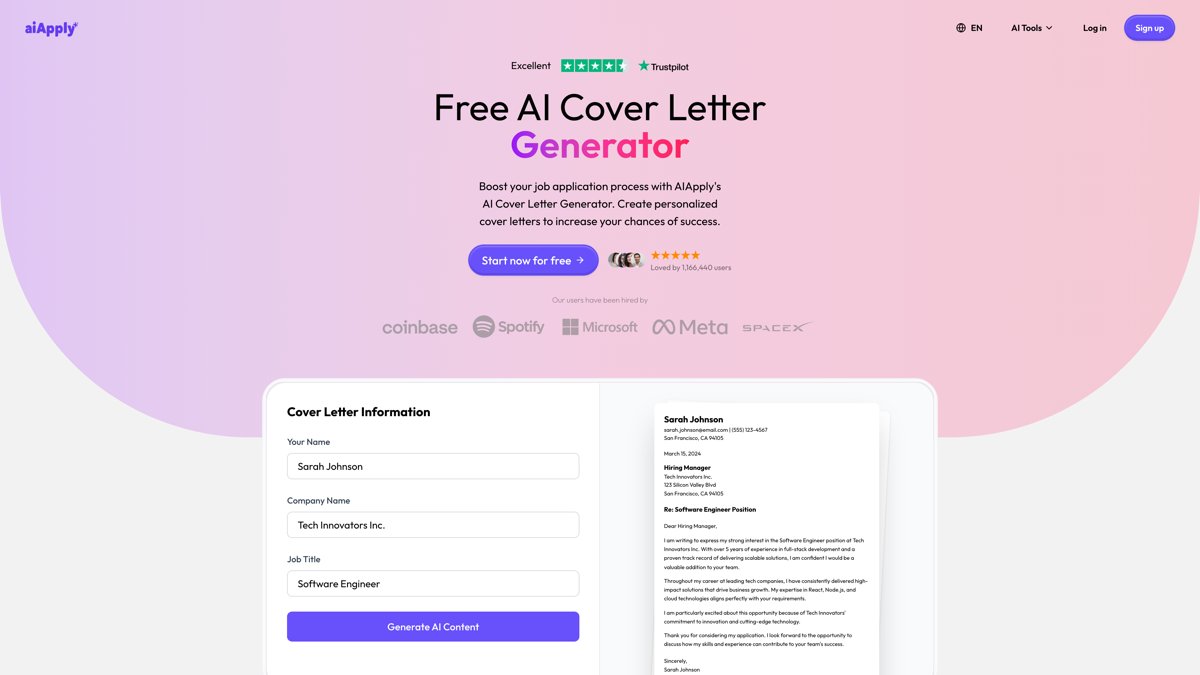
2. Find the exact language employers are looking for using our Job Description Keyword Finder. It pulls out the specific terms and phrases that matter most to that employer, so your letter speaks their language instead of generic career jargon.
3. Check your resume for ATS gaps with our Resume Scanner. This makes sure your cover letter and resume use consistent keywords and headings, so your application doesn't get filtered out before a human sees it.
4. Study real examples by browsing our Cover Letter Examples library, which covers dozens of industries and seniority levels. Seeing what works in your target field helps you calibrate tone and structure.

5. Do the human pass. This is the step most people skip, and it's the most important one. Go back through your draft and add the 3 un-fakeables: a specific constraint, a concrete artifact, and personal reasoning. This is what keeps your letter out of the "generic AI" bucket.
Our stance at AIApply has always been this: the goal isn't to hide that you used AI. The goal is to make the letter still signal something real about you. The AI handles structure and polish. You supply the substance that no algorithm can generate on its own. If you haven't tried it yet, our AI Resume Builder pairs naturally with your cover letter for a consistent, polished application package.
When to Use a Video Cover Letter Instead
If the role is customer-facing or communication-heavy, a short video cover letter can be a real differentiator. But it's not for everyone.
Career experts recommend keeping it to 60 to 90 seconds, focusing on alignment with the role and specific examples. They also noted potential downsides, including discomfort on camera and possible discrimination risks.
Use a video cover letter only when:
You're comfortable on camera and can be natural
The company culture is modern and would appreciate the format
You're not replacing a required written cover letter (a video supplements, it doesn't substitute)
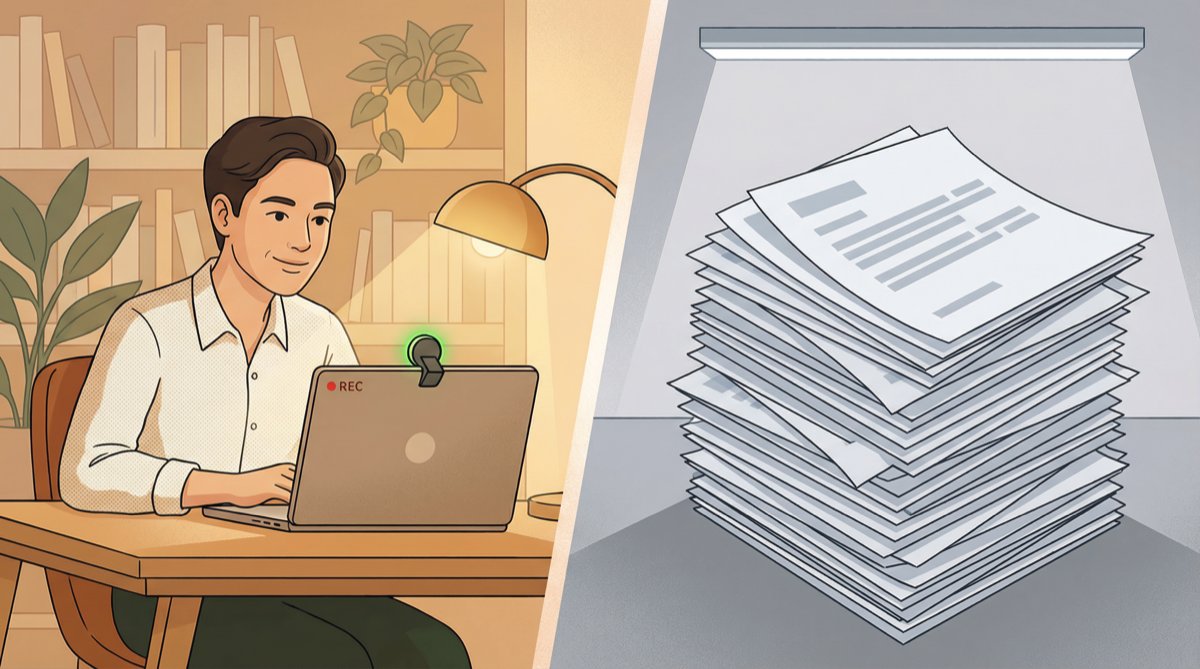
For most applications, a strong written letter will do the job. But if you're applying to a startup, a media company, or a role that's explicitly about communication, a well-done 60-second video can set you apart from a pile of identical PDFs.
If a video letter goes well and you land an interview, our AI Mock Interview tool can help you practice your answers before the real conversation. And for real-time support during the actual interview, Interview Buddy provides live, on-screen coaching.
Frequently Asked Questions About Cover Letters With No Experience
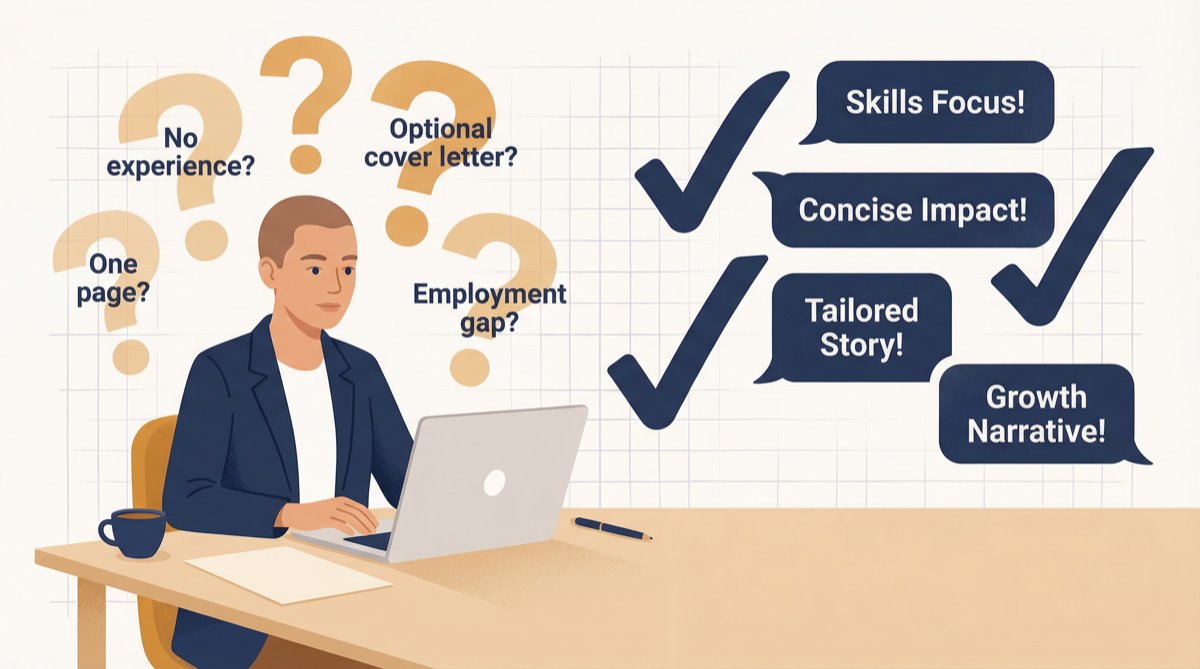
Should I Admit I'm Changing Fields?
Yes, but don't frame it as a weakness. Frame it as a bridge:
"I'm transitioning from X to Y and bringing Z that maps directly to your needs."
Hiring managers can see your resume. They already know you're not coming from their industry. Trying to hide it looks evasive. Owning it and connecting the dots looks confident. For a deeper look at executing this kind of transition, see our guide on the best jobs for career changers and how to position yourself for them.
How Long Should My Cover Letter Be?
One page. Short enough to skim, long enough to include real proof. MIT and Harvard Career Services both confirm this as the standard. If you're writing more than that, you're probably including information that belongs on your resume, not in the letter.
Do I Need to Address It to a Specific Person?
If you can find the hiring manager's name, use it. Check LinkedIn, the company's team page, or the job posting itself. If you genuinely can't find a name, MIT notes that "Dear Hiring Manager" is perfectly acceptable. Don't waste hours hunting for a name when you could be strengthening your proof paragraphs.
What If I Truly Have No Proof at All?
Then your first task isn't writing a cover letter. Your first task is building a tiny piece of proof this week. That could be a small project, a volunteer deliverable, a case study you write up, or an artifact that shows you can do relevant work. You can build proof faster than you think. Even a weekend project counts if it demonstrates the right skills. Check our skills for resume list to identify the specific skills worth building for your target role, then use our cover letter examples to see how others have framed similar proof.
Should I Use AI to Write My Cover Letter?
AI is a great starting point, not a great finishing point. Use it to generate a structured first draft (our AI Cover Letter Generator does this well), then personalize it with your real stories, constraints, and reasoning. The combination of AI efficiency and human specificity is what produces letters that actually get interviews.
Can I Use the Same Cover Letter for Every Application?
No. And this is doubly true when you don't have experience in the field. Your Proof Map should change for every role because every job description emphasizes different needs. The structure stays the same. The specific details, the proof story you lead with, and the company-specific details should be fresh each time. That said, once you've written two or three strong letters, creating new ones gets much faster because you're recycling your best proof stories and just adjusting the mapping. Our AI Cover Letter Generator makes this fast: paste in the new job description and it handles the tailoring.
What If the Job Says "Cover Letter Optional"?
If you're a career changer or someone without direct experience, "optional" is your opportunity. Most candidates skip optional cover letters. Submitting a focused, proof-heavy letter when it's optional makes you stand out simply because you bothered. It tells the hiring manager you're serious about this role, not just mass-applying everywhere. If you are mass-applying alongside your targeted applications, our Auto Apply feature can handle the volume while you focus your personal effort on priority roles.
How Do I Handle Employment Gaps Alongside No Field Experience?
Don't ignore gaps, but don't spotlight them either. If you did something productive during the gap (freelancing, volunteering, learning a new skill, caregiving), mention the relevant parts briefly. If the gap is recent and you've been building new skills, Paragraph 3 of the 4-paragraph structure is the natural place to address it: "Over the past [timeframe], I've been [what you did], including [specific artifact or result]." The key is to focus on what you did produce, not on the absence of employment. See our guide on explaining employment gaps in resumes and interviews for more detail on how to frame gaps across your full application.
Writing a cover letter with no experience in the field is harder than writing one with 10 years of industry history. But it's not impossible, and honestly, it's a skill worth getting good at. The 2026 job market rewards people who can show what they're capable of, not just what titles they've held. Build your Proof Map, follow the structure, add the details only you can provide, and let tools like our AI Cover Letter Generator handle the parts that don't need to be manually painful. Your cover letter isn't a confession. It's your case. Make it a strong one.
If you're searching for how to write a cover letter with no experience in the field, you're not really looking for document formatting tips. You're trying to solve a trust problem.
Hiring works like this: a company has a risk (a job that needs doing), and they can't see inside your head. So they look for signals that reduce that risk. Traditional "experience in the field" is one signal. But it's not the only one, and honestly, it's not always the best one.
A cover letter is your chance to replace missing signals with better ones. Done well, it can turn "no direct experience" into "this person clearly can do the work, and here's the proof."
And here's something worth knowing about 2026 specifically: AI has made polished writing cheap. That means generic cover letters are getting ignored, or worse, actively distrusted by recruiters who spot AI-ish patterns. The bar isn't "write something pretty." The bar is "write something only you could have written." Understanding your transferable skills is where that specificity starts.
This guide walks you through exactly how to do that, even if you're breaking into a completely new field. We'll cover the thinking system behind strong cover letters, a proven structure, templates you can customize today, and how to use tools like our AI Cover Letter Generator without losing what makes your letter genuinely yours.
What a Cover Letter Needs to Do When You Lack Experience
Career offices like Harvard's Mignone Center for Career Success put it plainly: a cover letter is both a writing sample and part of the screening process, an exercise in persuasion, not confession.
In practical terms, your cover letter has exactly three jobs:
1. Prove relevance quickly.
"I'm not randomly applying. I understand what this job is."
2. Prove capability with evidence.
"Here's a specific thing I've done that maps to your needs."
3. Prove motivation without cringe.
"Here's why this role and company make sense for me, specifically."
Notice what's not on that list: apologizing for not having the exact background. That's the single most common mistake people make when they have "no experience." They treat the letter like a confession booth. They open with "Although I lack relevant experience..." or "I know I'm not the most qualified candidate, but..."
That's you arguing against yourself. Don't do it.
A cover letter is persuasion. Your job is to build a case, not undermine one. If you want to see what a strong case looks like before you write your own, our cover letter examples library has dozens of real examples across industries and seniority levels.
Should You Even Write a Cover Letter in 2026?
This is a fair question. Some research has found that a meaningful portion of job seekers won't apply at all if a cover letter is required, which is one reason companies keep debating whether to ask for them.
But plenty of hiring managers still use cover letters to judge clarity, effort, and fit, especially when your resume doesn't obviously match the role.
So use this simple decision framework:
When Writing a Cover Letter Is Worth Your Time
A cover letter is worth your time when:
You're switching fields or industries (your resume needs "connective tissue" that only a letter can provide)
You're applying for entry-level roles with heavy competition
The job involves writing, communication, customer-facing work, or stakeholder management
You have a referral or a very specific reason you want that company
When to Skip the Cover Letter
Skip writing one when:
The application explicitly says "do not include a cover letter"
There's no upload field and no place to paste one
You're doing high-volume "good enough" applications and need to protect your time (but still write one for your top targets)
If it's optional and you're a career changer or beginner, the cover letter is often one of the few places you can win attention with context your resume can't provide. If you're applying in volume, our Auto Apply feature handles the mechanics while you focus on crafting strong letters for your priority roles.
What Kind of "No Experience" Do You Have?
This matters more than most people realize, because your strategy shifts depending on your specific situation. Be honest about where you fall:
In NACE's Job Outlook 2026 survey, 70% of employers reported using skills-based hiring, often during screening and interviewing. That's a massive shift in how hiring actually works.
It means you can win without the perfect job title on your resume. But only if you show concrete proof of what you can actually do. Understanding what transferable skills are and how to frame them is half the battle, and the other half is building them into every paragraph of your letter.
How to Build a Cover Letter Proof Map Before You Write
Most cover letters fail because people start with writing. They open a blank document, stare at it, and start typing something vague about being a "passionate and driven professional."
Start with thinking instead.
Step 1: Read the Job Description for What They Really Need
Open the job description and highlight three things:
The 3 most repeated responsibilities (look for verbs)
The 3 most repeated skills or tools (look for nouns)
Any "must-have" signals (certifications, portfolio requirements, language, schedule)
Quick example for a marketing role:
Responsibilities: write email campaigns, analyze performance, coordinate launches
Skills/tools: HubSpot, GA4, copywriting, stakeholder coordination
Step 2: Map Your Skills to Their Requirements
Create a simple three-column table. This is the backbone of your entire letter:
If you can't fill a row, don't panic. That row becomes your plan: "Here's how I'm closing that gap right now." More on that in the structure section below.
This is the same "signals" idea from the introduction, just in a practical form. You're replacing missing employer trust with tangible proof. Showcasing transferable skills, passion, and potential is exactly what makes the difference, and our AI Cover Letter Generator can help you build a proof-driven first draft in minutes.
Once you've built your Proof Map, you can run the job description through our Job Description Keyword Finder to make sure you're hitting the exact language the employer cares about.
The Best Cover Letter Structure When You Have No Field Experience
Now that you've built your Proof Map, the actual writing becomes surprisingly straightforward. Most credible career resources, including MIT's Career Advising and Harvard Career Services, emphasize the same principles: one page, clear formatting, and tailoring to the specific role.
Here's the structure we recommend:
Opening Paragraph: Hook, Role, and Why This Company
Goal: Show you're intentional and you understand what the role is about.
The formula is simple:
→ I'm applying for X.
→ Here's the value I bring (one line).
→ Here's why this company/role specifically (one line).
That last part is critical. Naming something specific about the company (a product, a mission, a recent launch) tells the reader you didn't just blast this letter to 50 employers.
Second Paragraph: Prove You Can Do the Core Work
Goal: One mini-story that maps directly to their top need. Pull this from the strongest row in your Proof Map.
Use this micro-structure:
→ Situation: What you were doing
→ Action: What you did (mention tools or methods)
→ Result: What changed (include numbers if you have them)
This is where career changers and first-time job seekers often sell themselves short. You don't need a job title in their industry. You need a story that proves you've done something similar in substance. Our cover letter examples by role show exactly how real applicants have translated unrelated backgrounds into compelling proof stories.
Third Paragraph: Show You Learn Fast
Goal: Remove the hiring manager's fear that "we'll have to train this person from scratch."
Show three things:
→ What you learned recently
→ How you applied it
→ What you produced
This paragraph is especially powerful if you've completed a bootcamp, earned a certification, or done a self-directed project. Mention the artifact you created. Link to it if you can.
Closing Paragraph: Make It Easy to Say Yes
Goal: Make it easy to say yes.
→ Thank them briefly
→ Mention your attached resume (and portfolio, if relevant)
→ Invite conversation and share your availability
Keep this paragraph to two or three sentences. Don't overdo the gratitude. And make sure your resume is as strong as your cover letter. Our AI Resume Builder can generate a job-specific resume in under two minutes that pairs well with your letter.
What to Say Instead of "I Don't Have Experience"
There are three sentences that should never appear in your cover letter:
❌ "Although I don't have experience..."
❌ "I know I'm not qualified, but..."
❌ "This would be a great opportunity for me to learn..."
All three put you on the defensive before you've even made your case. They tell the reader to view your entire letter through the lens of what's missing.
Write one of these instead:
The Bridge Statement for Career Changers
"I'm transitioning from [old field] to [new field] and I'm bringing [transferable strength] that directly supports [job requirement]."
This works best when you have real work experience in a different industry. If you're in this situation, understanding how to structure your resume objective for a career change can help you align your full application package.
The Proof-First Statement for Self-Taught Applicants
"I haven't held the title yet, but I've already done the work through [project/volunteering/coursework], including [specific outcome]."
This works best when you have no formal title but you've been doing relevant work.
The Plan Statement for Skill-Gap Situations
"I'm currently strengthening my [gap skill] by [specific action], and I've already applied it in [artifact/result]."
This only works after you've shown proof in Paragraph 2. If you lead with a gap before establishing credibility, the reader mentally files you as "needs too much ramp-up."
All three of these approaches keep your letter honest without making your lack of direct experience the headline. The key shift: you're not explaining away a weakness, you're building a case forward.
How to Make Your Cover Letter Feel Human in 2026
Recruiters are getting better at spotting AI-generated cover letters. And it's not that they hate AI. It's that they hate empty polish. Obvious AI patterns (vague enthusiasm, no specific details, perfectly balanced sentence structures) can get strong candidates rejected when the writing sounds generic.
The fix is simple: add information that AI can't invent without your input.
We call this the "3 Un-Fakeables" rule.
Our approach at AIApply aligns with this thinking: the problem isn't using AI to write. The problem is when the letter loses "signal" and becomes a polished blob that could have been written about anyone for any role. After you draft your letter, use our free Cover Letter Checker to verify that it reads as specific, human, and role-targeted before you send it.
Cover Letter Formatting Rules That Prevent Rejections
These are the boring rules that quietly matter. Get them wrong and your letter might not even get read:
If you're building your resume alongside your cover letter, running it through our Resume Scanner can help make sure both documents use consistent keywords and pass ATS screening. It checks against 50+ ATS systems, free to use, unlimited scans.
Cover Letter Templates for Every "No Experience" Situation
These templates are designed to be grabbed and customized. Each one maps to a different type of "no experience" scenario. Replace the bracketed text with your real information, and you'll have a strong first draft in minutes.
Template 1: Career Changer (Different Field)
Subject (if email): Application for [Role] | [Your Name]
Dear [Hiring Manager Name],
I'm applying for the [Role] position at [Company]. I'm transitioning from [current field] into [target field], and I'm bringing [transferable strength] that directly supports your focus on [job's top priority]. What pulled me to [Company] specifically is [one specific detail: product, mission, recent launch, customer type].
In my recent role as [Your Role] at [Place], I [did action] using [tool/method] to [solve problem]. The result was [metric/outcome]. This maps closely to your need for [job requirement], because [one sentence connection].
Over the last [timeframe], I've been building field-specific capability by [course/project/portfolio]. For example, I [built artifact] and [applied it], which led to [result or what you learned].
I'd love to discuss how I can contribute to [team/goal]. I've attached my resume and [portfolio/work sample]. Thank you for your time, and I'm happy to meet [availability].
Sincerely,
[Your Name]
[Phone] | [Email] | [LinkedIn/Portfolio]
Template 2: No Work History (Student or Recent Graduate)
Dear [Hiring Manager Name],
I'm excited to apply for the [Role] position at [Company]. I'm a [student/recent grad] focused on [relevant focus], and I've built practical experience through [projects/volunteering/leadership] that aligns with your need for [top requirement]. I'm particularly interested in [Company] because [specific detail].
In [project/club/volunteer role], I [action] using [tool/method] to [goal]. I measured success by [metric], and we achieved [result]. This matters for your role because [direct mapping sentence].
I also learn quickly and apply what I learn fast. Recently, I taught myself [skill/tool] and used it to [artifact], which [outcome]. I'm ready to bring that same pace and ownership to [Company/team].
Thank you for considering my application. I've attached my resume and [portfolio/work sample]. I'd love to talk about how I can help [specific team goal].
Sincerely,
[Your Name]
Template 3: Portfolio-Heavy (Tech, Data, Design, Writing)
Dear [Hiring Manager Name],
I'm applying for [Role]. While I'm new to the field professionally, I've already built [2 to 3 artifacts] that reflect the real work: [one-line proof]. I'm drawn to [Company] because [specific detail], and I'd love to contribute to [goal].
One project that's especially relevant is [project name]. I [action] using [tools], then [analysis/decision], resulting in [impact]. If helpful, I can share the full write-up and repo.
To build depth, I've been practicing [skill] through [routine: weekly builds, writing, shipping]. The key thing you'll get from me is [strength: structured problem solving, clarity, speed, ownership], backed by work you can actually review.
Thanks for your time. My portfolio is included here: [link] and I'm available [times].
Sincerely,
[Your Name]
The 120-Word Version (For Tiny Text Boxes)
Some applications give you a small text box instead of a file upload. Here's a version that says everything essential in about 120 words:
Hi [Name], I'm applying for [Role]. I'm transitioning from [current field] into [target field], and I'm bringing [transferable strength] that directly supports your need for [requirement]. In [project/job], I [did action] using [tool/method], resulting in [metric]. I'm especially interested in [Company] because [specific detail], and I've been building job-ready skill through [course/project], including [artifact]. I'd love to share the work and discuss how I can contribute. Thanks for your time, [Your Name].
You can also use our AI Cover Letter Generator to get a tailored first draft and then trim it down to fit whatever character or word limit you're working with. If you're a student, check out our dedicated tools for students and recent grads, which includes a 40% discount on all premium features.
Cover Letter Examples With No Direct Field Experience
These are intentionally short. Real letters that get read are easy to skim. Study the pattern: each one follows the 4-paragraph structure, leads with proof instead of apology, and names specific details that no generic template could produce.
Example 1: Retail to Customer Success (SaaS)
Dear Hiring Manager,
I'm applying for the Customer Success Associate role at Northbridge. I'm moving from retail operations into customer success, and I'm bringing strength in de-escalation, process improvement, and clear communication. I'm especially interested in Northbridge because your product focuses on reducing churn through better onboarding, and onboarding is where I've consistently helped customers succeed.
In my current role as a retail supervisor, I led a weekly "returns rescue" process to reduce repeat complaints. I created a simple issue-tagging spreadsheet, trained two teammates, and used the data to rewrite our top five scripts. Within six weeks, repeat complaints in those categories dropped by 18%, and our store's customer rating improved from 4.2 to 4.5.
To build SaaS-specific skills, I've been studying onboarding flows and help-center design. Last month I wrote a 10-article help-center draft for a fictional subscription app based on common support tickets, plus a one-page onboarding email sequence. I'd love to share the artifacts if useful.
Thank you for considering my application. I've attached my resume and portfolio link. I'm happy to meet this week and walk through how I'd support onboarding and retention in this role.
Sincerely,
Aisha Khan
Why this works: Aisha never mentions "no SaaS experience." She translates retail supervision into customer success language, provides a specific result (18% complaint reduction), and shows she's already building SaaS-relevant artifacts. The letter is proof-dense and easy to skim. If you're targeting a similar role, see our Customer Success Manager cover letter example and Customer Success Manager resume example for more inspiration.
Example 2: Teacher to Data Analyst
Dear Ms. Romero,
I'm applying for the Junior Data Analyst position at Brightwell Health. I'm transitioning from secondary education into analytics, and I'm bringing structured problem-solving and the ability to turn messy information into decisions. I'm drawn to Brightwell because your team focuses on operational metrics that directly improve patient experience.
As a teacher, I ran a semester-long attendance intervention. I combined data from three sources into a single spreadsheet, created a weekly dashboard, and tested two interventions (parent SMS reminders vs. counselor check-ins). The SMS intervention improved attendance for the target group by 11% over eight weeks, and I documented the approach so other teachers could replicate it.
To build technical depth, I've been studying SQL and Power BI and applying them to public datasets. Recently I built a simple dashboard that tracks appointment no-show patterns and wrote a one-page memo suggesting three operational changes. I can share the dashboard and reasoning.
Thank you for your time. I'd love to discuss how I can support Brightwell's reporting and insights work. I'm available Tuesday to Thursday afternoon.
Sincerely,
Daniel Okoye
Why this works: Daniel doesn't say "I was just a teacher." He reframes teaching as data-driven problem solving (which it genuinely is), provides a measurable outcome (11% attendance improvement), and demonstrates he's already using analyst tools on relevant problems. Browse our Data Analyst cover letter example and entry-level Data Analyst cover letter for additional frameworks for this kind of career pivot.
Example 3: Hospitality to Marketing Coordinator
Dear Hiring Manager,
I'm applying for the Marketing Coordinator role at GreenCedar. I'm moving from hospitality into marketing, and I'm bringing hands-on customer psychology, fast execution, and comfort working across teams. I'm especially interested in GreenCedar because your brand leans on community-driven growth, and community is where I've built repeat business in my current work.
In my role as a front-of-house lead, I created and tested weekly promotions with our manager. I wrote short social captions, tracked redemption manually, and adjusted messaging based on what actually pulled people in. One weekend promotion increased weekday bookings by 14% over the following two weeks.
To build modern marketing skills, I've completed a GA4 fundamentals course and built a mini portfolio: a landing page rewrite, three email sequences, and a 30-day content calendar for a local business (with rationale for each post). I'd love to bring that same execution speed and learning pace to your team.
Thanks for considering my application. I've attached my resume and portfolio link.
Sincerely,
Mina Patel
Why this works: Mina translates hospitality promotion work into marketing language, quantifies a result (14% booking increase), and shows she's not just interested in marketing, she's already doing it with a portfolio of real artifacts. Our Marketing Coordinator cover letter example and Marketing Coordinator resume example can help you adapt this same structure for your target role.
Cover Letter Checklist Before You Submit
Before you hit send, run through this quick self-check. If you fail any of these, fix it first:
Does the first paragraph mention why this company with a real, specific detail?
Did I include one strong proof story with a measurable result?
Did I show learning speed with a concrete artifact?
Did I remove filler lines like "I'm a hardworking team player" and replace them with actual evidence?
Is it one page and easy to skim? (MIT Career Advising recommends this as the standard.)
Can I defend every single claim if they ask about it in an interview?
If you can check all six boxes, your letter is ready. If not, go back and strengthen the weak spots before submitting.
After your letter is solid, run it through our AI Resume Checker to make sure your resume matches the same strength level. A strong cover letter next to a weak resume is a missed opportunity.
How AIApply Helps You Write a Cover Letter With No Experience
If writing is your bottleneck (and for a lot of career changers, it is), AI can be genuinely useful as a drafting assistant. The key is using it to accelerate your thinking, not to replace it.
Here's a practical workflow using our tools:
1. Create a strong first draft fast with our free AI Cover Letter Generator. Paste in the job description and your background, and you'll get a personalized letter in minutes. Over 1.1 million job seekers have used this tool to get started.
2. Find the exact language employers are looking for using our Job Description Keyword Finder. It pulls out the specific terms and phrases that matter most to that employer, so your letter speaks their language instead of generic career jargon.
3. Check your resume for ATS gaps with our Resume Scanner. This makes sure your cover letter and resume use consistent keywords and headings, so your application doesn't get filtered out before a human sees it.
4. Study real examples by browsing our Cover Letter Examples library, which covers dozens of industries and seniority levels. Seeing what works in your target field helps you calibrate tone and structure.
5. Do the human pass. This is the step most people skip, and it's the most important one. Go back through your draft and add the 3 un-fakeables: a specific constraint, a concrete artifact, and personal reasoning. This is what keeps your letter out of the "generic AI" bucket.
Our stance at AIApply has always been this: the goal isn't to hide that you used AI. The goal is to make the letter still signal something real about you. The AI handles structure and polish. You supply the substance that no algorithm can generate on its own. If you haven't tried it yet, our AI Resume Builder pairs naturally with your cover letter for a consistent, polished application package.
When to Use a Video Cover Letter Instead
If the role is customer-facing or communication-heavy, a short video cover letter can be a real differentiator. But it's not for everyone.
Career experts recommend keeping it to 60 to 90 seconds, focusing on alignment with the role and specific examples. They also noted potential downsides, including discomfort on camera and possible discrimination risks.
Use a video cover letter only when:
You're comfortable on camera and can be natural
The company culture is modern and would appreciate the format
You're not replacing a required written cover letter (a video supplements, it doesn't substitute)
For most applications, a strong written letter will do the job. But if you're applying to a startup, a media company, or a role that's explicitly about communication, a well-done 60-second video can set you apart from a pile of identical PDFs.
If a video letter goes well and you land an interview, our AI Mock Interview tool can help you practice your answers before the real conversation. And for real-time support during the actual interview, Interview Buddy provides live, on-screen coaching.
Frequently Asked Questions About Cover Letters With No Experience
Should I Admit I'm Changing Fields?
Yes, but don't frame it as a weakness. Frame it as a bridge:
"I'm transitioning from X to Y and bringing Z that maps directly to your needs."
Hiring managers can see your resume. They already know you're not coming from their industry. Trying to hide it looks evasive. Owning it and connecting the dots looks confident. For a deeper look at executing this kind of transition, see our guide on the best jobs for career changers and how to position yourself for them.
How Long Should My Cover Letter Be?
One page. Short enough to skim, long enough to include real proof. MIT and Harvard Career Services both confirm this as the standard. If you're writing more than that, you're probably including information that belongs on your resume, not in the letter.
Do I Need to Address It to a Specific Person?
If you can find the hiring manager's name, use it. Check LinkedIn, the company's team page, or the job posting itself. If you genuinely can't find a name, MIT notes that "Dear Hiring Manager" is perfectly acceptable. Don't waste hours hunting for a name when you could be strengthening your proof paragraphs.
What If I Truly Have No Proof at All?
Then your first task isn't writing a cover letter. Your first task is building a tiny piece of proof this week. That could be a small project, a volunteer deliverable, a case study you write up, or an artifact that shows you can do relevant work. You can build proof faster than you think. Even a weekend project counts if it demonstrates the right skills. Check our skills for resume list to identify the specific skills worth building for your target role, then use our cover letter examples to see how others have framed similar proof.
Should I Use AI to Write My Cover Letter?
AI is a great starting point, not a great finishing point. Use it to generate a structured first draft (our AI Cover Letter Generator does this well), then personalize it with your real stories, constraints, and reasoning. The combination of AI efficiency and human specificity is what produces letters that actually get interviews.
Can I Use the Same Cover Letter for Every Application?
No. And this is doubly true when you don't have experience in the field. Your Proof Map should change for every role because every job description emphasizes different needs. The structure stays the same. The specific details, the proof story you lead with, and the company-specific details should be fresh each time. That said, once you've written two or three strong letters, creating new ones gets much faster because you're recycling your best proof stories and just adjusting the mapping. Our AI Cover Letter Generator makes this fast: paste in the new job description and it handles the tailoring.
What If the Job Says "Cover Letter Optional"?
If you're a career changer or someone without direct experience, "optional" is your opportunity. Most candidates skip optional cover letters. Submitting a focused, proof-heavy letter when it's optional makes you stand out simply because you bothered. It tells the hiring manager you're serious about this role, not just mass-applying everywhere. If you are mass-applying alongside your targeted applications, our Auto Apply feature can handle the volume while you focus your personal effort on priority roles.
How Do I Handle Employment Gaps Alongside No Field Experience?
Don't ignore gaps, but don't spotlight them either. If you did something productive during the gap (freelancing, volunteering, learning a new skill, caregiving), mention the relevant parts briefly. If the gap is recent and you've been building new skills, Paragraph 3 of the 4-paragraph structure is the natural place to address it: "Over the past [timeframe], I've been [what you did], including [specific artifact or result]." The key is to focus on what you did produce, not on the absence of employment. See our guide on explaining employment gaps in resumes and interviews for more detail on how to frame gaps across your full application.
Writing a cover letter with no experience in the field is harder than writing one with 10 years of industry history. But it's not impossible, and honestly, it's a skill worth getting good at. The 2026 job market rewards people who can show what they're capable of, not just what titles they've held. Build your Proof Map, follow the structure, add the details only you can provide, and let tools like our AI Cover Letter Generator handle the parts that don't need to be manually painful. Your cover letter isn't a confession. It's your case. Make it a strong one.
.webp)
.webp)
Don't miss out on
your next opportunity.
Create and send applications in seconds, not hours.


