
Turn Your Internship Into a Full-Time Job Offer (2026)

.webp)
Most "turn your internship into a job" advice boils down to three words: work hard, be nice. And sure, that's true. But it's also useless. You already know to work hard and be nice. You're here because you want something more specific.
So let's talk about what's actually happening when an intern gets a full-time offer.
You're not being "rewarded for good work." You're being chosen as the lowest-risk, highest-upside way to fill a real headcount slot, inside a messy organization, under time pressure. That's a different game entirely. And it requires a different playbook.
At AIApply, we've helped over a million job seekers navigate every stage of the hiring process, from crafting resumes to crushing interviews. We've seen what separates the interns who get offers from the ones who don't. This guide is the complete system: a week-by-week conversion playbook with scripts you can copy, templates you can steal, and a data-backed framework for making yourself the obvious hire.

Internship Conversion Rates in 2026: What the Data Shows
If you're assuming "perform well and an offer will come," you need to adjust your expectations. Conversion is common, but it's far from guaranteed.
The latest data tells the story clearly:
In the U.S., NACE's 2025 Internship & Co-op Report (published March 2025) reports an average intern offer rate of 62% and an overall conversion rate under 51% for the 2023-24 intern cohort. That means nearly half of all interns who get an offer don't end up converting to full-time. And a significant chunk never get an offer at all.
The modality you're working in matters, too. NACE's data shows that in-person internships had significantly higher offer and conversion rates than hybrid programs: 71.9% offer rate vs 56.2%, and 58.5% conversion rate vs 46.0%. If you're remote or hybrid, that's not a death sentence, but it means you have to work harder on visibility (more on that later).
Across the Atlantic, the ISE Student Recruitment Survey 2025 shows that 50% of interns and 44% of placement students in the U.K. converted into graduate roles. That's actually down from 54% and 49% the year before.
And from a student-side perspective, Duke University's 2025 Summer Experience Survey (published February 2026, based on 850+ responses) found that 24% reported a full-time return offer, 23% got a return internship offer, and 53% received no return offer at all.
The takeaway isn't doom and gloom. You can't control headcount. You can control whether you become the obvious choice if headcount exists. That distinction changes everything about how you spend your internship.

What Managers Are Actually Thinking When They Extend a Return Offer
A full-time offer is not a compliment. It's a risk decision.
Managers aren't sitting around thinking, "Who was the nicest intern?" They're thinking, "Can I fill this role with someone I already know, instead of running a three-month search for a stranger?"
A manager only extends a return offer when three conditions are all true at the same time:
1. There's a real slot (headcount + budget). No headcount, no offer. It doesn't matter how brilliant you are. If the budget isn't there, the answer is no. This is the one factor completely outside your control.
2. You're "de-risked." This means your manager believes you can do the job with less supervision than hiring a stranger. You've proven you can handle ambiguity, deliver work, and not create more problems than you solve.
3. Someone will sponsor you internally. Hiring is political. Someone has to walk into a room you're not in and say, "I want this person on my team." If nobody's willing to do that, even great performance won't save you.
Think of your internship as a sales process:
The product is your future performance
The buyer is your manager and key stakeholders
The price is a headcount slot
The risk is "what if we hire them and it's a mistake?"
Your job over the next 8 to 12 weeks? Lower that perceived risk faster than anyone else.
The 3-Part System for Converting Your Internship Into a Hire
This is the conversion model that actually works. We call it Want, Can, Easy, and every action in this guide maps back to one of these three pillars.

Show Results They Can't Ignore
You deliver outcomes that matter, not just tasks that keep you busy. There's a huge difference between "I updated the spreadsheet" and "I automated the weekly report, saving the team three hours every Monday." The first is activity. The second is a reason to hire you. Knowing how to frame this on paper matters too. Our skills for resume list shows which abilities employers in your field actually look for.
Remove Every Obstacle to Your Own Hire
You surface constraints early: timing, location, graduation date, visa requirements, internal HR processes. If your manager wants to hire you but doesn't realize you graduate in December (not May), that's a problem you could've solved months ago.
Make Your Hire an Easy Decision to Approve
You produce a "proof pack" that makes the decision effortless to justify up the chain. Managers often want to hire their interns but hate writing the business case. If you write it for them, you've removed the last barrier.
Skip one of these and watch what happens:
Skip B (able): "We love you, but there's no headcount." You made them want you but never helped them figure out how to hire you.
Skip C (easy): "You're great, but we need to interview other candidates." You proved your worth but didn't make the paperwork easy enough to skip the formal process.
All three together: "We'd be stupid not to hire you." That's the goal.
Before Day 1: How to Set Up Your Internship for Conversion
Your internship conversion doesn't start on your first day. It starts the moment you accept the offer. This phase is about showing up already aligned with how hiring decisions actually work.

How to Find the Full-Time Role You Want to Convert Into
Don't wait until week 9 to figure out what you're converting into. Before you start, ask yourself:
What team would I join full-time?
What would my title likely be?
What would I own?
What skills does that role actually require?
If you can find the job description for the full-time role (even last year's posting), grab it. That becomes your "target spec," and every project you choose during the internship should create evidence that you can do that job. Explore career path guides like the marketing intern career guide and product analyst intern guide to understand what full-time versions of your role typically look like.
What to Ask About the Return Offer Process Before You Start
In your first conversations (or during onboarding), ask these four questions:
"How do return offers usually work here?"
"Who's involved in the decision?"
"What does a strong intern do differently?"
"When do people typically find out?"
USC's career center advises setting expectations early and being intentional about conversion, including planning a conversation well before the end of the internship. Getting this information early gives you a map of the entire process.
How to Define Your Intern Brand Before Anyone Defines It for You
This isn't cringe personal branding. It's clarity. Pick one positioning statement that describes how people should remember you:
"I'm the intern who takes messy problems and ships clean solutions."
"I'm the intern who makes numbers explainable and decisions easier."
"I'm the intern who improves a process and documents it so it sticks."
When your name comes up in a room you're not in, this is what you want people to say. Keep it simple, keep it true, and let your work reinforce it every week. This kind of intentional positioning is also the foundation of a strong job search strategy if you need to apply externally.
Week 1: How to Set Yourself Up for a Return Offer
Week 1 is where most interns accidentally lose the offer. Not by failing at anything. By never defining what "good" actually means.

How to Book a Success Criteria Meeting in Your First Week
In your first three to five working days, ask your manager for a dedicated meeting. A script you can adapt:
"Could we do 30 minutes this week to align on what a successful internship looks like? I'd love to confirm priorities, how you like updates, and what 'great' looks like by the end."
This single meeting does more for your conversion odds than any amount of head-down work. It tells your manager you're serious, organized, and operating at a level most interns never reach. If you're not sure how to phrase the request, our guide on how to send a message to a hiring manager has templates that work across industries.
How to Write a One-Page Internship Contract With Your Manager
After that meeting, send your manager a short document (email or shared doc) that captures:
Top 3 outcomes you'll deliver
Success metrics (even if they're approximate)
Weekly cadence (your 1:1 schedule + written update plan)
Definition of done for your main project
Feedback moments (midpoint check-in + end-of-internship review)
This does two things at once. First, it makes you look unusually organized. Second, it forces clarity, which means fewer surprises and less rework down the line. Both of those reduce risk, and reducing risk is the name of the game.
The One Question Interns Never Ask (But Should)
"If you were me, what would you do to earn a return offer?"
You're not begging. You're asking for the scoring rubric. Most managers will tell you exactly what matters if you give them permission to be direct. And once you know, you can spend the rest of the internship doing exactly that.
Weeks 2-4: How to Build Credibility and Prove You're Worth Hiring
Your goal during these weeks is to prove reliability and speed before anyone can label you "needs handholding."
How to Identify and Deliver a Quick Win Early in Your Internship
A quick win is something that's small enough to finish fast, visible enough that people notice, and useful enough that it reduces someone's pain.
Examples that work across industries:
→ Automate a recurring report that someone does manually every week
→ Fix a documentation gap that keeps causing mistakes
→ Improve an onboarding checklist based on your own experience joining
→ Clean up a dashboard that everyone complains about but nobody fixes
Why this matters so much: people generalize early. If you look effective in week 2, you get assigned better work. Better work gives you better evidence for your proof pack. That evidence makes conversion easier. The whole thing compounds.
How to Ask Better Questions and Stop Burning Your Manager's Time
Every time you're about to ask your manager a question, run it through this filter first:
"Can I show what I tried, what I think the answer is, and what decision I need?"
Managers don't hire interns who dump uncertainty on them. They hire interns who bring solutions with their questions.
The good question format:
Context (one sentence on what you're working on)
What I tried (one or two bullets showing your effort)
My best guess (what you think the answer is)
The decision I need from you (one specific ask)
This format turns every question into proof that you can think independently. Your manager notices, even if they don't say anything.
Why You Need a Daily Proof Log and How to Build One
Invisible work is indistinguishable from no work. The difference between "I did a lot of good work" and "here's exactly why you should hire me" is documentation.
Create a simple doc and update it every day:
You'll use this log later to build your proof pack and ROI memo. Interns who can say "I shipped X, which saved Y hours for Z team" in a conversion meeting are playing a completely different game than interns who say "I feel like I contributed a lot." This is the same discipline described in our guide on how to write a resume for your first job, turning daily contributions into bullet-point evidence that recruiters actually read.
Weeks 5-6: How to Get Honest Feedback and Build Internal Sponsors
This is the pivot point. You stop being "an intern" and start becoming "a future colleague."
How to Run Your Own Midpoint Performance Review
USC's career center recommends being proactive about discussing future plans and conversion rather than waiting until the end. Don't assume your company will schedule a formal midpoint. Many won't. Take the initiative.
"Could we do a midpoint check-in next week? I'd love feedback on what's going well, what to improve, and what I should focus on to be a strong candidate for a return offer."
In that meeting, ask these three questions:
"If my internship ended today, what would you rate my performance and why?"
"What would make you confident recommending me for a full-time role?"
"What's the biggest gap between where I am and where I need to be?"
The point isn't reassurance. The point is course correction while you still have time. If something needs to change, you want to find out at the halfway mark, not in a farewell meeting.
How to Build a Stakeholder Map That Creates Internal Advocates
Think of this like a consultant would. List out:
Your manager
Your manager's manager (skip-level)
3 to 5 frequent collaborators
1 person adjacent to your work (analytics, design, sales, ops)
Your goal isn't to network for fun. Your goal is to create sponsors: people who will walk into a room you're not in and say, "Hire them. I've seen their work."
One sponsor is fragile. If that person leaves, changes teams, or just isn't in the meeting, you've lost your advocate. Multiple sponsors create momentum.

How to Have Strategic Coffee Chats That Lead to Sponsorships
Random coffee chats are nice. Strategic ones are powerful. For each conversation, you want to cover:
① Context: "What does success look like on your team?"
② Pain: "What slows you down right now?"
③ Alignment: "Here's what I'm working on. Does it help?"
④ Advice: "What would you do to stand out here?"
Then follow up with something useful: a document, a fix, a summary, an introduction. This turns a casual chat into a working relationship, and working relationships turn into sponsorships. A well-crafted message makes a real difference here. Our guide on how to send a message to a hiring manager covers exactly how to reach out without coming across as generic or transactional.
Final Weeks: How to Ask for a Return Offer and Close the Deal
This is where you close. And the most common mistake is waiting too long.
When and How to Start the Return Offer Conversation
A lot of interns wait until the final week to bring up full-time employment. By then, headcount decisions may already be locked. USC's career center suggests planning a discussion about future plans ahead of the end of the internship.
A good timing rule:
4 to 5 weeks before the end: Start exploring the process. Ask about timelines, who's involved, and what's needed.
2 to 3 weeks before the end: Ask directly for next steps and a clear answer.
How to Build a Proof Pack Your Manager Can Forward Up the Chain
The proof pack is a short set of artifacts your manager can forward directly to whoever approves headcount. It makes hiring you easy (remember the framework).
Include these four things:
One-page impact summary (your ROI memo, template below)
Links to 2 to 3 key deliverables (PRs, dashboards, docs, decks)
A bullet list of stakeholder feedback (quotes or paraphrases from your coffee chats and collaborations)
Your "Next 90 Days" plan as a full-time hire
This is powerful because managers often want to hire you but hate writing the justification. You write it for them. You've just removed the biggest friction point in the entire process.
The ROI Memo Template Interns Can Copy and Send
Copy this, fill it in, and send it to your manager 2 to 3 weeks before your internship ends:
Subject: Internship wrap-up + proposal for full-time (Your Name)Context:- Team goal: [what your team is trying to achieve]- My internship focus: [your project area]What I delivered (high level):1) [deliverable] -> [impact metric]2) [deliverable] -> [impact metric]3) [deliverable] -> [impact metric]Business impact:- Time saved: [estimate]- Quality/reliability: [errors reduced, latency improved, etc.]- Revenue/cost/risk: [as applicable]- Stakeholders supported: [names/teams]What I learned + how I work:- Strengths I demonstrated: [2-3]- Feedback I received + changes I made: [show coachability]Why I'm a strong full-time fit:- I already understand: [systems, customers, process]- I can own: [specific scope]- I reduce ramp time vs a new hire because: [reasons]Proposed next 90 days (if I join full-time):- Weeks 1-2: [plan]- Weeks 3-6: [plan]- Weeks 7-12: [plan]Keep it to one page. Attach deliverable links separately. This document alone puts you ahead of 90% of interns who just "hope" for an offer.
How to Ask for a Full-Time Offer Without Making It Awkward
The cleanest way to do it:
"I've really enjoyed the work, and I'd like to stay full-time if there's a path. Based on what you've seen, do you feel comfortable supporting a return offer? If yes, what are the next steps and timing?"
Then stop talking and listen.
That last "no headcount" scenario is still a win. You're turning "no" into "help." A warm introduction from a manager who wanted to hire you is worth more than a hundred cold applications.
8 Intern Behaviors That Make Managers Want to Hire You
These are the high-signal behaviors that managers actually reward. They're not obvious, and most internship advice skips them entirely.
How to Report Progress in Terms of Outcomes, Not Just Activity
Invisible work is indistinguishable from no work.
Write your updates in terms of outcomes, not activities:
"Shipped the automated report, which reduced manual prep from 3 hours to 15 minutes"
"Removed the onboarding blocker for Team A by documenting the API setup process"
"Created a reference doc so future interns can set up their environment in 15 minutes instead of 2 days"
Why Being Predictable Gets You Hired Over More Brilliant Interns
Reliability beats brilliance in early-career hiring.
Why? Because reliability is lower risk. And lower risk is exactly what drives conversion decisions. Predictable means: you meet deadlines, you warn early when you won't, and you don't surprise people late.
Demonstrating this quality consistently also sets you up to perform well in any entry-level interview questions about your work style.
How to Ask for Feedback That Tells You Something Useful
"Any feedback?" will get you "You're doing great!" which tells you nothing.
Instead, ask:
"What's one thing I should stop doing?"
"What's one thing I should do more of?"
"If I were full-time, what would worry you?"
That last question is gold. It surfaces the real objections before they become disqualifying.
How to Show Coachability in Ways Managers Actually Notice
When you get feedback, don't just nod. Summarize it, act on it, and show what changed:
"Last week you mentioned my updates were too detailed. I switched to a 3-bullet format. Is this better?"
This is a massive signal. It tells your manager: this person listens, adapts, and improves. That's the definition of a low-risk hire.
How to Operate Independently and Reduce Your Manager's Workload
Managers hire interns who act like future colleagues, not future dependents. Every week, ask yourself:
"What decisions can I make without asking?"
"What can I document so I'm not asking twice?"
"What can I unblock for someone else?"
The more you operate independently, the more your manager starts seeing you as a peer, not a project.
Why You Need Internal Sponsors Across Multiple Teams, Not Just One
One sponsor is fragile. If your only advocate changes teams, goes on leave, or simply misses the decision meeting, you've lost your shot. Multiple allies across different teams create momentum that's hard to stop.
Think of sponsors like a portfolio, not a single stock. Diversify.
How to Find Out When and How Return Offer Decisions Get Made
This is where many interns are dangerously naive. NACE's 2025 Internship & Co-op Report shows conversion rates fluctuate and are affected by program structure and modality. Treat the hiring process as real operations with real deadlines, not vibes.
Ask your manager or HR:
When are headcount decisions made?
Who approves them?
What does the timeline look like?
Is there a formal review, or is it manager discretion?
How to Stay Visible When You're Working Hybrid or Remote
If you're hybrid or remote, you're fighting against a documented disadvantage. NACE reports lower offer and conversion rates in hybrid internships vs in-person in its NACE's 2025 Internship & Co-op Report.
Concrete actions that fix visibility:
→ Over-communicate progress in writing (send a weekly update, every single week)
→ Book short "demo slots" to show your work live, even if it's just 10 minutes
→ Attend key in-person days if possible, especially when decisions are being made
→ Ask to present at a team meeting at least once during your internship
You have to treat visibility as a job requirement when you're not in the office every day.
Ready-to-Use Scripts and Templates for Getting a Return Offer
These are ready to copy, paste, and personalize. Don't overthink the customization. Get them sent.

Weekly Internship Update Template to Send Your Manager
Send this every Friday (or whatever cadence you and your manager agreed on):
Subject: Weekly update (Your Name) - Week of [date]Wins shipped:- [what shipped] -> [impact]- [what shipped] -> [impact]In progress:- [item] (ETA: [date])- [item] (ETA: [date])Blocked / needs decision:- [blocker] -> decision needed: [A vs B] (recommended: [A])Next week priorities:- [top 1]- [top 2]Managers forward these upward. Your weekly update is your PR campaign with an audience of people who control headcount. Every one you send is another data point proving you're organized, productive, and low-risk. For more guidance on professional written communication during the job search, see our job application follow-up email examples. The principles translate directly to internal updates.
Coffee Chat Request Template for Reaching Out to Colleagues
Hi [Name] - I'm interning on [team] working on [topic].Would you be open to a 15-minute chat this week? I'd love tolearn how your team measures success and where I might beable to help.Email Template for Asking Your Manager About a Full-Time Role
If you need to put the ask in writing (some people are more comfortable this way, and written asks give managers time to think):
Subject: Next steps after internshipHi [Manager],I've really enjoyed the internship and I'd like to stay withthe team full-time if there's a path.Could we set aside 20 minutes this week to discuss:1) your feedback on my performance so far, and2) what the return offer process and timeline looks like here?I also put together a short summary of what I've shipped +the impact, and what I'd propose owning in the first 90 daysas a full-time hire.Thanks![Your Name]Need help writing follow-up communications that hit the right tone? The HR follow-up email generator can help you draft professional messages for any stage of the hiring conversation.
How to Prepare for an Internship Conversion Interview
Some companies treat return offers like a shortcut: your manager says yes, HR processes the paperwork, done. Others make you re-interview formally. Plan for the harder version.
How to Turn Internship Projects Into Behavioral Interview Stories
Every answer in a behavioral interview should follow the STAR structure:
Situation: What was the context?
Task: What were you responsible for?
Action: What specifically did you do?
Result: What happened? Quantify it.

Your internship just gave you a goldmine of STAR stories. Use your proof log to turn daily entries into polished interview answers. A guide to behavioral interview questions and answers can show you how to apply this structure across the most common question types, and a thorough walkthrough of behavioral interview preparation covers how to build an entire story bank from your experiences.
Which Interview Scenarios to Prepare Stories For
You need stories for each of these themes:
A time you solved a messy problem
A time you got feedback and changed your approach
A time you influenced someone without having authority
A time you handled ambiguity
A time you made a mistake and fixed it
A time you improved a process
If your internship generated evidence for all six, you're in great shape. If not, pull from previous experience (school projects, part-time jobs, volunteer work). The same frameworks that work for entry-level interview questions apply directly to conversion interviews. The only difference is that your examples will come from within the company rather than from outside it.
How to Practice for a Conversion Interview Until You're Confident
If your company requires a formal interview for conversion, treat it with the same seriousness you'd give an external interview. Our interview practice guide covers the best ways to rehearse role-specific questions, and AIApply's Mock Interview tool lets you paste a job description and practice with AI-generated questions tailored to your target role.
If you want real-time support during a live interview, AIApply's Interview Answer Buddy provides instant, on-screen coaching during Zoom, Google Meet, or Teams calls. It's completely discreet with a one-click hide button for when you share your screen.
One important note: practice is the ethical advantage. It builds real confidence and real skill. Don't rely on tools to "fake" competence. If you can't actually do the job, getting an offer becomes a trap, not a win.

How to Negotiate a Full-Time Offer After Your Internship
Once you have the offer in hand, the game changes completely. You shift from "prove my value" to "confirm fit, clarify terms, and negotiate carefully."

Two basics that matter more than any negotiation tactic:
1. Get everything in writing. Verbal offers are not offers. An offer is a document with a title, a salary, a start date, and benefits. If it's not written down, it's a conversation. Our guide on how to formally accept an offer letter walks through what to verify before you sign once the details are confirmed.
2. Ask for time to review before accepting. "Thank you so much. I'm excited about this. Could I have a few days to review the details?" is a perfectly normal and expected response. No reasonable employer will rescind an offer because you asked for 48 hours.
For a complete framework with scripts covering base salary, signing bonuses, and start dates, our guide on entry-level salary negotiation walks through how to build your case even when you have limited professional experience. If you're unsure how to respond when asked about your salary expectations during a conversion interview, this guide on how to answer salary expectations questions gives you word-for-word scripts you can adapt.
What to Do When You Don't Get a Return Offer
No return offer is painful. But it's not the end of your career, and it's usually caused by one of three things:
Performance: You didn't meet the bar.
Fit: They didn't see you as a long-term match for the team.
Headcount: They couldn't hire anyone, regardless of how good you were.
Only #1 is fully within your control. But you can extract real value from all three situations. Do this within 72 hours of finding out, and start your external search immediately using AIApply's Auto Apply to keep applications moving while you process the feedback.

How to Ask for Honest Feedback When You Don't Get an Offer
"If you had to pick the top 2 things I should improve to be a strong full-time hire in a similar role, what would they be?"
Don't ask for generic feedback. Ask for the two things that would change the outcome. People are much more willing to be honest when you narrow the question.
How to Get Referrals to Other Teams When There's No Headcount
"Are there teams you'd feel comfortable introducing me to?"
If the issue was headcount (not performance), your manager may be more than willing to connect you with other teams that are hiring. This is the warmest possible introduction, and it's yours for the asking.
How to Ask Your Manager for a LinkedIn Recommendation
Even a short LinkedIn recommendation is a durable asset. It validates your internship experience and signals to future employers that your manager thought highly enough of you to put it in writing. Pair it with a well-crafted resume and you'll have a strong foundation. See our guide on how to write a resume for your first job for structuring your internship experience into a compelling document.
How to Launch Your External Job Search After an Internship
This is where you take everything you built during the internship and put it to work. You have something most applicants don't: real impact stories, a proof log full of measurable results, and a strong reference.
Use that proof to build a standout resume. AIApply's Resume Builder can help you generate a version that's tailored to your target role and optimized for ATS systems, so your internship accomplishments actually get seen by recruiters. For inspiration on how to structure your experience, the marketing intern resume example shows exactly how to present internship impact in a format that wins interviews.
If you want to make sure your resume passes automated screening, run it through AIApply's Resume Scanner to check for keyword gaps and ATS compatibility before you send it anywhere. Pair it with a custom cover letter from our Cover Letter Generator, and you're already ahead of candidates who are still using generic templates.
And if you need to cast a wide net fast, AIApply's Auto Apply can submit tailored applications to hundreds of matched positions while you focus your energy on networking and interview prep. It handles the application grind so you can concentrate on what humans do best: building relationships and telling your story. A solid job search strategy can help you focus on which roles to target and how to sequence your outreach.
Students can also take advantage of AIApply's student discount for 40% off all premium features.
Frequently Asked Questions About Internship Conversion
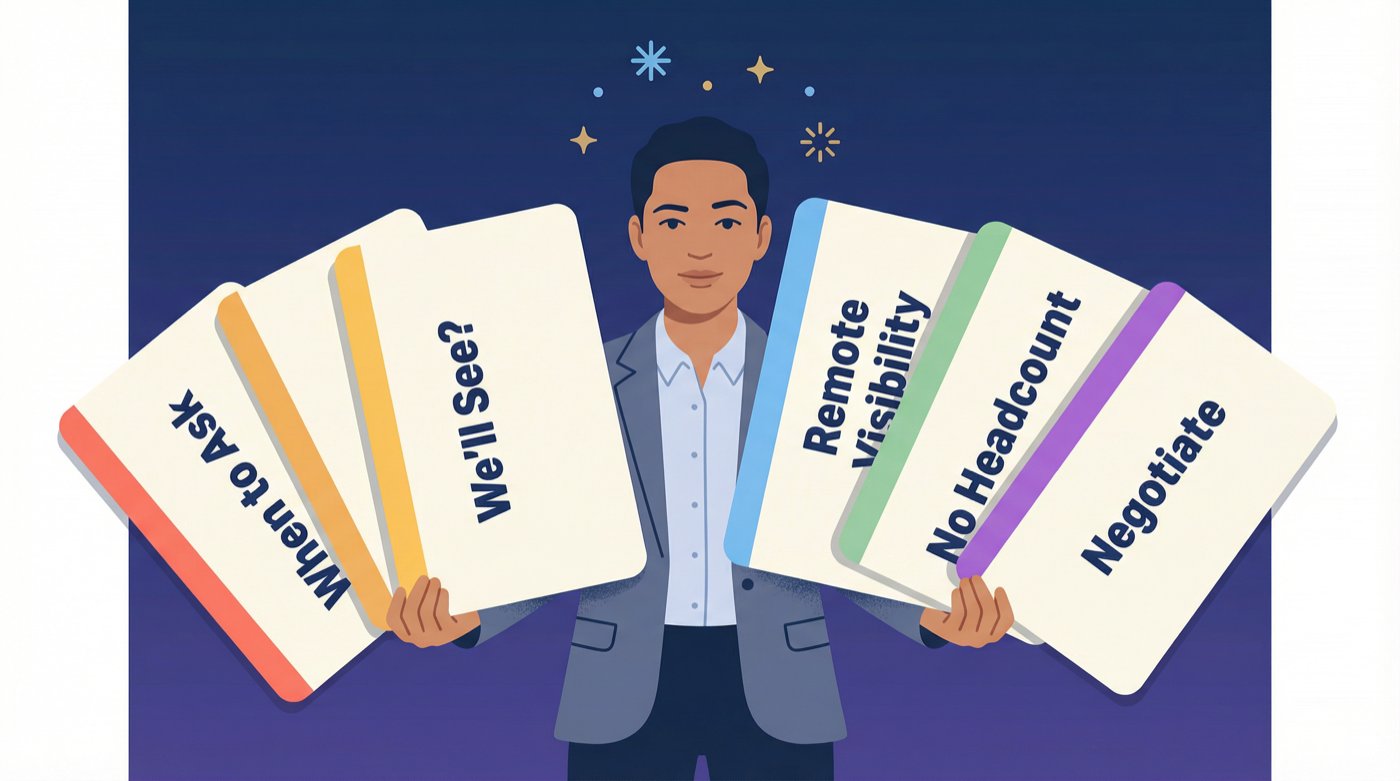
When Should I Ask About a Return Offer?
Earlier than feels natural. Start exploring the process around the midpoint of your internship. Ask directly about next steps 2 to 3 weeks before the end. Avoid waiting until the final week, because by then, headcount decisions may already be locked in. USC's career center recommends being proactive about discussing future plans well before the end of the internship.
What If My Manager Says "We'll See"?
Translate "we'll see" into a measurable plan. Ask: "What would you need to see to feel confident recommending me?" and "What are the top 2 gaps I should close before the end?" This turns a vague answer into specific, actionable targets. If you close those gaps and circle back, you've made it very hard for them to say no.
What If I'm Hybrid or Remote?
You need to engineer visibility deliberately. NACE's 2025 Internship & Co-op Report reports lower offer and conversion rates for hybrid internships than in-person ones, so treat visibility as part of your job. Send weekly written updates, book demo slots to show your work, attend in-person days when possible, and ask to present at a team meeting at least once.
What If There's No Headcount?
Ask for three things: referrals to other teams, a specific date when they'll re-evaluate headcount, and a written recommendation. Then activate your backup plan fast. An internship without a return offer still gave you real experience, real deliverables, and (hopefully) a real advocate willing to make introductions. That's a strong foundation for your job search, and tools like AIApply can help you move quickly on external applications.
How Do I Follow Up After Asking About a Return Offer?
Give your manager a few days to think after your initial conversation. If you haven't heard back within a week, send a brief follow-up: "Just wanted to check in on our conversation about next steps. Is there anything you need from me to move things forward?" Keep it short, professional, and focused on removing obstacles rather than applying pressure. For guidance on phrasing, our job application follow-up email examples translate directly to this kind of internal follow-up.
Can I Negotiate an Internship Conversion Offer?
Yes, absolutely. Conversion offers are still job offers, and they're negotiable. The negotiating dynamics are a bit different from an external offer, because you already have a relationship with the company and they know your market value better. Focus on the areas where you have the most room: start date, title, team placement, and sometimes base salary. Our guide on entry-level salary negotiation walks through the full framework.
What's the Difference Between a Return Offer and a Regular Job Offer?
A return offer (sometimes called a conversion offer) comes from a company you've already interned with. It typically involves a shorter or simplified hiring process because the company has already evaluated your work firsthand. A regular job offer comes through the standard application pipeline. The key advantage of a return offer is that you're a known quantity, which means less perceived risk for the employer and usually a faster decision.
Should I Tell My Manager About Other Offers?
This depends on your relationship and the culture. If you genuinely want to stay and have a competing offer, mentioning it can create urgency. But frame it as a commitment signal, not a threat: "I've received another offer, and I wanted to be transparent because this team is my first choice. Is there a way to accelerate the timeline?" If the relationship isn't strong enough for that kind of honesty, keep the competing offer to yourself and focus on your proof pack.
Your Next Steps: How to Put This Plan Into Action Today
If you want the fastest path to a return offer, do these three things today:
Schedule a Success Criteria meeting with your manager this week. Define what "great" looks like before you try to achieve it.
Start a Proof Log right now, even if you're halfway through your internship. Documenting impact retroactively is better than not documenting it at all.
Draft your ROI Memo and share it 2 to 3 weeks before your internship ends. Make it easy for your manager to say yes.
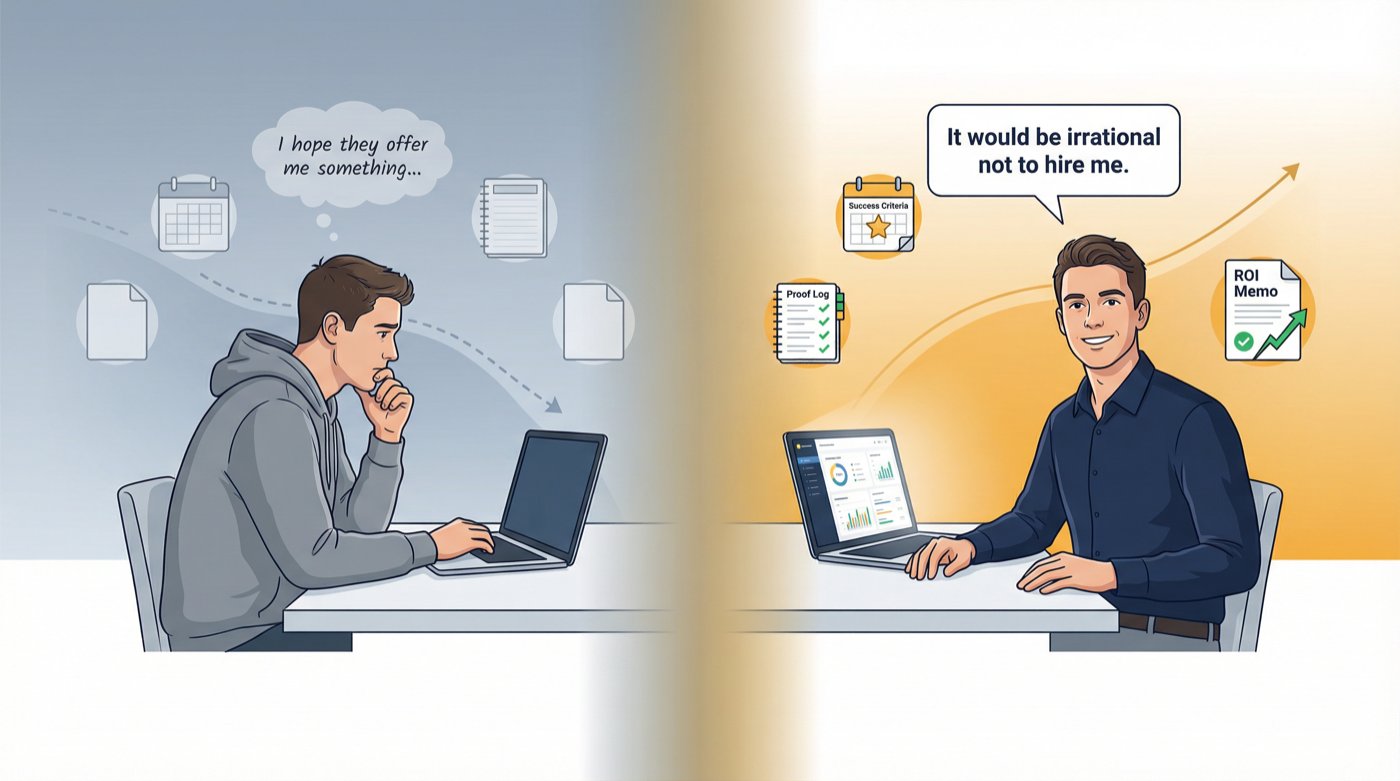
That's how you turn "I hope they offer me something" into "it would be irrational not to hire me."
And if you're preparing for conversion interviews or need to apply externally as a backup plan, AIApply's Mock Interview tool and AIApply's Resume Builder give you everything you need to compete.
If you need to cast a wide net, AIApply's Auto Apply keeps your search moving while you focus on earning that offer.
Most "turn your internship into a job" advice boils down to three words: work hard, be nice. And sure, that's true. But it's also useless. You already know to work hard and be nice. You're here because you want something more specific.
So let's talk about what's actually happening when an intern gets a full-time offer.
You're not being "rewarded for good work." You're being chosen as the lowest-risk, highest-upside way to fill a real headcount slot, inside a messy organization, under time pressure. That's a different game entirely. And it requires a different playbook.
At AIApply, we've helped over a million job seekers navigate every stage of the hiring process, from crafting resumes to crushing interviews. We've seen what separates the interns who get offers from the ones who don't. This guide is the complete system: a week-by-week conversion playbook with scripts you can copy, templates you can steal, and a data-backed framework for making yourself the obvious hire.
Internship Conversion Rates in 2026: What the Data Shows
If you're assuming "perform well and an offer will come," you need to adjust your expectations. Conversion is common, but it's far from guaranteed.
The latest data tells the story clearly:
In the U.S., NACE's 2025 Internship & Co-op Report (published March 2025) reports an average intern offer rate of 62% and an overall conversion rate under 51% for the 2023-24 intern cohort. That means nearly half of all interns who get an offer don't end up converting to full-time. And a significant chunk never get an offer at all.
The modality you're working in matters, too. NACE's data shows that in-person internships had significantly higher offer and conversion rates than hybrid programs: 71.9% offer rate vs 56.2%, and 58.5% conversion rate vs 46.0%. If you're remote or hybrid, that's not a death sentence, but it means you have to work harder on visibility (more on that later).
Across the Atlantic, the ISE Student Recruitment Survey 2025 shows that 50% of interns and 44% of placement students in the U.K. converted into graduate roles. That's actually down from 54% and 49% the year before.
And from a student-side perspective, Duke University's 2025 Summer Experience Survey (published February 2026, based on 850+ responses) found that 24% reported a full-time return offer, 23% got a return internship offer, and 53% received no return offer at all.
The takeaway isn't doom and gloom. You can't control headcount. You can control whether you become the obvious choice if headcount exists. That distinction changes everything about how you spend your internship.
What Managers Are Actually Thinking When They Extend a Return Offer
A full-time offer is not a compliment. It's a risk decision.
Managers aren't sitting around thinking, "Who was the nicest intern?" They're thinking, "Can I fill this role with someone I already know, instead of running a three-month search for a stranger?"
A manager only extends a return offer when three conditions are all true at the same time:
1. There's a real slot (headcount + budget). No headcount, no offer. It doesn't matter how brilliant you are. If the budget isn't there, the answer is no. This is the one factor completely outside your control.
2. You're "de-risked." This means your manager believes you can do the job with less supervision than hiring a stranger. You've proven you can handle ambiguity, deliver work, and not create more problems than you solve.
3. Someone will sponsor you internally. Hiring is political. Someone has to walk into a room you're not in and say, "I want this person on my team." If nobody's willing to do that, even great performance won't save you.
Think of your internship as a sales process:
The product is your future performance
The buyer is your manager and key stakeholders
The price is a headcount slot
The risk is "what if we hire them and it's a mistake?"
Your job over the next 8 to 12 weeks? Lower that perceived risk faster than anyone else.
The 3-Part System for Converting Your Internship Into a Hire
This is the conversion model that actually works. We call it Want, Can, Easy, and every action in this guide maps back to one of these three pillars.
Show Results They Can't Ignore
You deliver outcomes that matter, not just tasks that keep you busy. There's a huge difference between "I updated the spreadsheet" and "I automated the weekly report, saving the team three hours every Monday." The first is activity. The second is a reason to hire you. Knowing how to frame this on paper matters too. Our skills for resume list shows which abilities employers in your field actually look for.
Remove Every Obstacle to Your Own Hire
You surface constraints early: timing, location, graduation date, visa requirements, internal HR processes. If your manager wants to hire you but doesn't realize you graduate in December (not May), that's a problem you could've solved months ago.
Make Your Hire an Easy Decision to Approve
You produce a "proof pack" that makes the decision effortless to justify up the chain. Managers often want to hire their interns but hate writing the business case. If you write it for them, you've removed the last barrier.
Skip one of these and watch what happens:
Skip B (able): "We love you, but there's no headcount." You made them want you but never helped them figure out how to hire you.
Skip C (easy): "You're great, but we need to interview other candidates." You proved your worth but didn't make the paperwork easy enough to skip the formal process.
All three together: "We'd be stupid not to hire you." That's the goal.
Before Day 1: How to Set Up Your Internship for Conversion
Your internship conversion doesn't start on your first day. It starts the moment you accept the offer. This phase is about showing up already aligned with how hiring decisions actually work.
How to Find the Full-Time Role You Want to Convert Into
Don't wait until week 9 to figure out what you're converting into. Before you start, ask yourself:
What team would I join full-time?
What would my title likely be?
What would I own?
What skills does that role actually require?
If you can find the job description for the full-time role (even last year's posting), grab it. That becomes your "target spec," and every project you choose during the internship should create evidence that you can do that job. Explore career path guides like the marketing intern career guide and product analyst intern guide to understand what full-time versions of your role typically look like.
What to Ask About the Return Offer Process Before You Start
In your first conversations (or during onboarding), ask these four questions:
"How do return offers usually work here?"
"Who's involved in the decision?"
"What does a strong intern do differently?"
"When do people typically find out?"
USC's career center advises setting expectations early and being intentional about conversion, including planning a conversation well before the end of the internship. Getting this information early gives you a map of the entire process.
How to Define Your Intern Brand Before Anyone Defines It for You
This isn't cringe personal branding. It's clarity. Pick one positioning statement that describes how people should remember you:
"I'm the intern who takes messy problems and ships clean solutions."
"I'm the intern who makes numbers explainable and decisions easier."
"I'm the intern who improves a process and documents it so it sticks."
When your name comes up in a room you're not in, this is what you want people to say. Keep it simple, keep it true, and let your work reinforce it every week. This kind of intentional positioning is also the foundation of a strong job search strategy if you need to apply externally.
Week 1: How to Set Yourself Up for a Return Offer
Week 1 is where most interns accidentally lose the offer. Not by failing at anything. By never defining what "good" actually means.
How to Book a Success Criteria Meeting in Your First Week
In your first three to five working days, ask your manager for a dedicated meeting. A script you can adapt:
"Could we do 30 minutes this week to align on what a successful internship looks like? I'd love to confirm priorities, how you like updates, and what 'great' looks like by the end."
This single meeting does more for your conversion odds than any amount of head-down work. It tells your manager you're serious, organized, and operating at a level most interns never reach. If you're not sure how to phrase the request, our guide on how to send a message to a hiring manager has templates that work across industries.
How to Write a One-Page Internship Contract With Your Manager
After that meeting, send your manager a short document (email or shared doc) that captures:
Top 3 outcomes you'll deliver
Success metrics (even if they're approximate)
Weekly cadence (your 1:1 schedule + written update plan)
Definition of done for your main project
Feedback moments (midpoint check-in + end-of-internship review)
This does two things at once. First, it makes you look unusually organized. Second, it forces clarity, which means fewer surprises and less rework down the line. Both of those reduce risk, and reducing risk is the name of the game.
The One Question Interns Never Ask (But Should)
"If you were me, what would you do to earn a return offer?"
You're not begging. You're asking for the scoring rubric. Most managers will tell you exactly what matters if you give them permission to be direct. And once you know, you can spend the rest of the internship doing exactly that.
Weeks 2-4: How to Build Credibility and Prove You're Worth Hiring
Your goal during these weeks is to prove reliability and speed before anyone can label you "needs handholding."
How to Identify and Deliver a Quick Win Early in Your Internship
A quick win is something that's small enough to finish fast, visible enough that people notice, and useful enough that it reduces someone's pain.
Examples that work across industries:
→ Automate a recurring report that someone does manually every week
→ Fix a documentation gap that keeps causing mistakes
→ Improve an onboarding checklist based on your own experience joining
→ Clean up a dashboard that everyone complains about but nobody fixes
Why this matters so much: people generalize early. If you look effective in week 2, you get assigned better work. Better work gives you better evidence for your proof pack. That evidence makes conversion easier. The whole thing compounds.
How to Ask Better Questions and Stop Burning Your Manager's Time
Every time you're about to ask your manager a question, run it through this filter first:
"Can I show what I tried, what I think the answer is, and what decision I need?"
Managers don't hire interns who dump uncertainty on them. They hire interns who bring solutions with their questions.
The good question format:
Context (one sentence on what you're working on)
What I tried (one or two bullets showing your effort)
My best guess (what you think the answer is)
The decision I need from you (one specific ask)
This format turns every question into proof that you can think independently. Your manager notices, even if they don't say anything.
Why You Need a Daily Proof Log and How to Build One
Invisible work is indistinguishable from no work. The difference between "I did a lot of good work" and "here's exactly why you should hire me" is documentation.
Create a simple doc and update it every day:
You'll use this log later to build your proof pack and ROI memo. Interns who can say "I shipped X, which saved Y hours for Z team" in a conversion meeting are playing a completely different game than interns who say "I feel like I contributed a lot." This is the same discipline described in our guide on how to write a resume for your first job, turning daily contributions into bullet-point evidence that recruiters actually read.
Weeks 5-6: How to Get Honest Feedback and Build Internal Sponsors
This is the pivot point. You stop being "an intern" and start becoming "a future colleague."
How to Run Your Own Midpoint Performance Review
USC's career center recommends being proactive about discussing future plans and conversion rather than waiting until the end. Don't assume your company will schedule a formal midpoint. Many won't. Take the initiative.
"Could we do a midpoint check-in next week? I'd love feedback on what's going well, what to improve, and what I should focus on to be a strong candidate for a return offer."
In that meeting, ask these three questions:
"If my internship ended today, what would you rate my performance and why?"
"What would make you confident recommending me for a full-time role?"
"What's the biggest gap between where I am and where I need to be?"
The point isn't reassurance. The point is course correction while you still have time. If something needs to change, you want to find out at the halfway mark, not in a farewell meeting.
How to Build a Stakeholder Map That Creates Internal Advocates
Think of this like a consultant would. List out:
Your manager
Your manager's manager (skip-level)
3 to 5 frequent collaborators
1 person adjacent to your work (analytics, design, sales, ops)
Your goal isn't to network for fun. Your goal is to create sponsors: people who will walk into a room you're not in and say, "Hire them. I've seen their work."
One sponsor is fragile. If that person leaves, changes teams, or just isn't in the meeting, you've lost your advocate. Multiple sponsors create momentum.
How to Have Strategic Coffee Chats That Lead to Sponsorships
Random coffee chats are nice. Strategic ones are powerful. For each conversation, you want to cover:
① Context: "What does success look like on your team?"
② Pain: "What slows you down right now?"
③ Alignment: "Here's what I'm working on. Does it help?"
④ Advice: "What would you do to stand out here?"
Then follow up with something useful: a document, a fix, a summary, an introduction. This turns a casual chat into a working relationship, and working relationships turn into sponsorships. A well-crafted message makes a real difference here. Our guide on how to send a message to a hiring manager covers exactly how to reach out without coming across as generic or transactional.
Final Weeks: How to Ask for a Return Offer and Close the Deal
This is where you close. And the most common mistake is waiting too long.
When and How to Start the Return Offer Conversation
A lot of interns wait until the final week to bring up full-time employment. By then, headcount decisions may already be locked. USC's career center suggests planning a discussion about future plans ahead of the end of the internship.
A good timing rule:
4 to 5 weeks before the end: Start exploring the process. Ask about timelines, who's involved, and what's needed.
2 to 3 weeks before the end: Ask directly for next steps and a clear answer.
How to Build a Proof Pack Your Manager Can Forward Up the Chain
The proof pack is a short set of artifacts your manager can forward directly to whoever approves headcount. It makes hiring you easy (remember the framework).
Include these four things:
One-page impact summary (your ROI memo, template below)
Links to 2 to 3 key deliverables (PRs, dashboards, docs, decks)
A bullet list of stakeholder feedback (quotes or paraphrases from your coffee chats and collaborations)
Your "Next 90 Days" plan as a full-time hire
This is powerful because managers often want to hire you but hate writing the justification. You write it for them. You've just removed the biggest friction point in the entire process.
The ROI Memo Template Interns Can Copy and Send
Copy this, fill it in, and send it to your manager 2 to 3 weeks before your internship ends:
Subject: Internship wrap-up + proposal for full-time (Your Name)Context:- Team goal: [what your team is trying to achieve]- My internship focus: [your project area]What I delivered (high level):1) [deliverable] -> [impact metric]2) [deliverable] -> [impact metric]3) [deliverable] -> [impact metric]Business impact:- Time saved: [estimate]- Quality/reliability: [errors reduced, latency improved, etc.]- Revenue/cost/risk: [as applicable]- Stakeholders supported: [names/teams]What I learned + how I work:- Strengths I demonstrated: [2-3]- Feedback I received + changes I made: [show coachability]Why I'm a strong full-time fit:- I already understand: [systems, customers, process]- I can own: [specific scope]- I reduce ramp time vs a new hire because: [reasons]Proposed next 90 days (if I join full-time):- Weeks 1-2: [plan]- Weeks 3-6: [plan]- Weeks 7-12: [plan]Keep it to one page. Attach deliverable links separately. This document alone puts you ahead of 90% of interns who just "hope" for an offer.
How to Ask for a Full-Time Offer Without Making It Awkward
The cleanest way to do it:
"I've really enjoyed the work, and I'd like to stay full-time if there's a path. Based on what you've seen, do you feel comfortable supporting a return offer? If yes, what are the next steps and timing?"
Then stop talking and listen.
That last "no headcount" scenario is still a win. You're turning "no" into "help." A warm introduction from a manager who wanted to hire you is worth more than a hundred cold applications.
8 Intern Behaviors That Make Managers Want to Hire You
These are the high-signal behaviors that managers actually reward. They're not obvious, and most internship advice skips them entirely.
How to Report Progress in Terms of Outcomes, Not Just Activity
Invisible work is indistinguishable from no work.
Write your updates in terms of outcomes, not activities:
"Shipped the automated report, which reduced manual prep from 3 hours to 15 minutes"
"Removed the onboarding blocker for Team A by documenting the API setup process"
"Created a reference doc so future interns can set up their environment in 15 minutes instead of 2 days"
Why Being Predictable Gets You Hired Over More Brilliant Interns
Reliability beats brilliance in early-career hiring.
Why? Because reliability is lower risk. And lower risk is exactly what drives conversion decisions. Predictable means: you meet deadlines, you warn early when you won't, and you don't surprise people late.
Demonstrating this quality consistently also sets you up to perform well in any entry-level interview questions about your work style.
How to Ask for Feedback That Tells You Something Useful
"Any feedback?" will get you "You're doing great!" which tells you nothing.
Instead, ask:
"What's one thing I should stop doing?"
"What's one thing I should do more of?"
"If I were full-time, what would worry you?"
That last question is gold. It surfaces the real objections before they become disqualifying.
How to Show Coachability in Ways Managers Actually Notice
When you get feedback, don't just nod. Summarize it, act on it, and show what changed:
"Last week you mentioned my updates were too detailed. I switched to a 3-bullet format. Is this better?"
This is a massive signal. It tells your manager: this person listens, adapts, and improves. That's the definition of a low-risk hire.
How to Operate Independently and Reduce Your Manager's Workload
Managers hire interns who act like future colleagues, not future dependents. Every week, ask yourself:
"What decisions can I make without asking?"
"What can I document so I'm not asking twice?"
"What can I unblock for someone else?"
The more you operate independently, the more your manager starts seeing you as a peer, not a project.
Why You Need Internal Sponsors Across Multiple Teams, Not Just One
One sponsor is fragile. If your only advocate changes teams, goes on leave, or simply misses the decision meeting, you've lost your shot. Multiple allies across different teams create momentum that's hard to stop.
Think of sponsors like a portfolio, not a single stock. Diversify.
How to Find Out When and How Return Offer Decisions Get Made
This is where many interns are dangerously naive. NACE's 2025 Internship & Co-op Report shows conversion rates fluctuate and are affected by program structure and modality. Treat the hiring process as real operations with real deadlines, not vibes.
Ask your manager or HR:
When are headcount decisions made?
Who approves them?
What does the timeline look like?
Is there a formal review, or is it manager discretion?
How to Stay Visible When You're Working Hybrid or Remote
If you're hybrid or remote, you're fighting against a documented disadvantage. NACE reports lower offer and conversion rates in hybrid internships vs in-person in its NACE's 2025 Internship & Co-op Report.
Concrete actions that fix visibility:
→ Over-communicate progress in writing (send a weekly update, every single week)
→ Book short "demo slots" to show your work live, even if it's just 10 minutes
→ Attend key in-person days if possible, especially when decisions are being made
→ Ask to present at a team meeting at least once during your internship
You have to treat visibility as a job requirement when you're not in the office every day.
Ready-to-Use Scripts and Templates for Getting a Return Offer
These are ready to copy, paste, and personalize. Don't overthink the customization. Get them sent.
Weekly Internship Update Template to Send Your Manager
Send this every Friday (or whatever cadence you and your manager agreed on):
Subject: Weekly update (Your Name) - Week of [date]Wins shipped:- [what shipped] -> [impact]- [what shipped] -> [impact]In progress:- [item] (ETA: [date])- [item] (ETA: [date])Blocked / needs decision:- [blocker] -> decision needed: [A vs B] (recommended: [A])Next week priorities:- [top 1]- [top 2]Managers forward these upward. Your weekly update is your PR campaign with an audience of people who control headcount. Every one you send is another data point proving you're organized, productive, and low-risk. For more guidance on professional written communication during the job search, see our job application follow-up email examples. The principles translate directly to internal updates.
Coffee Chat Request Template for Reaching Out to Colleagues
Hi [Name] - I'm interning on [team] working on [topic].Would you be open to a 15-minute chat this week? I'd love tolearn how your team measures success and where I might beable to help.Email Template for Asking Your Manager About a Full-Time Role
If you need to put the ask in writing (some people are more comfortable this way, and written asks give managers time to think):
Subject: Next steps after internshipHi [Manager],I've really enjoyed the internship and I'd like to stay withthe team full-time if there's a path.Could we set aside 20 minutes this week to discuss:1) your feedback on my performance so far, and2) what the return offer process and timeline looks like here?I also put together a short summary of what I've shipped +the impact, and what I'd propose owning in the first 90 daysas a full-time hire.Thanks![Your Name]Need help writing follow-up communications that hit the right tone? The HR follow-up email generator can help you draft professional messages for any stage of the hiring conversation.
How to Prepare for an Internship Conversion Interview
Some companies treat return offers like a shortcut: your manager says yes, HR processes the paperwork, done. Others make you re-interview formally. Plan for the harder version.
How to Turn Internship Projects Into Behavioral Interview Stories
Every answer in a behavioral interview should follow the STAR structure:
Situation: What was the context?
Task: What were you responsible for?
Action: What specifically did you do?
Result: What happened? Quantify it.
Your internship just gave you a goldmine of STAR stories. Use your proof log to turn daily entries into polished interview answers. A guide to behavioral interview questions and answers can show you how to apply this structure across the most common question types, and a thorough walkthrough of behavioral interview preparation covers how to build an entire story bank from your experiences.
Which Interview Scenarios to Prepare Stories For
You need stories for each of these themes:
A time you solved a messy problem
A time you got feedback and changed your approach
A time you influenced someone without having authority
A time you handled ambiguity
A time you made a mistake and fixed it
A time you improved a process
If your internship generated evidence for all six, you're in great shape. If not, pull from previous experience (school projects, part-time jobs, volunteer work). The same frameworks that work for entry-level interview questions apply directly to conversion interviews. The only difference is that your examples will come from within the company rather than from outside it.
How to Practice for a Conversion Interview Until You're Confident
If your company requires a formal interview for conversion, treat it with the same seriousness you'd give an external interview. Our interview practice guide covers the best ways to rehearse role-specific questions, and AIApply's Mock Interview tool lets you paste a job description and practice with AI-generated questions tailored to your target role.
If you want real-time support during a live interview, AIApply's Interview Answer Buddy provides instant, on-screen coaching during Zoom, Google Meet, or Teams calls. It's completely discreet with a one-click hide button for when you share your screen.
One important note: practice is the ethical advantage. It builds real confidence and real skill. Don't rely on tools to "fake" competence. If you can't actually do the job, getting an offer becomes a trap, not a win.
How to Negotiate a Full-Time Offer After Your Internship
Once you have the offer in hand, the game changes completely. You shift from "prove my value" to "confirm fit, clarify terms, and negotiate carefully."
Two basics that matter more than any negotiation tactic:
1. Get everything in writing. Verbal offers are not offers. An offer is a document with a title, a salary, a start date, and benefits. If it's not written down, it's a conversation. Our guide on how to formally accept an offer letter walks through what to verify before you sign once the details are confirmed.
2. Ask for time to review before accepting. "Thank you so much. I'm excited about this. Could I have a few days to review the details?" is a perfectly normal and expected response. No reasonable employer will rescind an offer because you asked for 48 hours.
For a complete framework with scripts covering base salary, signing bonuses, and start dates, our guide on entry-level salary negotiation walks through how to build your case even when you have limited professional experience. If you're unsure how to respond when asked about your salary expectations during a conversion interview, this guide on how to answer salary expectations questions gives you word-for-word scripts you can adapt.
What to Do When You Don't Get a Return Offer
No return offer is painful. But it's not the end of your career, and it's usually caused by one of three things:
Performance: You didn't meet the bar.
Fit: They didn't see you as a long-term match for the team.
Headcount: They couldn't hire anyone, regardless of how good you were.
Only #1 is fully within your control. But you can extract real value from all three situations. Do this within 72 hours of finding out, and start your external search immediately using AIApply's Auto Apply to keep applications moving while you process the feedback.
How to Ask for Honest Feedback When You Don't Get an Offer
"If you had to pick the top 2 things I should improve to be a strong full-time hire in a similar role, what would they be?"
Don't ask for generic feedback. Ask for the two things that would change the outcome. People are much more willing to be honest when you narrow the question.
How to Get Referrals to Other Teams When There's No Headcount
"Are there teams you'd feel comfortable introducing me to?"
If the issue was headcount (not performance), your manager may be more than willing to connect you with other teams that are hiring. This is the warmest possible introduction, and it's yours for the asking.
How to Ask Your Manager for a LinkedIn Recommendation
Even a short LinkedIn recommendation is a durable asset. It validates your internship experience and signals to future employers that your manager thought highly enough of you to put it in writing. Pair it with a well-crafted resume and you'll have a strong foundation. See our guide on how to write a resume for your first job for structuring your internship experience into a compelling document.
How to Launch Your External Job Search After an Internship
This is where you take everything you built during the internship and put it to work. You have something most applicants don't: real impact stories, a proof log full of measurable results, and a strong reference.
Use that proof to build a standout resume. AIApply's Resume Builder can help you generate a version that's tailored to your target role and optimized for ATS systems, so your internship accomplishments actually get seen by recruiters. For inspiration on how to structure your experience, the marketing intern resume example shows exactly how to present internship impact in a format that wins interviews.
If you want to make sure your resume passes automated screening, run it through AIApply's Resume Scanner to check for keyword gaps and ATS compatibility before you send it anywhere. Pair it with a custom cover letter from our Cover Letter Generator, and you're already ahead of candidates who are still using generic templates.
And if you need to cast a wide net fast, AIApply's Auto Apply can submit tailored applications to hundreds of matched positions while you focus your energy on networking and interview prep. It handles the application grind so you can concentrate on what humans do best: building relationships and telling your story. A solid job search strategy can help you focus on which roles to target and how to sequence your outreach.
Students can also take advantage of AIApply's student discount for 40% off all premium features.
Frequently Asked Questions About Internship Conversion
When Should I Ask About a Return Offer?
Earlier than feels natural. Start exploring the process around the midpoint of your internship. Ask directly about next steps 2 to 3 weeks before the end. Avoid waiting until the final week, because by then, headcount decisions may already be locked in. USC's career center recommends being proactive about discussing future plans well before the end of the internship.
What If My Manager Says "We'll See"?
Translate "we'll see" into a measurable plan. Ask: "What would you need to see to feel confident recommending me?" and "What are the top 2 gaps I should close before the end?" This turns a vague answer into specific, actionable targets. If you close those gaps and circle back, you've made it very hard for them to say no.
What If I'm Hybrid or Remote?
You need to engineer visibility deliberately. NACE's 2025 Internship & Co-op Report reports lower offer and conversion rates for hybrid internships than in-person ones, so treat visibility as part of your job. Send weekly written updates, book demo slots to show your work, attend in-person days when possible, and ask to present at a team meeting at least once.
What If There's No Headcount?
Ask for three things: referrals to other teams, a specific date when they'll re-evaluate headcount, and a written recommendation. Then activate your backup plan fast. An internship without a return offer still gave you real experience, real deliverables, and (hopefully) a real advocate willing to make introductions. That's a strong foundation for your job search, and tools like AIApply can help you move quickly on external applications.
How Do I Follow Up After Asking About a Return Offer?
Give your manager a few days to think after your initial conversation. If you haven't heard back within a week, send a brief follow-up: "Just wanted to check in on our conversation about next steps. Is there anything you need from me to move things forward?" Keep it short, professional, and focused on removing obstacles rather than applying pressure. For guidance on phrasing, our job application follow-up email examples translate directly to this kind of internal follow-up.
Can I Negotiate an Internship Conversion Offer?
Yes, absolutely. Conversion offers are still job offers, and they're negotiable. The negotiating dynamics are a bit different from an external offer, because you already have a relationship with the company and they know your market value better. Focus on the areas where you have the most room: start date, title, team placement, and sometimes base salary. Our guide on entry-level salary negotiation walks through the full framework.
What's the Difference Between a Return Offer and a Regular Job Offer?
A return offer (sometimes called a conversion offer) comes from a company you've already interned with. It typically involves a shorter or simplified hiring process because the company has already evaluated your work firsthand. A regular job offer comes through the standard application pipeline. The key advantage of a return offer is that you're a known quantity, which means less perceived risk for the employer and usually a faster decision.
Should I Tell My Manager About Other Offers?
This depends on your relationship and the culture. If you genuinely want to stay and have a competing offer, mentioning it can create urgency. But frame it as a commitment signal, not a threat: "I've received another offer, and I wanted to be transparent because this team is my first choice. Is there a way to accelerate the timeline?" If the relationship isn't strong enough for that kind of honesty, keep the competing offer to yourself and focus on your proof pack.
Your Next Steps: How to Put This Plan Into Action Today
If you want the fastest path to a return offer, do these three things today:
Schedule a Success Criteria meeting with your manager this week. Define what "great" looks like before you try to achieve it.
Start a Proof Log right now, even if you're halfway through your internship. Documenting impact retroactively is better than not documenting it at all.
Draft your ROI Memo and share it 2 to 3 weeks before your internship ends. Make it easy for your manager to say yes.
That's how you turn "I hope they offer me something" into "it would be irrational not to hire me."
And if you're preparing for conversion interviews or need to apply externally as a backup plan, AIApply's Mock Interview tool and AIApply's Resume Builder give you everything you need to compete.
If you need to cast a wide net, AIApply's Auto Apply keeps your search moving while you focus on earning that offer.
%20(1).webp)
.webp)
Don't miss out on
your next opportunity.
Create and send applications in seconds, not hours.


