
Should I Use AI to Write My Resume? 2026 Reality Check

.webp)
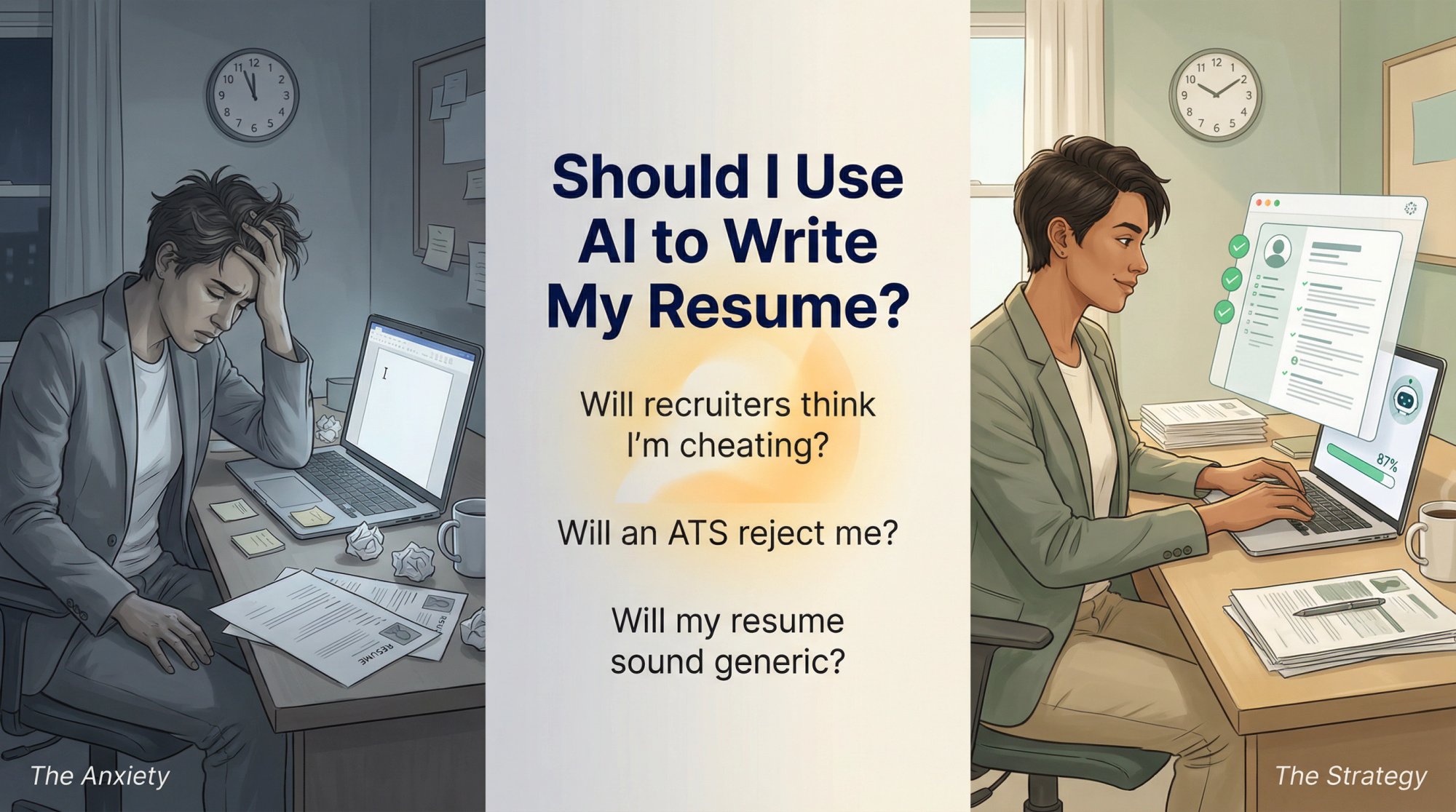
If you're asking "should I use AI to write my resume?", you're usually not asking about writing at all.
You're asking: "Will recruiters think I'm cheating?" "Will an ATS reject me?" "Will I get caught?" "Will my resume sound fake and generic?" "How do I use AI without accidentally lying or looking lazy?"
Here's the honest answer for 2026:
Yes, you should use AI for your resume, but only as a tool to amplify your evidence, not as a machine that invents your story. The candidates who win use AI like a power tool: fast, precise, and dangerous if you don't keep your hands on the wheel.
This guide shows you exactly how to do that.
When Should You Use AI for Your Resume?
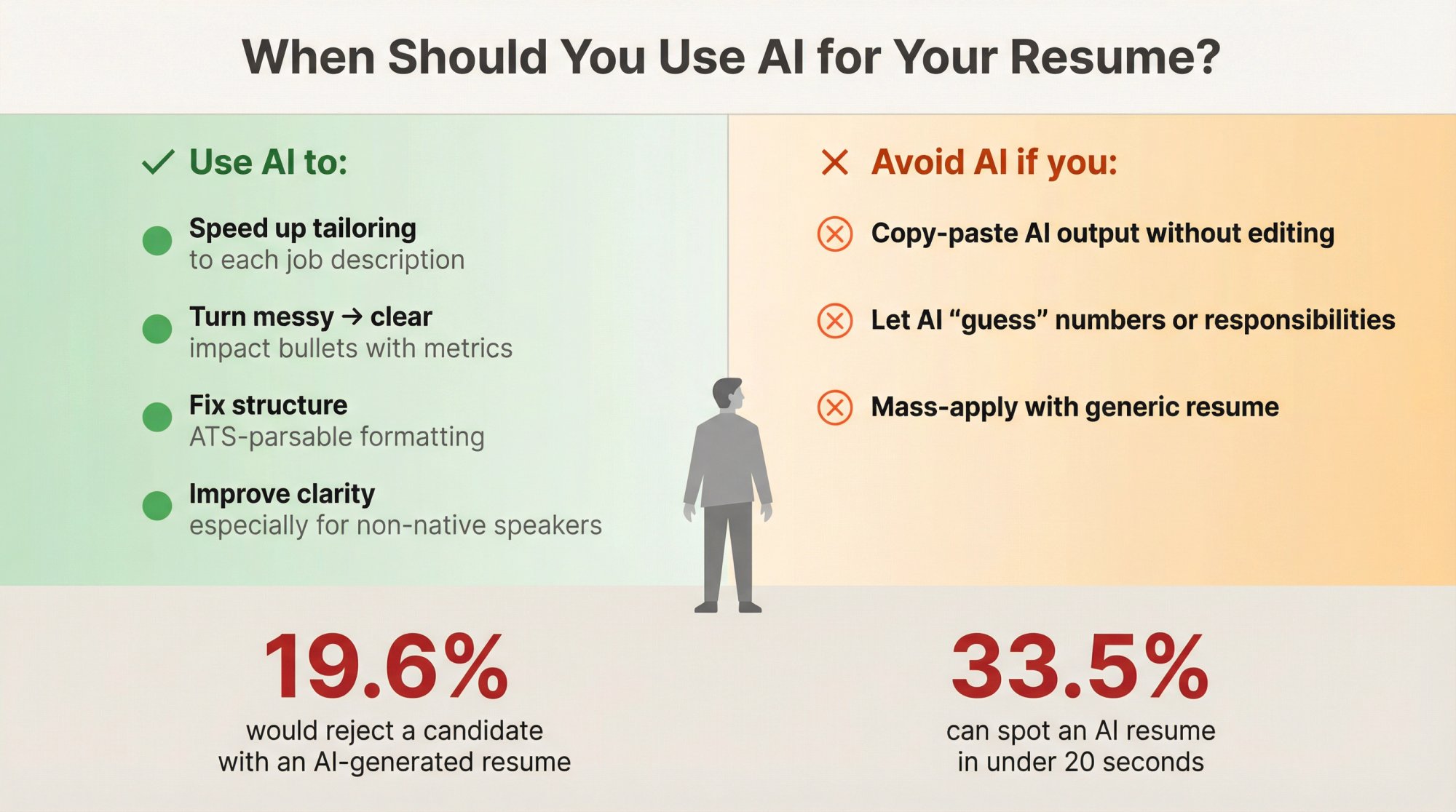
Use AI if you want to:
→ Speed up tailoring to each job description without rewriting from scratch
→ Turn messy experience into clear impact bullets with metrics and context
→ Fix structure with ATS-parsable formatting and consistent sections
→ Improve clarity and tone, especially if English isn't your first language
Avoid AI (or use it only lightly) if you plan to:
• Copy-paste AI output without editing
• Let AI "guess" numbers, tools, or responsibilities
• Mass-apply with the same generic resume
Why? Because recruiters are increasingly skeptical of "perfect-but-empty" writing. One 2025 survey of 600 hiring managers found 19.6% would reject a candidate with an AI-generated resume or cover letter, and 33.5% said they can spot an AI-generated resume in under 20 seconds.
That doesn't mean "don't use AI." It means don't submit "AI-looking" resumes.
How Resume Screening Actually Works in 2026
A resume isn't a biography. It's not even "writing."
A resume is a decision-making tool. Its job is to help a stranger make a quick bet: "This person is likely to succeed in this role."
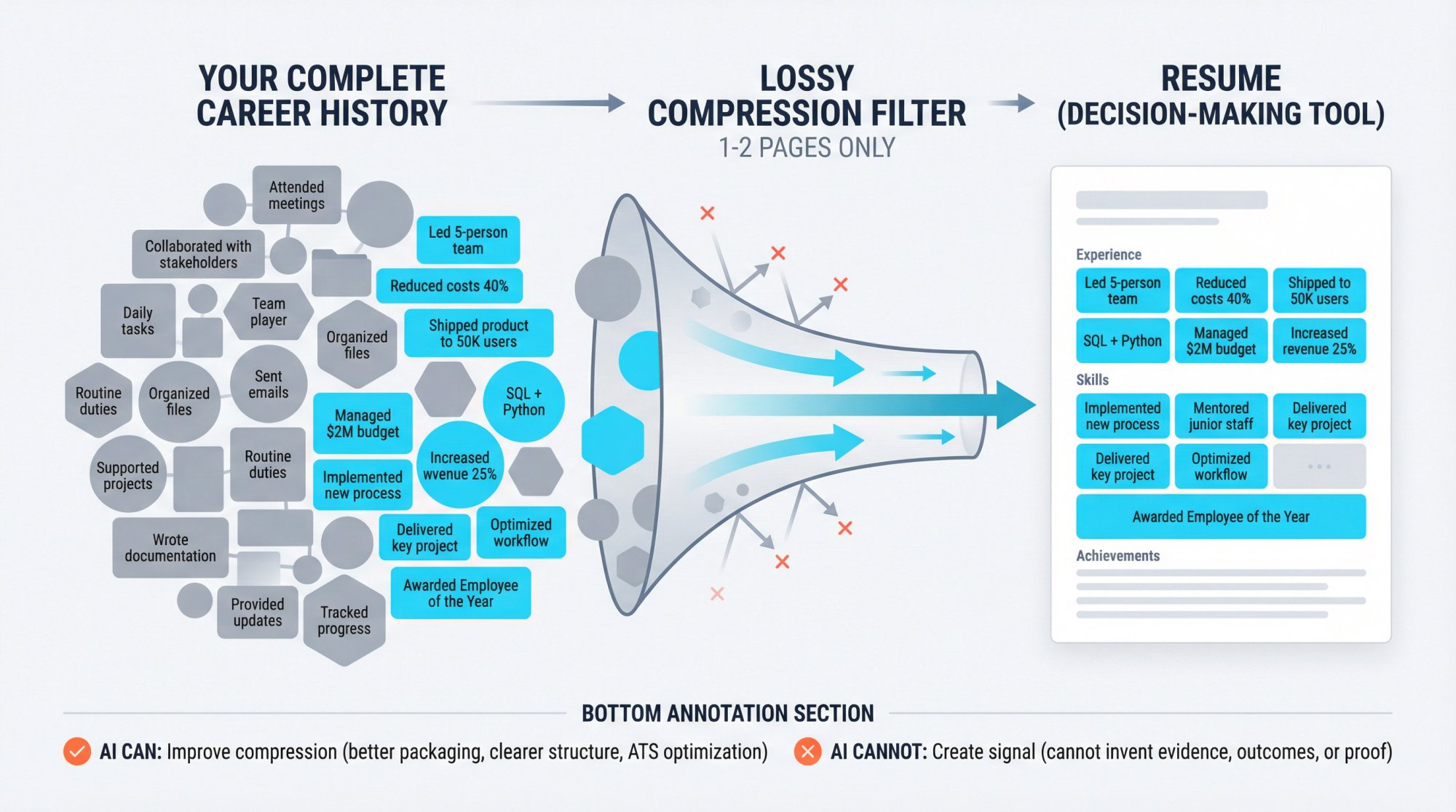
From first principles, hiring is a signal problem. The employer has a role with real constraints (tasks, tools, deadlines, risk). You have a history of actions you took and outcomes you caused. The resume is a lossy compression of that history into one or two pages.
Lossy compression means: you cannot include everything, so you must include the highest-signal evidence.
That's the key insight:
AI can improve compression. It cannot create signal.
If you don't have evidence (projects, outcomes, scope), AI can't invent it without turning your resume into a liability.
So the correct mental model is:
You provide the facts and proof.
AI helps you package those facts into the cleanest, most job-relevant signal.
Why 81% of Job Seekers Use AI for Resumes
If you're worried "using AI will make me stand out in a bad way," you might be running on a 2022 mental model.
In 2026, AI use is mainstream.
Here's what the data actually shows:
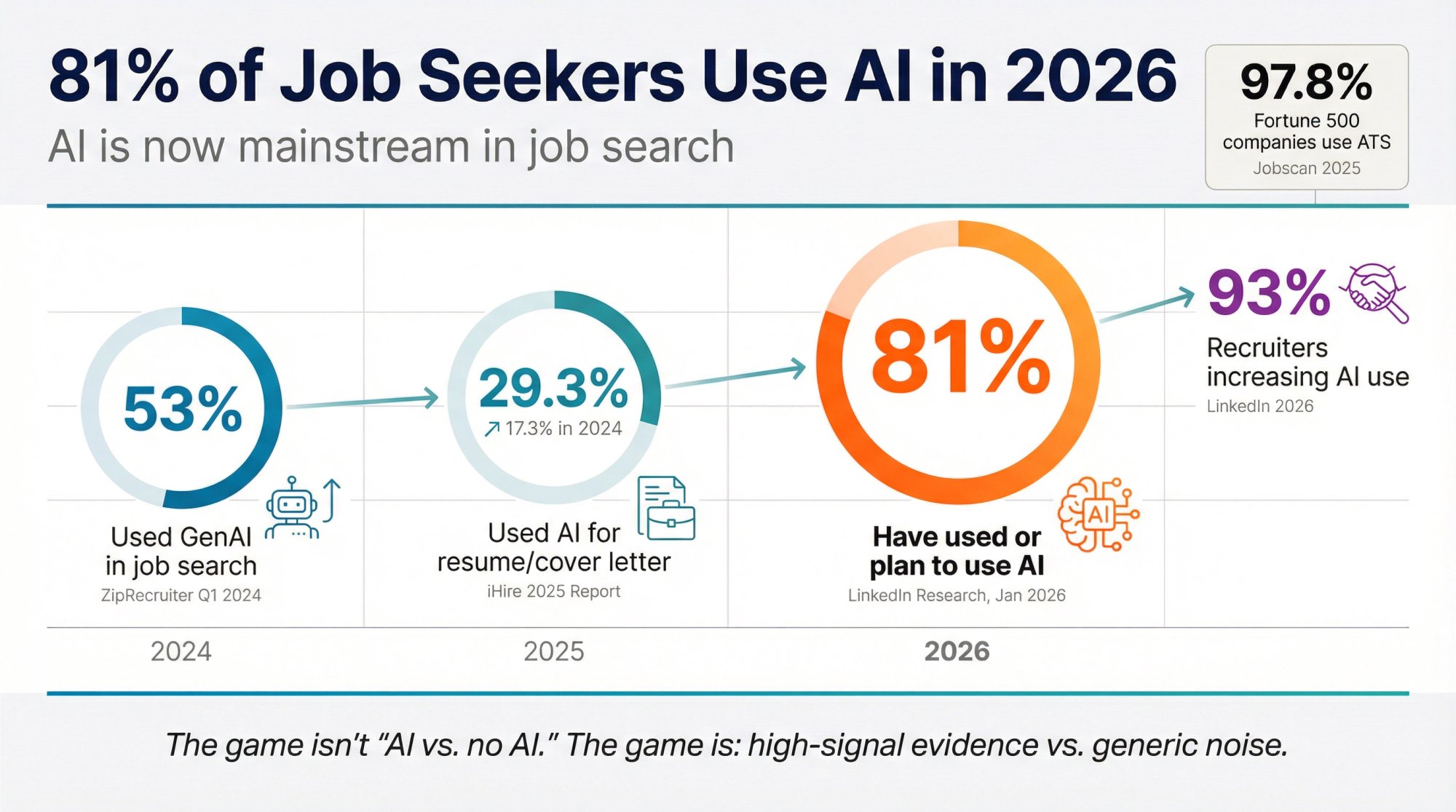
• 53% of job seekers surveyed in ZipRecruiter's 2024 Q1 New Hires Survey said they used ChatGPT or a similar GenAI tool in their job search. Among those who used GenAI, 23% used it to draft a resume and 21% to draft a cover letter
• In iHire's State of Online Recruiting 2025 report, 29.3% of candidates said they used AI to write or customize their resume or cover letter in the past year, up from 17.3% in 2024
• LinkedIn's research published January 7, 2026 reports 93% of recruiters plan to increase their use of AI in 2026, and 81% of people have used or plan to use AI in their job search
• Jobscan's 2025 ATS Usage Report (July 14, 2025) found an ATS was detectable for 97.8% of Fortune 500 companies in 2025
Translation: even if a recruiter is human, the pipeline around them is often software-mediated.
So the game isn't "AI vs. no AI." The game is: high-signal, role-matched evidence vs. generic noise.
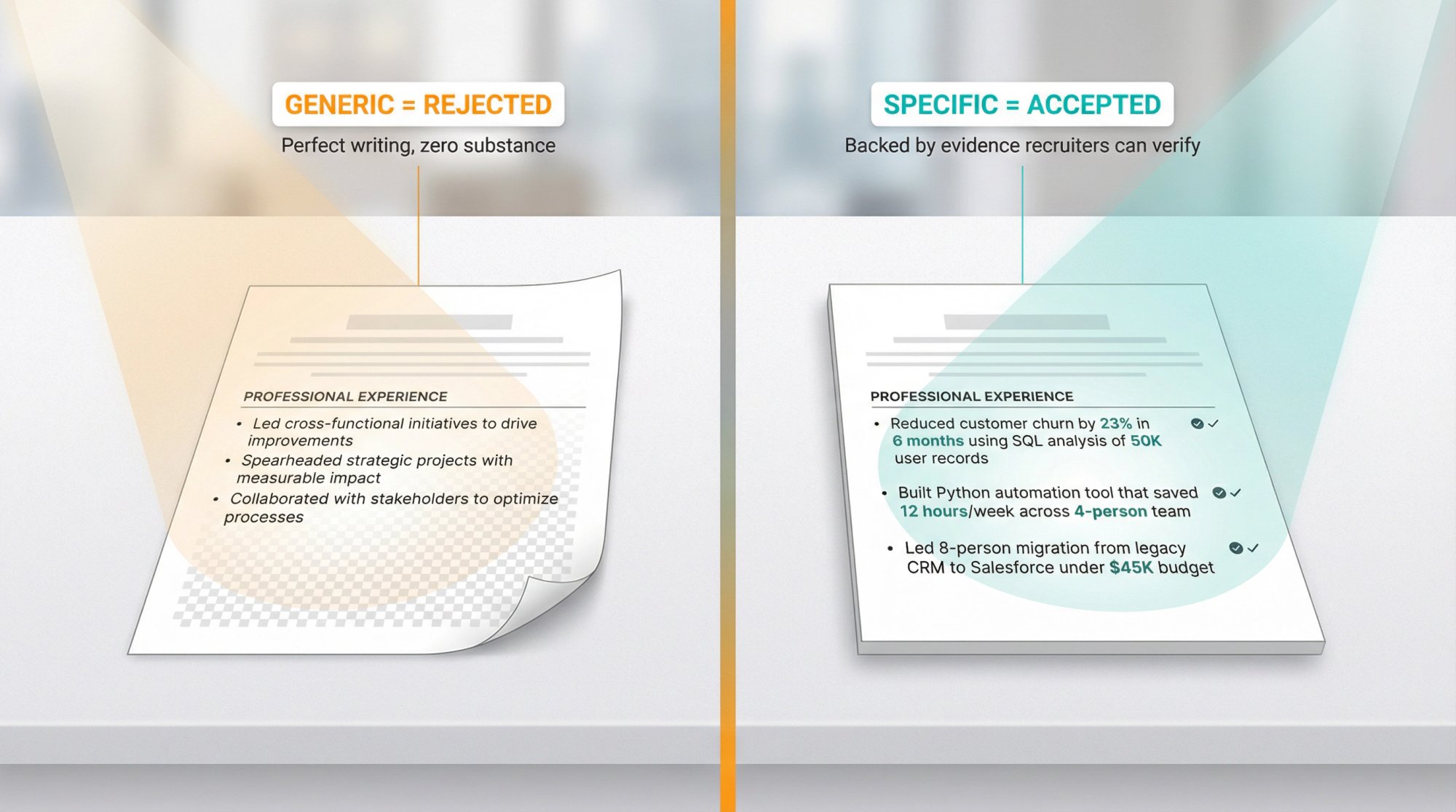
Why Generic Resumes Get Rejected (Not AI-Written Ones)
A lot of people obsess over: "Can employers detect AI writing?"
The bigger threat is: they can detect emptiness.
Here's what "AI-looking" usually means in practice:
Indeed's career advice (updated July 26, 2025) includes employer interviews where AI-generated resumes were described as well-written and aligned, but also generic and lacking detail, requiring extra effort to verify truth.
So you don't win by "sounding human." You win by being specific.
Do AI Detectors Actually Work?
Many AI text detectors have high false-positive and false-negative rates. MIT Sloan Teaching & Learning literally titles it: "AI Detectors Don't Work."
OpenAI's own AI text classifier was discontinued (July 20, 2023) due to its low accuracy.
More recent commentary from UCLA (Oct 9, 2025) also emphasizes reliability issues and institutional skepticism toward detectors.
A particularly important angle: detectors can be biased. Stanford HAI highlighted research where detectors misclassified a large share of TOEFL essays written by non-native English speakers as AI-generated.
Takeaway: betting your career on "beating detectors" is the wrong optimization target.
Optimize for:
→ Truth
→ Specificity
→ Match to the role
→ Clean formatting
When to Use AI for Your Resume (And When to Avoid It)
Use this like a quick diagnostic.
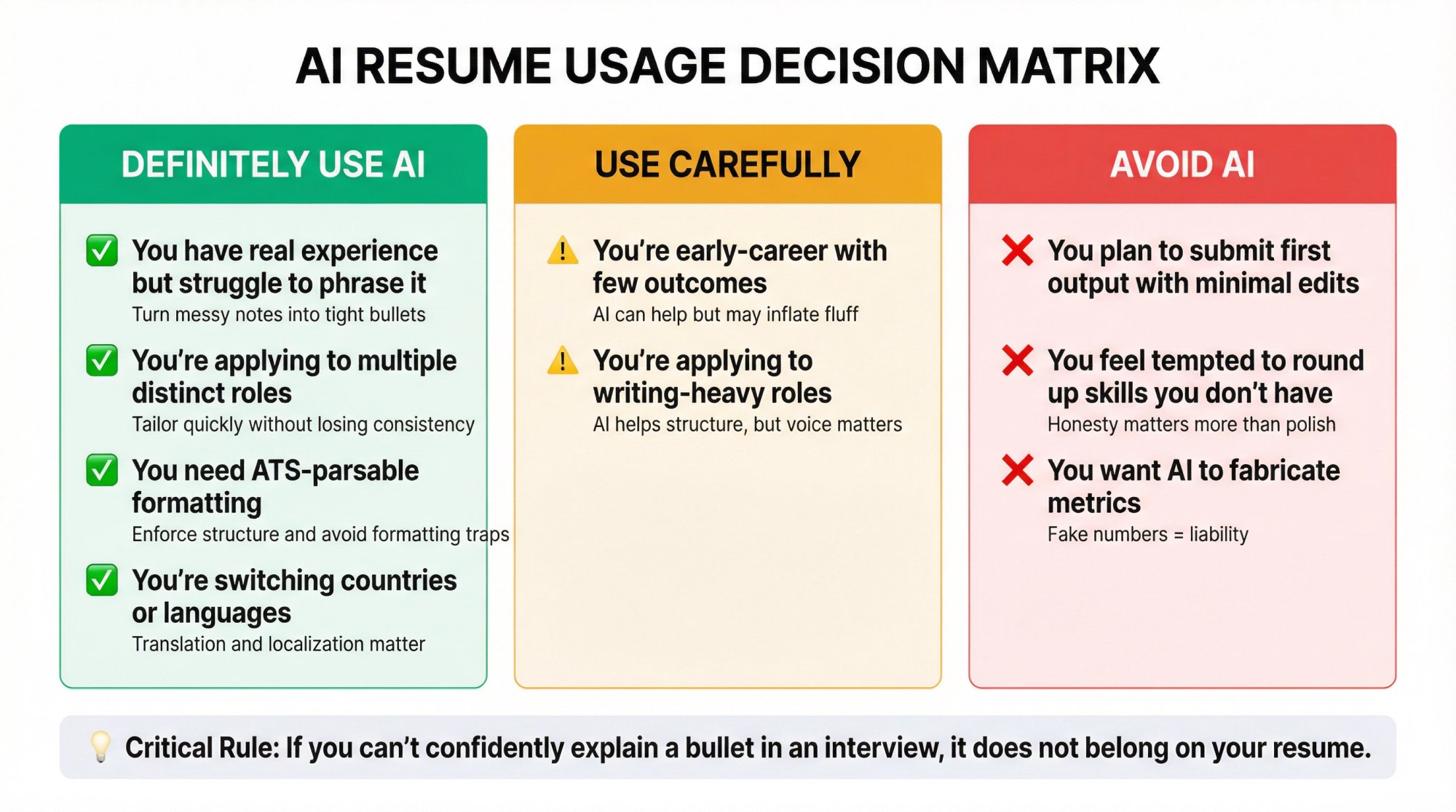
When Should You Definitely Use AI for Your Resume?
You have real experience but struggle to phrase it.
AI can turn messy notes into tight bullets.
You're applying to multiple distinct roles.
AI helps you tailor quickly without losing consistency.
You need ATS-parsable formatting.
AI tools can enforce structure and avoid formatting traps.
You're switching countries or languages.
Translation and localization can matter a lot.
When Should You Use AI Carefully?
You're early-career and don't have many outcomes yet.
AI can help highlight projects, but it can also inflate fluff.
You're applying to writing-heavy roles (content, comms, PR).
AI can help structure, but you'll be judged on voice and originality.
When Should You Avoid AI for Your Resume?
You plan to submit the first output with minimal edits.
You feel tempted to "round up" skills you don't actually have.
You want AI to fabricate metrics ("increased revenue by 37%") because it sounds good.
A useful rule:
If you can't confidently explain a bullet in an interview, it does not belong on your resume.
How to Write an AI Resume: 8-Step Workflow
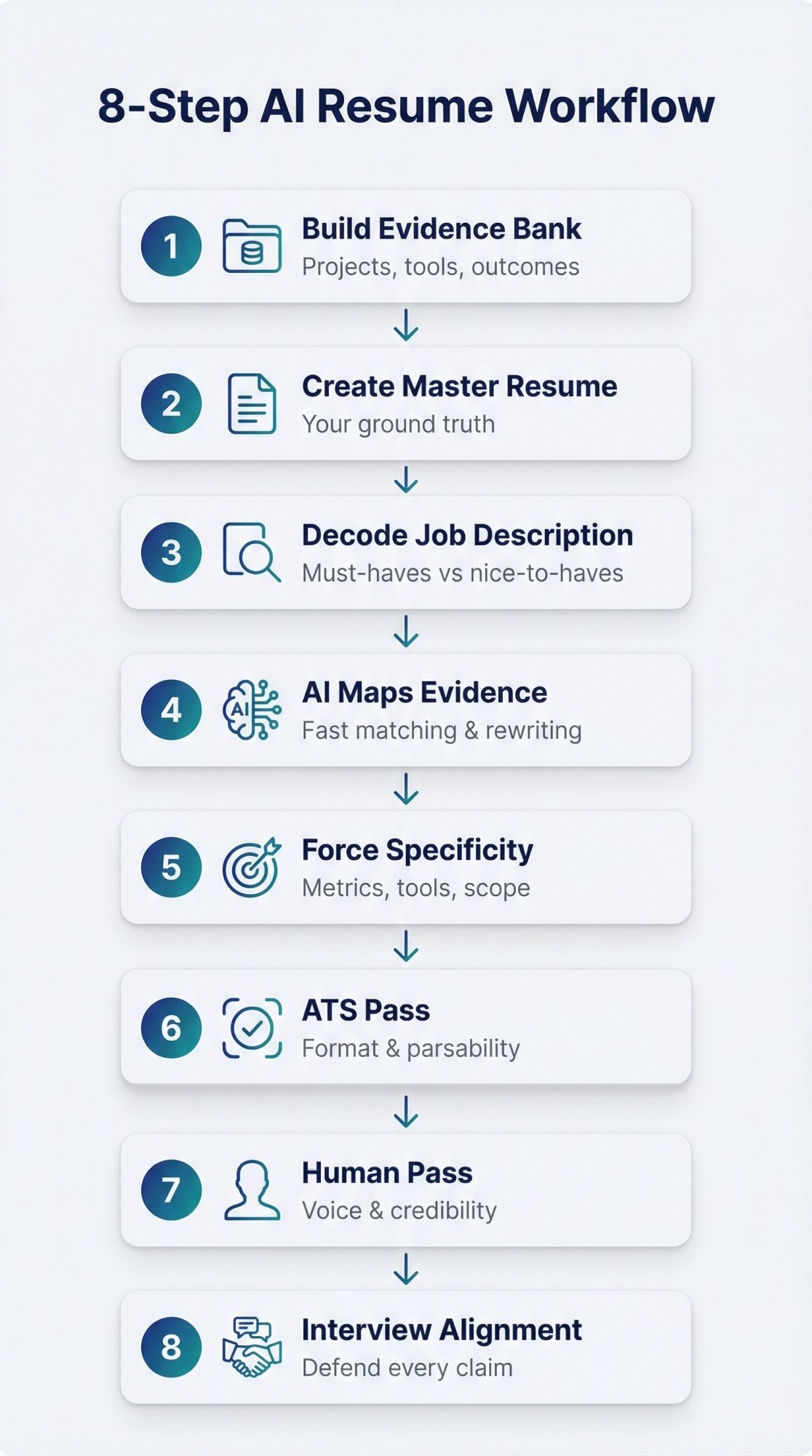
Most advice stops at "use AI to tailor your resume." That's shallow. Here's the real workflow that works in 2026.
Step 1: Build Your "Evidence Bank" (10 Minutes, Once)
Create a private document with:
① Projects you worked on
② Tools you used
③ Scope (team size, users, budget, volume)
④ Constraints (deadline, compliance, legacy systems)
⑤ Outcomes (numbers, speed, quality, cost, risk reduction)
⑥ Proof sources (tickets, dashboards, OKRs, customer quotes, performance reviews)
This is the raw material AI needs to avoid hallucinating.
Step 2: Write a "Master Resume" (Your Ground Truth)
One resume that includes everything (yes, it can be long). It's not for sending. It's for generating tailored versions.
Why this matters: if you only ever write role-specific resumes from scratch, you'll forget important wins and you'll drift into inconsistency.
Step 3: Decode the Job Description Like an Engineer
Most job descriptions are a mixture of:
• Core responsibilities (must do)
• Constraints (must work within)
• Screening keywords (ATS filters)
• Cultural signals (how they want you to behave)
Your job is to extract:
Must-haves (if you don't show these, you're out)
Nice-to-haves (differentiators)
Proof points you can credibly show
Step 4: Use AI to Map Your Evidence to Their Needs
This is where AI shines: fast matching and rewriting.
But you must give AI constraints:
• "Only use facts from my evidence bank."
• "If something is missing, ask me questions instead of inventing."
Step 5: Force Specificity Into Every Bullet
A bullet should ideally include at least 2 of these:
If a bullet has none, it's probably fluff.
Step 6: ATS Pass (Format and Parsability)
ATS systems parse text. They're not impressed by design.
Jobscan's report emphasizes ATS-based search and ranking by skills and keywords, and the importance of being parsable.
Step 7: Human Pass (Voice, Credibility, Coherence)
This is the part most people skip.
Read your resume and ask:
• Does it sound like a real person?
• Are there concrete proofs, or just claims?
• Is there any bullet that would make a hiring manager ask, "Wait, what does that actually mean?"
Step 8: Interview Alignment
If your resume claims impact, your interview must deliver story.
LinkedIn reports recruiters increasing AI use, including pre-screening. That raises the bar on consistency between your written claims and your spoken explanation.
AI Resume Prompts That Avoid Generic Writing
These are designed to stop the two biggest failure modes: AI invents, and AI writes vague fluff.
Use any AI tool, but keep this structure.
Prompt A: Turn Messy Notes Into Measurable Bullets
You are a resume writer. Rewrite my experience into 6 bullet points.Rules:- Use ONLY the facts I provide. Do not invent tools, numbers, or responsibilities.- If a metric is missing, propose 3 specific metrics I might have, and ask me to confirm.- Each bullet must include: action + tool/skill + outcome.- Keep each bullet under 22 words.- Avoid buzzwords like "synergy", "dynamic", "results-driven".My role: [title]Company/industry: [industry]My raw notes:[Paste evidence bank notes]Prompt B: Tailor to a Job Description Without Keyword Stuffing
Tailor my resume for the job description below.Rules:- Do not add skills I do not have.- Prefer evidence and outcomes over adjectives.- Add relevant keywords ONLY where they truthfully match my experience.- Return:1) A revised professional summary (3 lines max)2) Revised bullets for my most relevant 2 roles3) A "missing requirements" list that I should address (if truthful)My master resume:[Paste]Job description:[Paste]Prompt C: "Make It Sound Less AI-Written" (Without Making It Worse)
Act as a skeptical hiring manager. Review my resume for:- generic wording- vague claims without proof- unrealistic or inflated impact- overly polished AI toneThen rewrite ONLY the lines that are weak.Preserve facts, numbers, and tools exactly.Resume:[Paste]Prompt D: "Interview-Proof" Check
For each bullet point on my resume:1) Write the most likely interview follow-up question.2) Write a strong, concise answer using the STAR format.3) Flag any bullet that would be hard to defend truthfully.Resume:[Paste]If a bullet collapses under this prompt, it's a red flag. Fix it now, not in the interview.
How to Optimize Your Resume for ATS Systems
Most people misunderstand ATS.
ATS is not a robot that "likes" your resume. ATS is typically a database and workflow system that helps recruiters:
• Parse resumes into fields
• Search/filter by skills, titles, certifications
• Rank or categorize candidates
Jobscan's 2025 report describes ATS search by skills, job titles, degrees, certifications, and keywords.
What Makes a Resume ATS-Friendly
• Simple headings (Experience, Education, Skills)
• Predictable formatting (no text boxes that break parsing)
• Standard job titles (if your title is unusual, add a parenthetical)
Example:
"Growth Ninja" (Growth Marketing Specialist)
Keyword Alignment vs Keyword Stuffing
Alignment works because it connects the keyword to a credible action.
Stuffing often backfires because it signals manipulation and reduces readability.
A Simple ATS Checklist
Before you submit:
✓ Can you copy your resume into a plain text editor and still read it cleanly?
✓ Do your core skills match the job description's core skills (truthfully)?
✓ Do your job titles and dates parse cleanly?
Should You Tell Employers You Used AI?
Ethics: What Crosses the Line?
Using AI to improve writing is not the same as using AI to misrepresent capability.
Even employer-facing guidance reflects this distinction. Indeed's interviews show employers may accept AI-assisted resumes but strongly reject using AI to complete assessments, framing it as cheating that can lead to disqualification.
TopResume's survey similarly suggests certain uses (especially real-time interview assistance) are viewed as unacceptable by many hiring managers.
So the ethical boundary is simple:
AI for communication: generally acceptable
AI for pretending: high risk
Should You Disclose AI Use?
In most applications, there's no standard field asking "Did you use AI to write this?"
So generally:
• Don't volunteer it
• Don't lie if asked
• Be ready to explain your resume like you wrote it, because you should have
Some employers may request transparency or add extra evaluation steps. Indeed mentions employers may consider asking candidates to be transparent and may add additional text fields or tests.
Privacy: What You Should Never Paste Into a Chatbot
Avoid pasting:
• National ID numbers
• Full home address
• Confidential employer info (internal metrics, client names under NDA)
• Private performance reviews
• Unreleased product details
A safer approach: redact, then reinsert details in your final document.
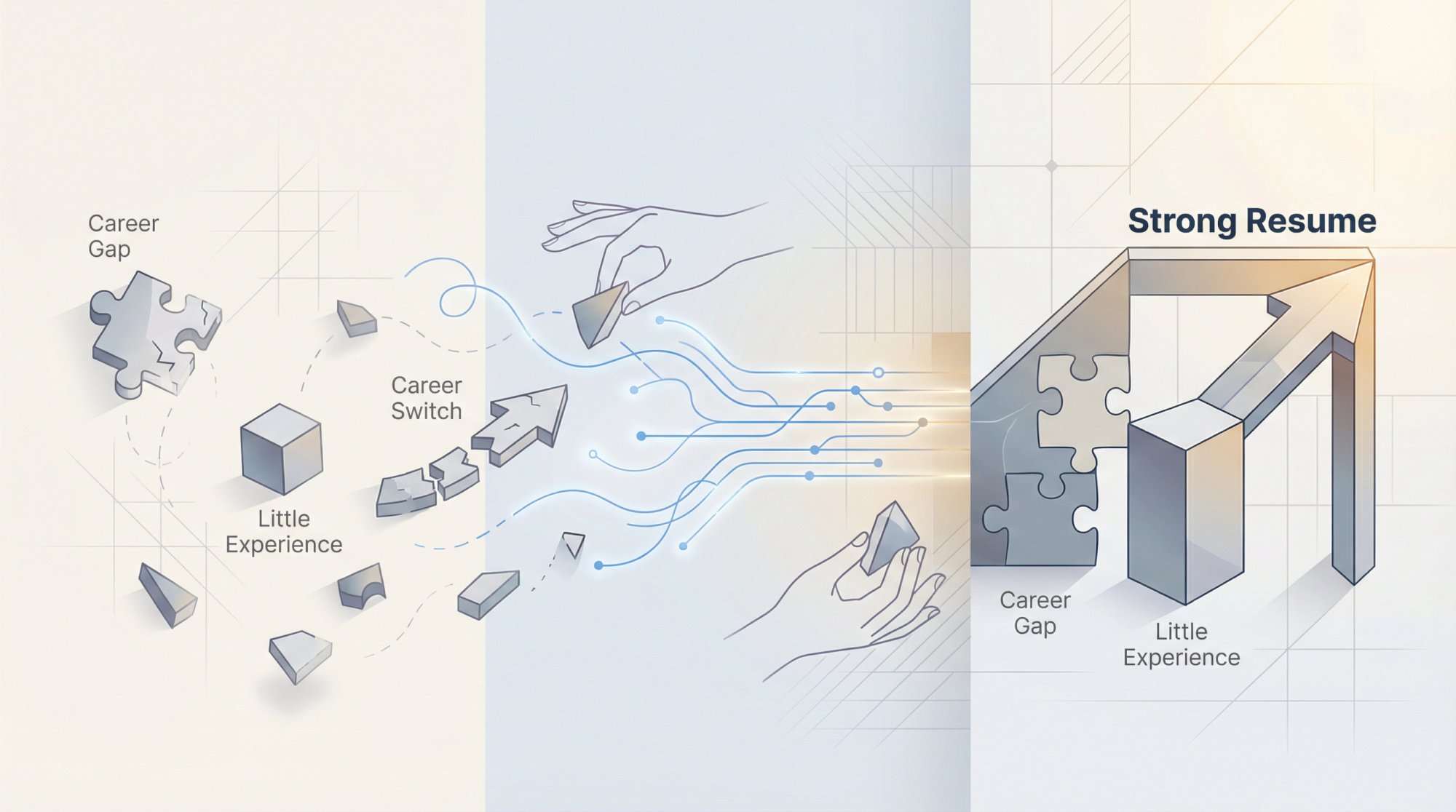
How to Use AI for Resumes with Career Gaps
If You Have Little Experience
AI can help, but it can also create fluff that screams "student resume."
Your job is to show evidence from:
• Projects (course, personal, volunteer)
• Competitions
• Internships
• Measurable responsibilities (even part-time work)
Use this structure for projects:
→ Problem
→ What you built/did
→ Tools used
→ Outcome (users, performance, accuracy, time saved)
If You Have a Career Gap
AI can help you craft a clean narrative, but keep it tight.
Options:
• A short line in your Experience section: "2023-2024: Family caregiving" (if you want)
• Or explain in cover letter
The goal is to remove uncertainty, not to over-explain.
If You're Switching Careers
Your resume is a "transfer function." You must map old evidence to new requirements.
AI is great at mapping, but only if you give it the right inputs:
• The new role's must-haves
• The closest matching evidence from your past
• A clear summary statement that frames you as "already operating in that direction"
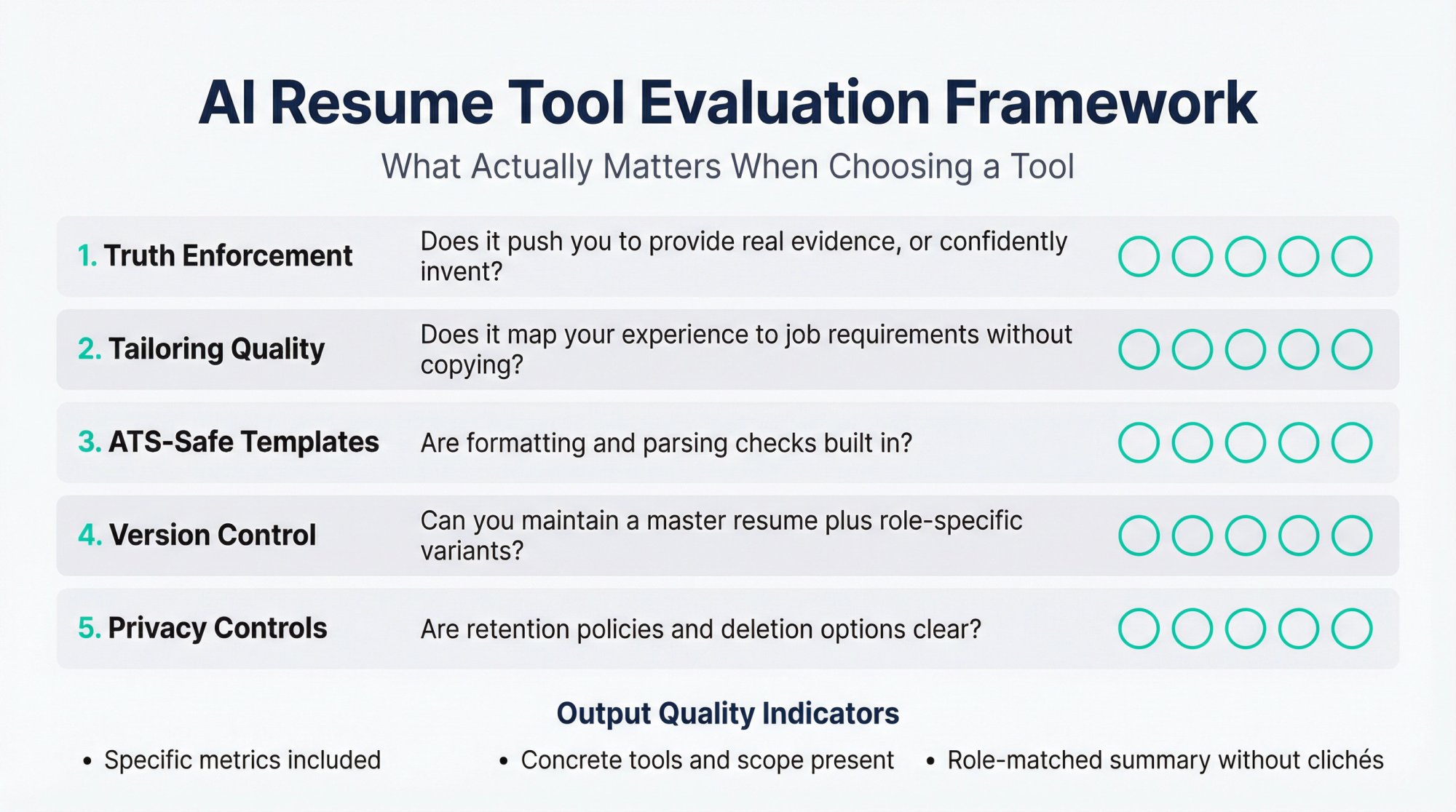
How to Choose an AI Resume Tool (What Actually Matters)
Ignore flashy claims. Here's what determines results:
1. Truth Enforcement
Does the tool push you to provide real evidence, or does it confidently invent?
2. Tailoring Quality
Does it map your experience to the job requirements without copying the job description?
3. ATS-Safe Templates + Parsing Checks
Formatting failures still kill otherwise-good candidates.
4. Version Control
You need a master resume plus role-specific variants.
5. Privacy Controls
Clear retention policies and deletion options matter.
If you're evaluating tools, judge them on outputs like:
• Number of specific metrics included
• Presence of concrete tools and scope
• How well the summary matches the role without cliché
How AIApply Helps You Write Better Resumes
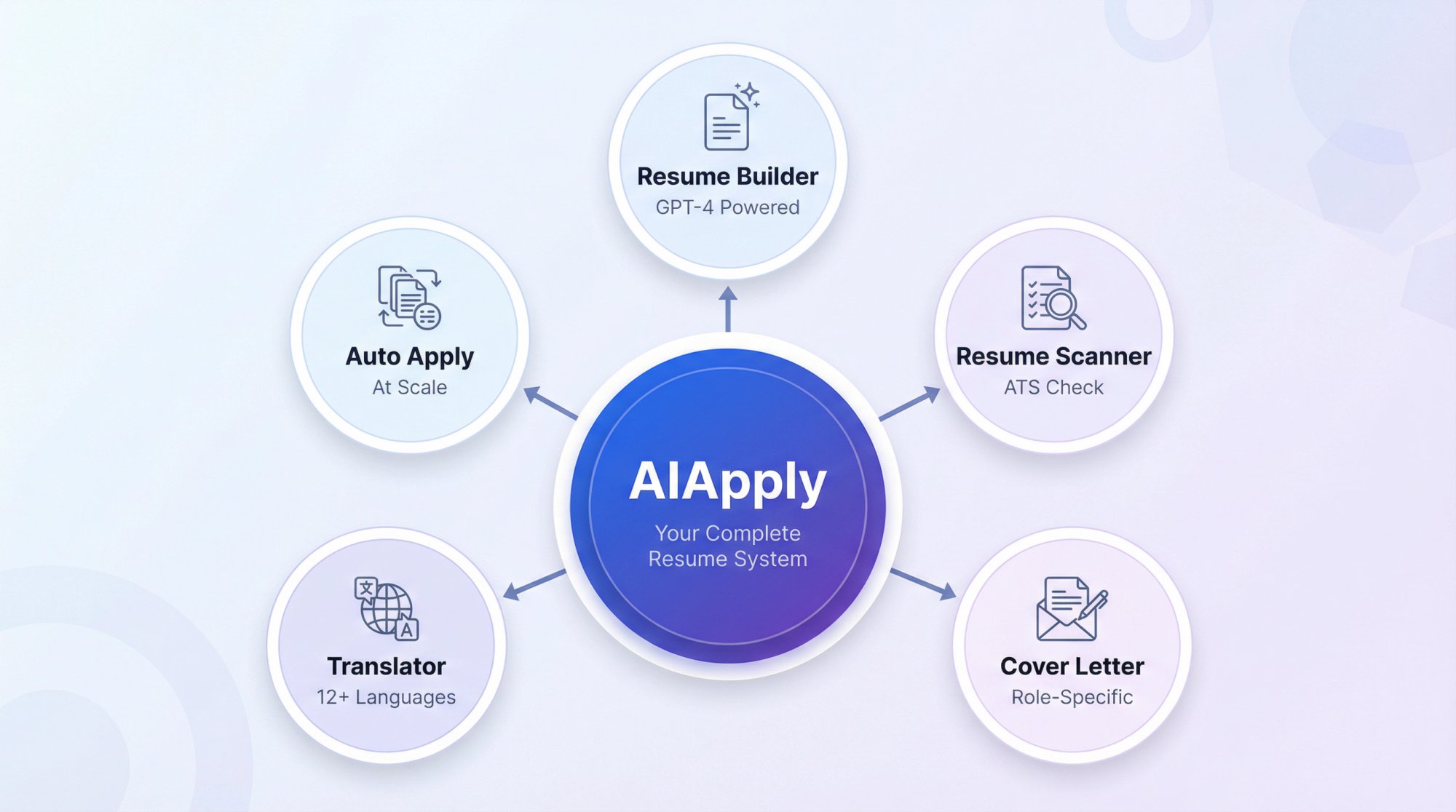
If you want an end-to-end system rather than stitching together random tools, AIApply is built around the core workflow that actually works:
AI Resume Builder for fast, job-aligned drafts and structure. Powered by GPT-4 via Azure OpenAI with ATS-friendly templates that pass the parsing test.
AI Resume Scanner to check ATS compatibility, keywords, and formatting issues before you submit. Know exactly where your gaps are.
AI Cover Letter Generator to write role-specific letters without starting from a blank page. Each letter is unique and tailored to the position.
Resume Translator if you're applying across regions or languages. Instant translation into 12+ languages with cultural localization.
Auto Apply if you're applying at scale and want the workflow handled end-to-end. Use responsibly, because volume without relevance is still noise.
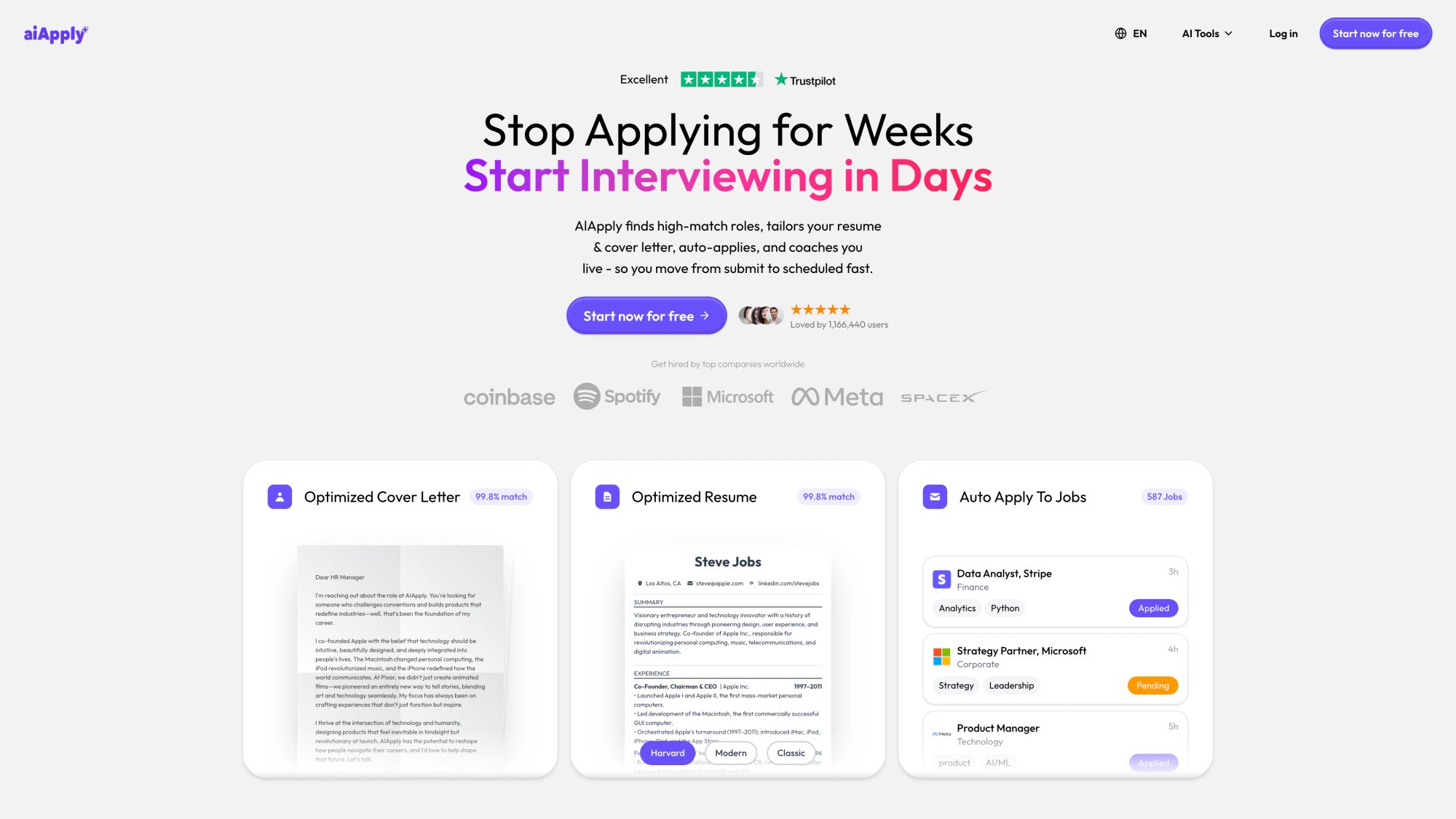
AIApply's clean interface makes it easy to build, scan, and customize your resume without juggling multiple tools.
If You Use AIApply, the Best Practice Is Still the Same:
1. Feed it truth
Start with your evidence bank. Real projects, real outcomes, real tools.
2. Tailor to the job
Don't blast the same resume to 100 companies. Let AIApply customize, but you verify.
3. Scan for ATS and clarity
Run the scanner. Fix the gaps. Make sure it parses cleanly.
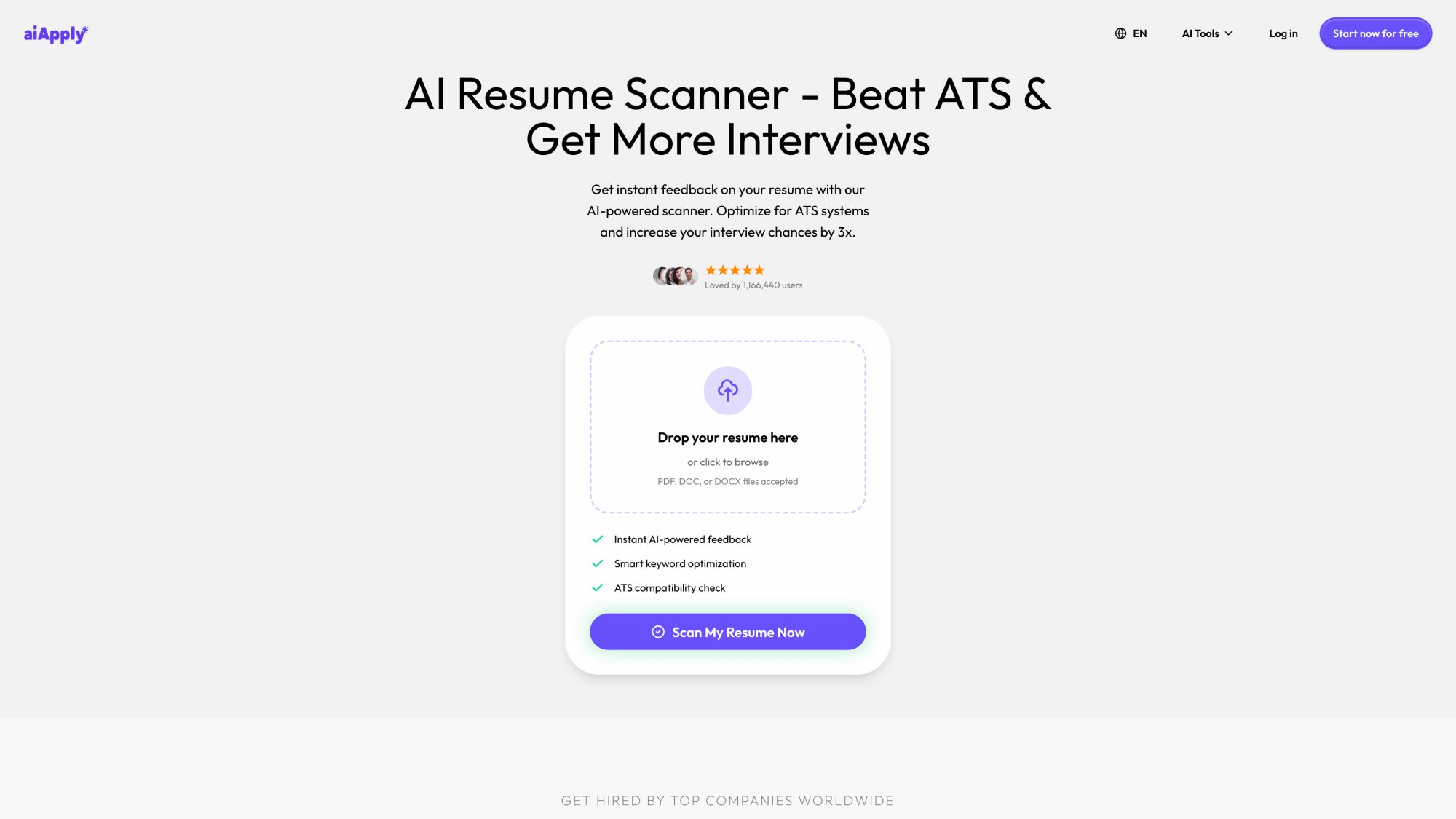
The Resume Scanner checks your formatting, keywords, and ATS compatibility before you submit, so you know exactly which gaps to fix.
4. Submit only what you could defend in an interview
If you can't explain it, it shouldn't be on there.
AI Resume FAQ: Your Top Questions Answered
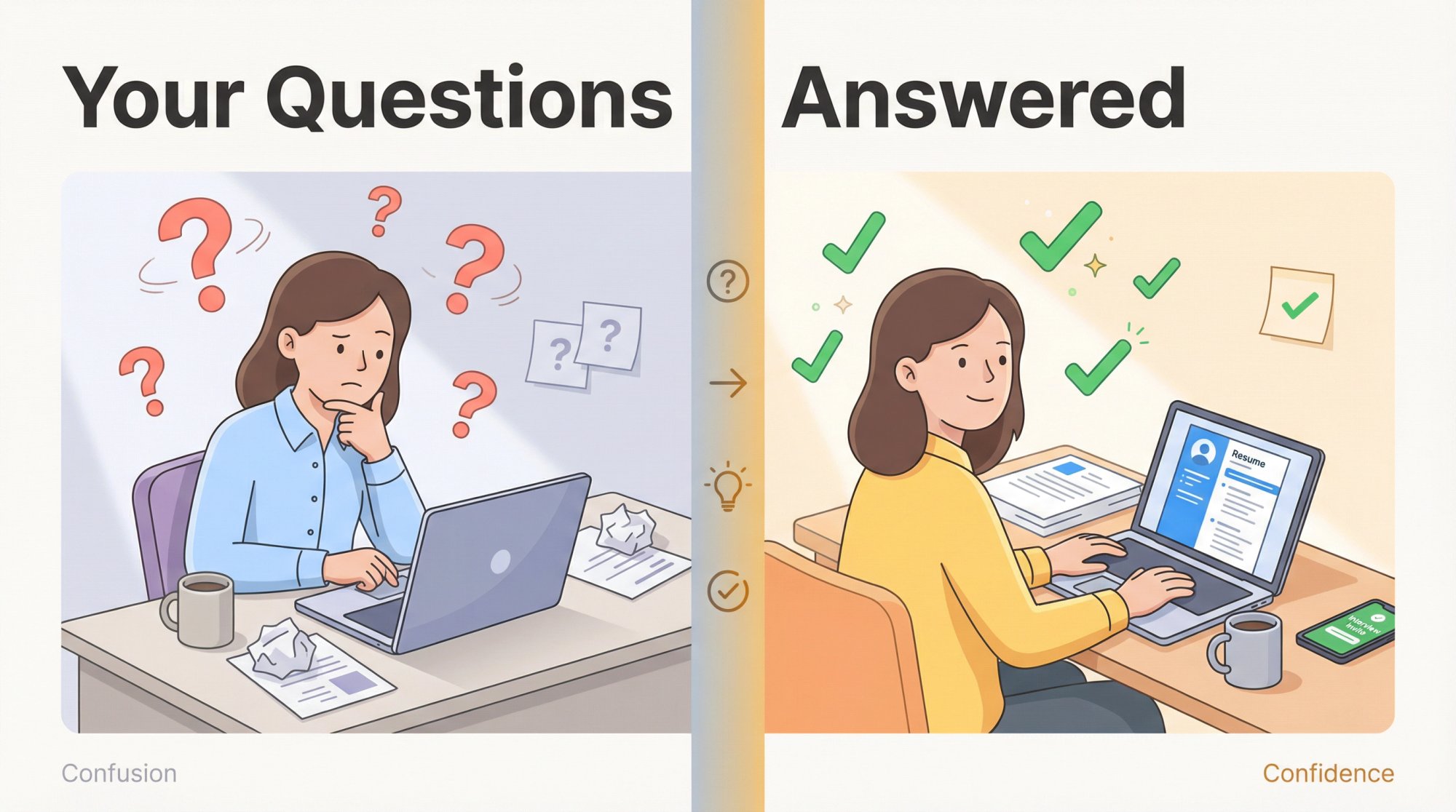
Will an ATS reject my resume because it's AI-written?
ATS systems generally evaluate structure and match signals (skills, titles, keywords). The bigger practical risk is formatting and mismatch, not whether prose was AI-assisted. ATS prevalence is extremely high in large companies (Jobscan detected an ATS for 97.8% of Fortune 500 companies in 2025).
So focus on:
→ Clean, parsable formatting
→ Matching the required keywords truthfully
→ Standard section headings
Your resume won't get rejected for "being AI-written." It'll get rejected for being poorly formatted or irrelevant.
Can recruiters tell if I used AI?
Sometimes they can tell something is off, especially when writing is generic. One survey claims many hiring managers can spot AI-like resumes quickly, and some reject them.
But here's what they're actually detecting: vagueness, template language, lack of proof.
Treat this as a warning to add specificity, not a reason to avoid AI entirely.
If your resume is specific, backed by evidence, and tailored to the role, recruiters won't care if AI helped you write it. They care if it's good.
Should I run my resume through an AI detector?
Not as a strategy. Detectors are widely criticized as unreliable, and even AI companies have retired their own tools due to low accuracy.
MIT Sloan literally says "AI Detectors Don't Work."
Better approach: optimize for substance, not detector evasion.
Write with:
→ Concrete metrics
→ Real tools and technologies
→ Specific outcomes
→ Natural language
If you do that, detector scores become irrelevant.
Is using AI on a resume considered cheating?
Most employers draw the line at deception, not assistance. Employer interviews reported by Indeed suggest AI-assisted drafting can be acceptable, while using AI for assessments is often viewed as disqualifying.
The ethical boundary:
AI for improving how you communicate your experience? Generally fine.
AI for faking skills, inventing metrics, or pretending you did things you didn't? Absolutely not fine.
If every claim on your resume is true and you can defend it in an interview, you're ethically clear.
What if the company explicitly says "no AI"?
Follow their instruction. Policies vary, and some employers have changed positions over time. When in doubt, treat a "no AI" request the same way you would treat any application instruction: comply.
You can still prepare with AI (building your evidence bank, practicing answers), but write the final resume yourself if they've asked for that.
Is it better to write it myself?
Only if "myself" means: specific, evidence-heavy, role-matched, and easy to parse.
If writing it yourself means: vague, inconsistent, and slow, then AI-assisted done right is better.
The question isn't "AI vs. human." The question is "good vs. bad."
Use whichever method produces the best result: a resume that's truthful, specific, tailored, and ATS-friendly.
How do I avoid my AI resume sounding generic?
Force AI to work from your specific evidence:
① Build your evidence bank first (real projects, real numbers, real tools)
② Give AI clear constraints: "Only use facts I provide. If missing info, ask me questions."
③ Use the prompts in this guide to force specificity
④ Edit heavily. Cut anything that feels like template language.
⑤ Add personal context and examples.
Generic happens when you give AI nothing to work with. Specific happens when you feed it real evidence and edit aggressively.
What about using AI for cover letters too?
Same rules apply. AI can help you structure and draft, but the final letter must be specific to the role and sound like you.
AIApply's Cover Letter Generator creates role-specific letters, but you still need to:
→ Add details only you would know
→ Reference the company specifically
→ Explain why you (not just anyone) want this role
Generic cover letters are even more obvious than generic resumes. Make it personal.
Can I use AI if I'm applying to writing or creative jobs?
Yes, but carefully.
If you're being hired to write, the hiring manager will judge your writing quality heavily. They'll also be more attuned to AI patterns.
Use AI for:
→ Structure and organization
→ Grammar and polish
→ Generating first drafts you then heavily rewrite
Don't use AI for:
→ Final copy without significant editing
→ Creative elements that should showcase your voice
Your resume and cover letter are writing samples. Make sure they actually represent your skill.
How much should I edit AI-generated content?
Heavily.
Never send AI output as-is. The editing phase is where you:
→ Verify all facts are accurate
→ Add specificity and context
→ Remove generic language
→ Inject your voice
→ Ensure interview-defensibility
Think of AI output as a rough draft that needs 30-50% rewriting. If you're not changing at least that much, you're probably sending generic content.
Should I disclose I used AI?
You're generally not required to unless specifically asked.
If asked directly: be honest. "I used an AI tool to help structure and polish my resume, but all the content is my actual experience."
Most recruiters won't ask. And if your resume is good, they won't care.
Focus on making sure every claim is true and defensible, not on whether you used tools to write it.
What are the legal and ethical boundaries?
Legal: Don't violate confidentiality agreements. Don't paste proprietary company data into public AI tools. Don't include information you're legally prohibited from sharing.
Ethical: Don't lie. Don't claim skills you don't have. Don't fabricate achievements. Don't misrepresent your role in projects.
The line is simple: AI can help you communicate truth more effectively. It cannot create truth.
If you're using AI to describe real experience accurately and compellingly, you're fine. If you're using it to invent a false narrative, that's both unethical and risky.
Should You Use AI to Write Your Resume? Final Answer
Should you use AI to write your resume?
Yes. But use it as a tool that amplifies your real evidence, not as a machine that invents your story.
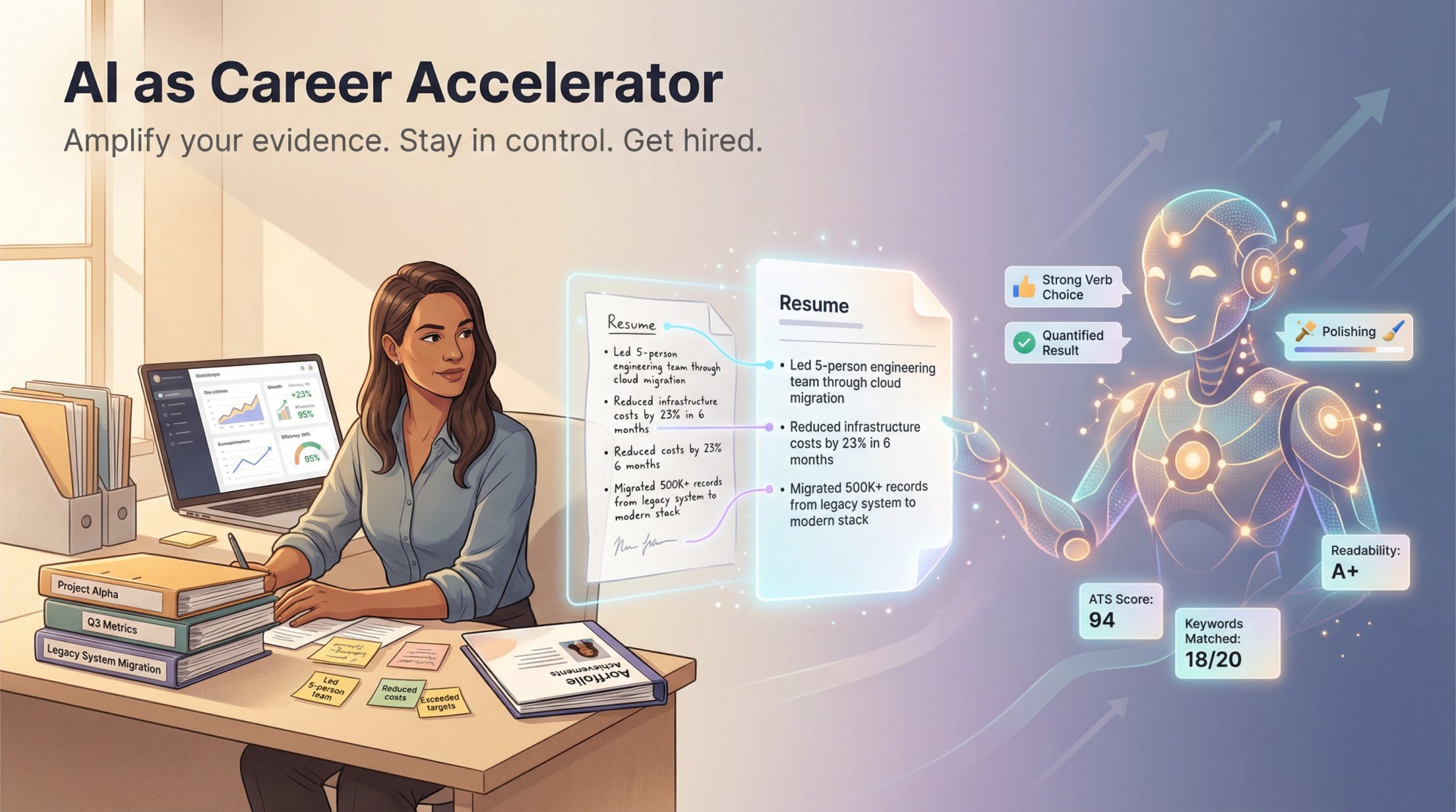
In 2026, 81% of job seekers are using or planning to use AI in their job search. Ignoring AI would put you at a disadvantage.
But the candidates who win don't just use AI. They use it right.
They give AI real evidence to work with.
They tailor to every job.
They edit heavily.
They optimize for specificity, not just keywords.
They make sure they can defend every bullet in an interview.
If you approach it that way, AI becomes your career accelerator. A tool that makes you faster, more precise, and more competitive.
Just remember: the content still needs your human judgment. Recruiters hire humans, not robots. They want to sense the person behind the page.
Use AI strategically. Present the best version of yourself on paper without losing what makes you unique.
And when you're ready to build a resume that's both AI-powered and genuinely you, AIApply is here to help you do it right.
If you're asking "should I use AI to write my resume?", you're usually not asking about writing at all.
You're asking: "Will recruiters think I'm cheating?" "Will an ATS reject me?" "Will I get caught?" "Will my resume sound fake and generic?" "How do I use AI without accidentally lying or looking lazy?"
Here's the honest answer for 2026:
Yes, you should use AI for your resume, but only as a tool to amplify your evidence, not as a machine that invents your story. The candidates who win use AI like a power tool: fast, precise, and dangerous if you don't keep your hands on the wheel.
This guide shows you exactly how to do that.
When Should You Use AI for Your Resume?
Use AI if you want to:
→ Speed up tailoring to each job description without rewriting from scratch
→ Turn messy experience into clear impact bullets with metrics and context
→ Fix structure with ATS-parsable formatting and consistent sections
→ Improve clarity and tone, especially if English isn't your first language
Avoid AI (or use it only lightly) if you plan to:
• Copy-paste AI output without editing
• Let AI "guess" numbers, tools, or responsibilities
• Mass-apply with the same generic resume
Why? Because recruiters are increasingly skeptical of "perfect-but-empty" writing. One 2025 survey of 600 hiring managers found 19.6% would reject a candidate with an AI-generated resume or cover letter, and 33.5% said they can spot an AI-generated resume in under 20 seconds.
That doesn't mean "don't use AI." It means don't submit "AI-looking" resumes.
How Resume Screening Actually Works in 2026
A resume isn't a biography. It's not even "writing."
A resume is a decision-making tool. Its job is to help a stranger make a quick bet: "This person is likely to succeed in this role."
From first principles, hiring is a signal problem. The employer has a role with real constraints (tasks, tools, deadlines, risk). You have a history of actions you took and outcomes you caused. The resume is a lossy compression of that history into one or two pages.
Lossy compression means: you cannot include everything, so you must include the highest-signal evidence.
That's the key insight:
AI can improve compression. It cannot create signal.
If you don't have evidence (projects, outcomes, scope), AI can't invent it without turning your resume into a liability.
So the correct mental model is:
You provide the facts and proof.
AI helps you package those facts into the cleanest, most job-relevant signal.
Why 81% of Job Seekers Use AI for Resumes
If you're worried "using AI will make me stand out in a bad way," you might be running on a 2022 mental model.
In 2026, AI use is mainstream.
Here's what the data actually shows:
• 53% of job seekers surveyed in ZipRecruiter's 2024 Q1 New Hires Survey said they used ChatGPT or a similar GenAI tool in their job search. Among those who used GenAI, 23% used it to draft a resume and 21% to draft a cover letter
• In iHire's State of Online Recruiting 2025 report, 29.3% of candidates said they used AI to write or customize their resume or cover letter in the past year, up from 17.3% in 2024
• LinkedIn's research published January 7, 2026 reports 93% of recruiters plan to increase their use of AI in 2026, and 81% of people have used or plan to use AI in their job search
• Jobscan's 2025 ATS Usage Report (July 14, 2025) found an ATS was detectable for 97.8% of Fortune 500 companies in 2025
Translation: even if a recruiter is human, the pipeline around them is often software-mediated.
So the game isn't "AI vs. no AI." The game is: high-signal, role-matched evidence vs. generic noise.
Why Generic Resumes Get Rejected (Not AI-Written Ones)
A lot of people obsess over: "Can employers detect AI writing?"
The bigger threat is: they can detect emptiness.
Here's what "AI-looking" usually means in practice:
Indeed's career advice (updated July 26, 2025) includes employer interviews where AI-generated resumes were described as well-written and aligned, but also generic and lacking detail, requiring extra effort to verify truth.
So you don't win by "sounding human." You win by being specific.
Do AI Detectors Actually Work?
Many AI text detectors have high false-positive and false-negative rates. MIT Sloan Teaching & Learning literally titles it: "AI Detectors Don't Work."
OpenAI's own AI text classifier was discontinued (July 20, 2023) due to its low accuracy.
More recent commentary from UCLA (Oct 9, 2025) also emphasizes reliability issues and institutional skepticism toward detectors.
A particularly important angle: detectors can be biased. Stanford HAI highlighted research where detectors misclassified a large share of TOEFL essays written by non-native English speakers as AI-generated.
Takeaway: betting your career on "beating detectors" is the wrong optimization target.
Optimize for:
→ Truth
→ Specificity
→ Match to the role
→ Clean formatting
When to Use AI for Your Resume (And When to Avoid It)
Use this like a quick diagnostic.
When Should You Definitely Use AI for Your Resume?
You have real experience but struggle to phrase it.
AI can turn messy notes into tight bullets.
You're applying to multiple distinct roles.
AI helps you tailor quickly without losing consistency.
You need ATS-parsable formatting.
AI tools can enforce structure and avoid formatting traps.
You're switching countries or languages.
Translation and localization can matter a lot.
When Should You Use AI Carefully?
You're early-career and don't have many outcomes yet.
AI can help highlight projects, but it can also inflate fluff.
You're applying to writing-heavy roles (content, comms, PR).
AI can help structure, but you'll be judged on voice and originality.
When Should You Avoid AI for Your Resume?
You plan to submit the first output with minimal edits.
You feel tempted to "round up" skills you don't actually have.
You want AI to fabricate metrics ("increased revenue by 37%") because it sounds good.
A useful rule:
If you can't confidently explain a bullet in an interview, it does not belong on your resume.
How to Write an AI Resume: 8-Step Workflow
Most advice stops at "use AI to tailor your resume." That's shallow. Here's the real workflow that works in 2026.
Step 1: Build Your "Evidence Bank" (10 Minutes, Once)
Create a private document with:
① Projects you worked on
② Tools you used
③ Scope (team size, users, budget, volume)
④ Constraints (deadline, compliance, legacy systems)
⑤ Outcomes (numbers, speed, quality, cost, risk reduction)
⑥ Proof sources (tickets, dashboards, OKRs, customer quotes, performance reviews)
This is the raw material AI needs to avoid hallucinating.
Step 2: Write a "Master Resume" (Your Ground Truth)
One resume that includes everything (yes, it can be long). It's not for sending. It's for generating tailored versions.
Why this matters: if you only ever write role-specific resumes from scratch, you'll forget important wins and you'll drift into inconsistency.
Step 3: Decode the Job Description Like an Engineer
Most job descriptions are a mixture of:
• Core responsibilities (must do)
• Constraints (must work within)
• Screening keywords (ATS filters)
• Cultural signals (how they want you to behave)
Your job is to extract:
Must-haves (if you don't show these, you're out)
Nice-to-haves (differentiators)
Proof points you can credibly show
Step 4: Use AI to Map Your Evidence to Their Needs
This is where AI shines: fast matching and rewriting.
But you must give AI constraints:
• "Only use facts from my evidence bank."
• "If something is missing, ask me questions instead of inventing."
Step 5: Force Specificity Into Every Bullet
A bullet should ideally include at least 2 of these:
If a bullet has none, it's probably fluff.
Step 6: ATS Pass (Format and Parsability)
ATS systems parse text. They're not impressed by design.
Jobscan's report emphasizes ATS-based search and ranking by skills and keywords, and the importance of being parsable.
Step 7: Human Pass (Voice, Credibility, Coherence)
This is the part most people skip.
Read your resume and ask:
• Does it sound like a real person?
• Are there concrete proofs, or just claims?
• Is there any bullet that would make a hiring manager ask, "Wait, what does that actually mean?"
Step 8: Interview Alignment
If your resume claims impact, your interview must deliver story.
LinkedIn reports recruiters increasing AI use, including pre-screening. That raises the bar on consistency between your written claims and your spoken explanation.
AI Resume Prompts That Avoid Generic Writing
These are designed to stop the two biggest failure modes: AI invents, and AI writes vague fluff.
Use any AI tool, but keep this structure.
Prompt A: Turn Messy Notes Into Measurable Bullets
You are a resume writer. Rewrite my experience into 6 bullet points.Rules:- Use ONLY the facts I provide. Do not invent tools, numbers, or responsibilities.- If a metric is missing, propose 3 specific metrics I might have, and ask me to confirm.- Each bullet must include: action + tool/skill + outcome.- Keep each bullet under 22 words.- Avoid buzzwords like "synergy", "dynamic", "results-driven".My role: [title]Company/industry: [industry]My raw notes:[Paste evidence bank notes]Prompt B: Tailor to a Job Description Without Keyword Stuffing
Tailor my resume for the job description below.Rules:- Do not add skills I do not have.- Prefer evidence and outcomes over adjectives.- Add relevant keywords ONLY where they truthfully match my experience.- Return:1) A revised professional summary (3 lines max)2) Revised bullets for my most relevant 2 roles3) A "missing requirements" list that I should address (if truthful)My master resume:[Paste]Job description:[Paste]Prompt C: "Make It Sound Less AI-Written" (Without Making It Worse)
Act as a skeptical hiring manager. Review my resume for:- generic wording- vague claims without proof- unrealistic or inflated impact- overly polished AI toneThen rewrite ONLY the lines that are weak.Preserve facts, numbers, and tools exactly.Resume:[Paste]Prompt D: "Interview-Proof" Check
For each bullet point on my resume:1) Write the most likely interview follow-up question.2) Write a strong, concise answer using the STAR format.3) Flag any bullet that would be hard to defend truthfully.Resume:[Paste]If a bullet collapses under this prompt, it's a red flag. Fix it now, not in the interview.
How to Optimize Your Resume for ATS Systems
Most people misunderstand ATS.
ATS is not a robot that "likes" your resume. ATS is typically a database and workflow system that helps recruiters:
• Parse resumes into fields
• Search/filter by skills, titles, certifications
• Rank or categorize candidates
Jobscan's 2025 report describes ATS search by skills, job titles, degrees, certifications, and keywords.
What Makes a Resume ATS-Friendly
• Simple headings (Experience, Education, Skills)
• Predictable formatting (no text boxes that break parsing)
• Standard job titles (if your title is unusual, add a parenthetical)
Example:
"Growth Ninja" (Growth Marketing Specialist)
Keyword Alignment vs Keyword Stuffing
Alignment works because it connects the keyword to a credible action.
Stuffing often backfires because it signals manipulation and reduces readability.
A Simple ATS Checklist
Before you submit:
✓ Can you copy your resume into a plain text editor and still read it cleanly?
✓ Do your core skills match the job description's core skills (truthfully)?
✓ Do your job titles and dates parse cleanly?
Should You Tell Employers You Used AI?
Ethics: What Crosses the Line?
Using AI to improve writing is not the same as using AI to misrepresent capability.
Even employer-facing guidance reflects this distinction. Indeed's interviews show employers may accept AI-assisted resumes but strongly reject using AI to complete assessments, framing it as cheating that can lead to disqualification.
TopResume's survey similarly suggests certain uses (especially real-time interview assistance) are viewed as unacceptable by many hiring managers.
So the ethical boundary is simple:
AI for communication: generally acceptable
AI for pretending: high risk
Should You Disclose AI Use?
In most applications, there's no standard field asking "Did you use AI to write this?"
So generally:
• Don't volunteer it
• Don't lie if asked
• Be ready to explain your resume like you wrote it, because you should have
Some employers may request transparency or add extra evaluation steps. Indeed mentions employers may consider asking candidates to be transparent and may add additional text fields or tests.
Privacy: What You Should Never Paste Into a Chatbot
Avoid pasting:
• National ID numbers
• Full home address
• Confidential employer info (internal metrics, client names under NDA)
• Private performance reviews
• Unreleased product details
A safer approach: redact, then reinsert details in your final document.
How to Use AI for Resumes with Career Gaps
If You Have Little Experience
AI can help, but it can also create fluff that screams "student resume."
Your job is to show evidence from:
• Projects (course, personal, volunteer)
• Competitions
• Internships
• Measurable responsibilities (even part-time work)
Use this structure for projects:
→ Problem
→ What you built/did
→ Tools used
→ Outcome (users, performance, accuracy, time saved)
If You Have a Career Gap
AI can help you craft a clean narrative, but keep it tight.
Options:
• A short line in your Experience section: "2023-2024: Family caregiving" (if you want)
• Or explain in cover letter
The goal is to remove uncertainty, not to over-explain.
If You're Switching Careers
Your resume is a "transfer function." You must map old evidence to new requirements.
AI is great at mapping, but only if you give it the right inputs:
• The new role's must-haves
• The closest matching evidence from your past
• A clear summary statement that frames you as "already operating in that direction"
How to Choose an AI Resume Tool (What Actually Matters)
Ignore flashy claims. Here's what determines results:
1. Truth Enforcement
Does the tool push you to provide real evidence, or does it confidently invent?
2. Tailoring Quality
Does it map your experience to the job requirements without copying the job description?
3. ATS-Safe Templates + Parsing Checks
Formatting failures still kill otherwise-good candidates.
4. Version Control
You need a master resume plus role-specific variants.
5. Privacy Controls
Clear retention policies and deletion options matter.
If you're evaluating tools, judge them on outputs like:
• Number of specific metrics included
• Presence of concrete tools and scope
• How well the summary matches the role without cliché
How AIApply Helps You Write Better Resumes
If you want an end-to-end system rather than stitching together random tools, AIApply is built around the core workflow that actually works:
AI Resume Builder for fast, job-aligned drafts and structure. Powered by GPT-4 via Azure OpenAI with ATS-friendly templates that pass the parsing test.
AI Resume Scanner to check ATS compatibility, keywords, and formatting issues before you submit. Know exactly where your gaps are.
AI Cover Letter Generator to write role-specific letters without starting from a blank page. Each letter is unique and tailored to the position.
Resume Translator if you're applying across regions or languages. Instant translation into 12+ languages with cultural localization.
Auto Apply if you're applying at scale and want the workflow handled end-to-end. Use responsibly, because volume without relevance is still noise.
AIApply's clean interface makes it easy to build, scan, and customize your resume without juggling multiple tools.
If You Use AIApply, the Best Practice Is Still the Same:
1. Feed it truth
Start with your evidence bank. Real projects, real outcomes, real tools.
2. Tailor to the job
Don't blast the same resume to 100 companies. Let AIApply customize, but you verify.
3. Scan for ATS and clarity
Run the scanner. Fix the gaps. Make sure it parses cleanly.
The Resume Scanner checks your formatting, keywords, and ATS compatibility before you submit, so you know exactly which gaps to fix.
4. Submit only what you could defend in an interview
If you can't explain it, it shouldn't be on there.
AI Resume FAQ: Your Top Questions Answered
Will an ATS reject my resume because it's AI-written?
ATS systems generally evaluate structure and match signals (skills, titles, keywords). The bigger practical risk is formatting and mismatch, not whether prose was AI-assisted. ATS prevalence is extremely high in large companies (Jobscan detected an ATS for 97.8% of Fortune 500 companies in 2025).
So focus on:
→ Clean, parsable formatting
→ Matching the required keywords truthfully
→ Standard section headings
Your resume won't get rejected for "being AI-written." It'll get rejected for being poorly formatted or irrelevant.
Can recruiters tell if I used AI?
Sometimes they can tell something is off, especially when writing is generic. One survey claims many hiring managers can spot AI-like resumes quickly, and some reject them.
But here's what they're actually detecting: vagueness, template language, lack of proof.
Treat this as a warning to add specificity, not a reason to avoid AI entirely.
If your resume is specific, backed by evidence, and tailored to the role, recruiters won't care if AI helped you write it. They care if it's good.
Should I run my resume through an AI detector?
Not as a strategy. Detectors are widely criticized as unreliable, and even AI companies have retired their own tools due to low accuracy.
MIT Sloan literally says "AI Detectors Don't Work."
Better approach: optimize for substance, not detector evasion.
Write with:
→ Concrete metrics
→ Real tools and technologies
→ Specific outcomes
→ Natural language
If you do that, detector scores become irrelevant.
Is using AI on a resume considered cheating?
Most employers draw the line at deception, not assistance. Employer interviews reported by Indeed suggest AI-assisted drafting can be acceptable, while using AI for assessments is often viewed as disqualifying.
The ethical boundary:
AI for improving how you communicate your experience? Generally fine.
AI for faking skills, inventing metrics, or pretending you did things you didn't? Absolutely not fine.
If every claim on your resume is true and you can defend it in an interview, you're ethically clear.
What if the company explicitly says "no AI"?
Follow their instruction. Policies vary, and some employers have changed positions over time. When in doubt, treat a "no AI" request the same way you would treat any application instruction: comply.
You can still prepare with AI (building your evidence bank, practicing answers), but write the final resume yourself if they've asked for that.
Is it better to write it myself?
Only if "myself" means: specific, evidence-heavy, role-matched, and easy to parse.
If writing it yourself means: vague, inconsistent, and slow, then AI-assisted done right is better.
The question isn't "AI vs. human." The question is "good vs. bad."
Use whichever method produces the best result: a resume that's truthful, specific, tailored, and ATS-friendly.
How do I avoid my AI resume sounding generic?
Force AI to work from your specific evidence:
① Build your evidence bank first (real projects, real numbers, real tools)
② Give AI clear constraints: "Only use facts I provide. If missing info, ask me questions."
③ Use the prompts in this guide to force specificity
④ Edit heavily. Cut anything that feels like template language.
⑤ Add personal context and examples.
Generic happens when you give AI nothing to work with. Specific happens when you feed it real evidence and edit aggressively.
What about using AI for cover letters too?
Same rules apply. AI can help you structure and draft, but the final letter must be specific to the role and sound like you.
AIApply's Cover Letter Generator creates role-specific letters, but you still need to:
→ Add details only you would know
→ Reference the company specifically
→ Explain why you (not just anyone) want this role
Generic cover letters are even more obvious than generic resumes. Make it personal.
Can I use AI if I'm applying to writing or creative jobs?
Yes, but carefully.
If you're being hired to write, the hiring manager will judge your writing quality heavily. They'll also be more attuned to AI patterns.
Use AI for:
→ Structure and organization
→ Grammar and polish
→ Generating first drafts you then heavily rewrite
Don't use AI for:
→ Final copy without significant editing
→ Creative elements that should showcase your voice
Your resume and cover letter are writing samples. Make sure they actually represent your skill.
How much should I edit AI-generated content?
Heavily.
Never send AI output as-is. The editing phase is where you:
→ Verify all facts are accurate
→ Add specificity and context
→ Remove generic language
→ Inject your voice
→ Ensure interview-defensibility
Think of AI output as a rough draft that needs 30-50% rewriting. If you're not changing at least that much, you're probably sending generic content.
Should I disclose I used AI?
You're generally not required to unless specifically asked.
If asked directly: be honest. "I used an AI tool to help structure and polish my resume, but all the content is my actual experience."
Most recruiters won't ask. And if your resume is good, they won't care.
Focus on making sure every claim is true and defensible, not on whether you used tools to write it.
What are the legal and ethical boundaries?
Legal: Don't violate confidentiality agreements. Don't paste proprietary company data into public AI tools. Don't include information you're legally prohibited from sharing.
Ethical: Don't lie. Don't claim skills you don't have. Don't fabricate achievements. Don't misrepresent your role in projects.
The line is simple: AI can help you communicate truth more effectively. It cannot create truth.
If you're using AI to describe real experience accurately and compellingly, you're fine. If you're using it to invent a false narrative, that's both unethical and risky.
Should You Use AI to Write Your Resume? Final Answer
Should you use AI to write your resume?
Yes. But use it as a tool that amplifies your real evidence, not as a machine that invents your story.
In 2026, 81% of job seekers are using or planning to use AI in their job search. Ignoring AI would put you at a disadvantage.
But the candidates who win don't just use AI. They use it right.
They give AI real evidence to work with.
They tailor to every job.
They edit heavily.
They optimize for specificity, not just keywords.
They make sure they can defend every bullet in an interview.
If you approach it that way, AI becomes your career accelerator. A tool that makes you faster, more precise, and more competitive.
Just remember: the content still needs your human judgment. Recruiters hire humans, not robots. They want to sense the person behind the page.
Use AI strategically. Present the best version of yourself on paper without losing what makes you unique.
And when you're ready to build a resume that's both AI-powered and genuinely you, AIApply is here to help you do it right.
.webp)
.webp)
.webp)
Don't miss out on
your next opportunity.
Create and send applications in seconds, not hours.


